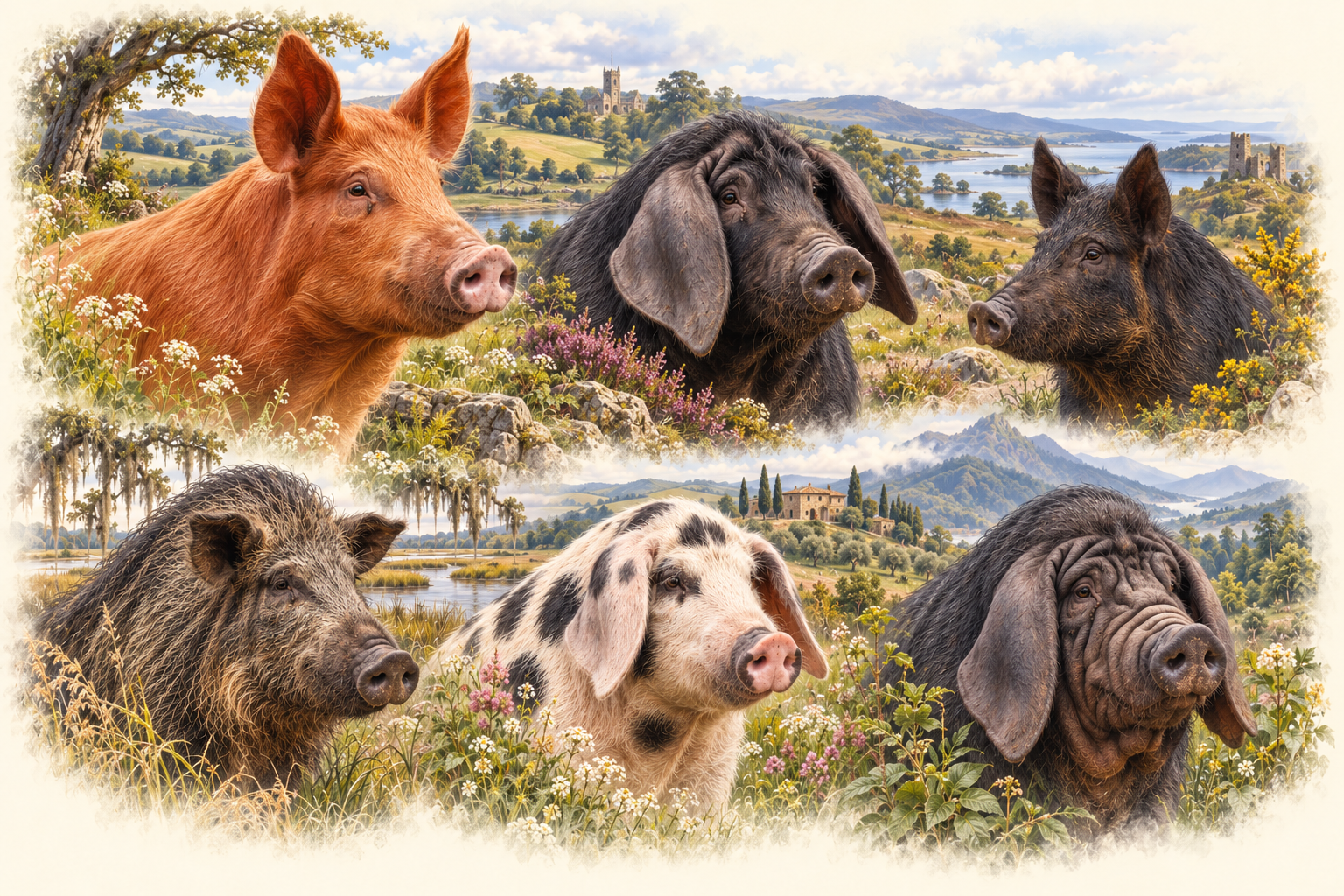
Heritage pig breeds connect farming history with living populations that still need purposeful stewardship. Breed identity can involve ancestry, recognizable traits and the production systems in which those traits were valued. Maintaining a population requires more than remembering its name: breeding animals need care, documented relationships and a future role. Explore the breeds below as distinct conservation stories rather than interchangeable examples of livestock.
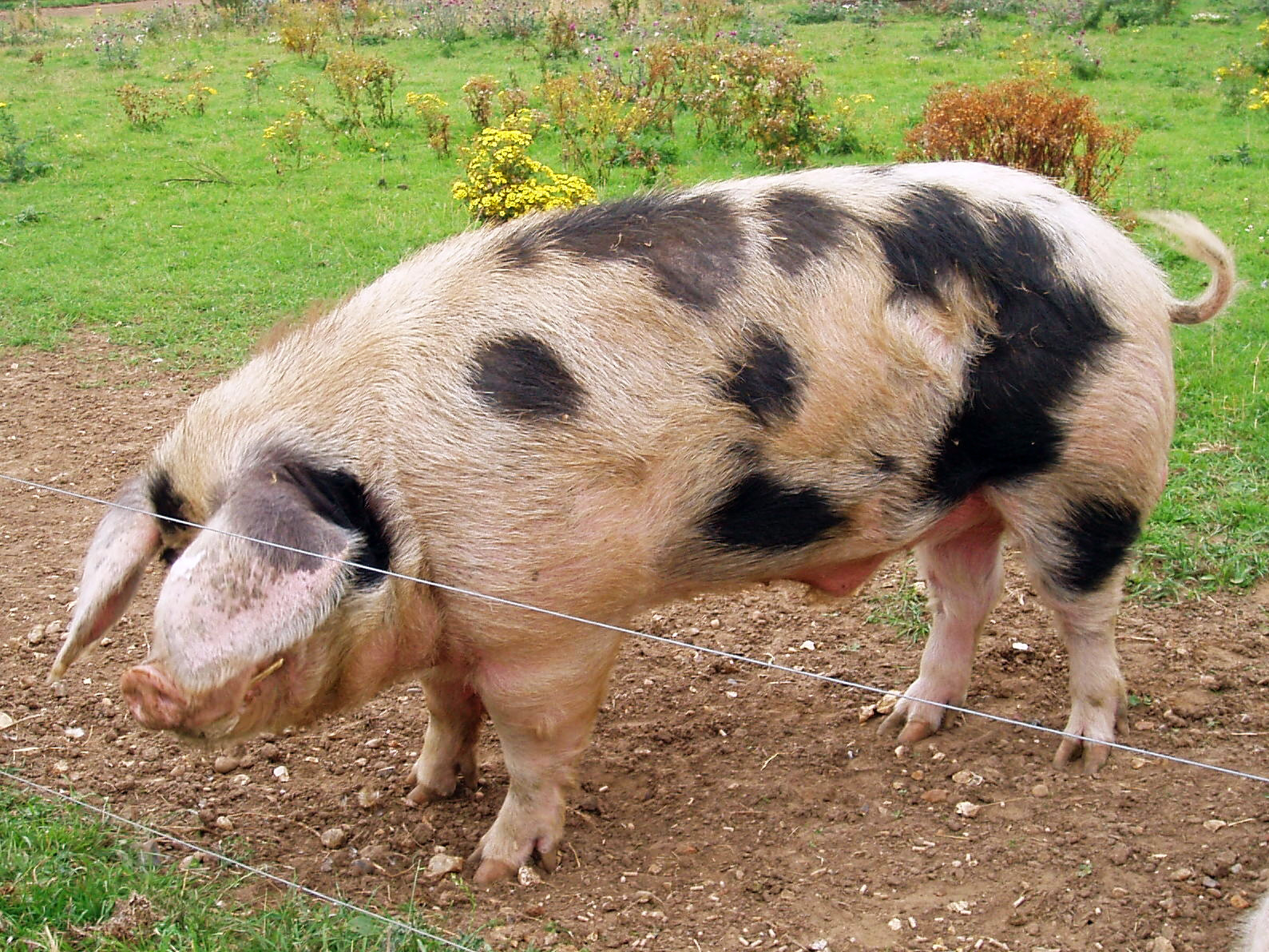
Guinea Hog at Roger Williams Zoo, Providence, Rhode Island, in 2007. · jude · CC BY 2.0
Threatenedbreed
Guinea Hog
This relatively small pig served diverse homestead purposes and foraged as part of farm life. Its traditional value included both meat and fat. Smaller size and a generally docile reputation explain modern interest, but individual temperament and management still vary.
A pale coat with black spots and large lop ears distinguishes the breed. Its heritage reflects a mixed-farm economy in which livestock used agricultural by-products. Coat pattern is useful for recognition, but documented breeding background and overall type remain important.
The fleshy appendages on each side of the neck are the breed's most obvious identifier. The source describes wattles as an inherited trait with no known function. Because the trait can appear in crosses, wattles alone cannot demonstrate pure Red Wattle ancestry.
The Choctaw is a comparatively small heritage hog shaped by extensive management and regional use. Its identity involves more than a particular color or an assumed connection with any free-ranging pig. Cultural association, documented breeding continuity, and functional type all matter.
The black coat and large lop ears produce a distinctive silhouette. Historically used for pork and bacon, Large Blacks also contributed to commercial crosses. The pure breed should be distinguished from those crosses when discussing conservation numbers or selecting photographs.
Island isolation and fluctuating resources shaped this distinctive domestic pig population. The breed is valued for its particular genetic history, not simply because it lived away from the mainland. Individuals maintained in captivity can differ in size from animals surviving under island conditions.
The breed is associated with a lard-oriented body, distinctive appearance, and reproductive qualities that attracted scientific interest. Its role differs from pigs selected mainly for lean industrial carcasses. Comparing these breeding priorities helps explain why agricultural biodiversity includes populations with very different forms.
Its fused, non-cloven hoof gives it the name. This feature, called syndactyly, is a domestic inherited characteristic; it does not make the pig related to mules. The breed also has an established overall appearance and farm-use history that cannot be reduced to hoof shape.
A red coat, long outline, and athletic build distinguish the Tamworth from heavier lard-oriented types. Its farm identity is associated with practical movement and meat production. The breed's relationship with woodland foraging belongs to its historical setting rather than implying that pasture alone supplies complete nutrition.
Critical, Threatened, Watch and Recovering are this organization’s domestic-breed categories. Their definitions vary between livestock, rabbits and poultry. A category threshold is not a census of this breed, and a registry’s annual registrations are not a count of every living animal.
Compare future population figures by assessment year, geography and the animals counted. Keep a wild relative’s IUCN assessment separate from a domestic breed’s status.
Scientific field notes
Where these animals belong.
Domestic pigs are associated with Sus scrofa; some classifications use the domestic designation Sus scrofa domesticus. The wild-boar species account supplies biological context, not a breed-specific risk assessment.
Ranks follow the linked reference’s treatment. Domestic names and wild relatives may be handled differently by other authorities.
Kingdom
Animalia
Phylum
Chordata
Class
Mammalia
Order
Artiodactyla
Family
Suidae
Genus
Sus
Species / domestic context
Sus scrofa (domestic pig context)
Explore beyond appearance
Four questions for a living legacy.
01
Breed origins and traditional production
What does the source actually establish, and which claims still need evidence?
02
Registration and breeding-animal continuity
How did people, place and practical use shape the population we see today?
03
Land use, rooting and containment
Which living breeding families can carry the population into another generation?
04
Care, biosecurity and practical farm economics
What would responsible stewardship require in time, facilities and ongoing support?
Knowledge belongs with its animal world.
Explore general pigs knowledge in the species library. Each population has its own collection for breed-specific history, identity and conservation reports.