
Conservation Legacy · Pigs world
Gloucestershire Old SpotsLiving heritage.
A connected world for understanding, teaching and carrying forward gloucestershire old spots—its history, characteristics, knowledge, people and future.
Living heritageThreatened2026 Conservancy list
The place and purpose behind the breed
A past that shaped a living population.
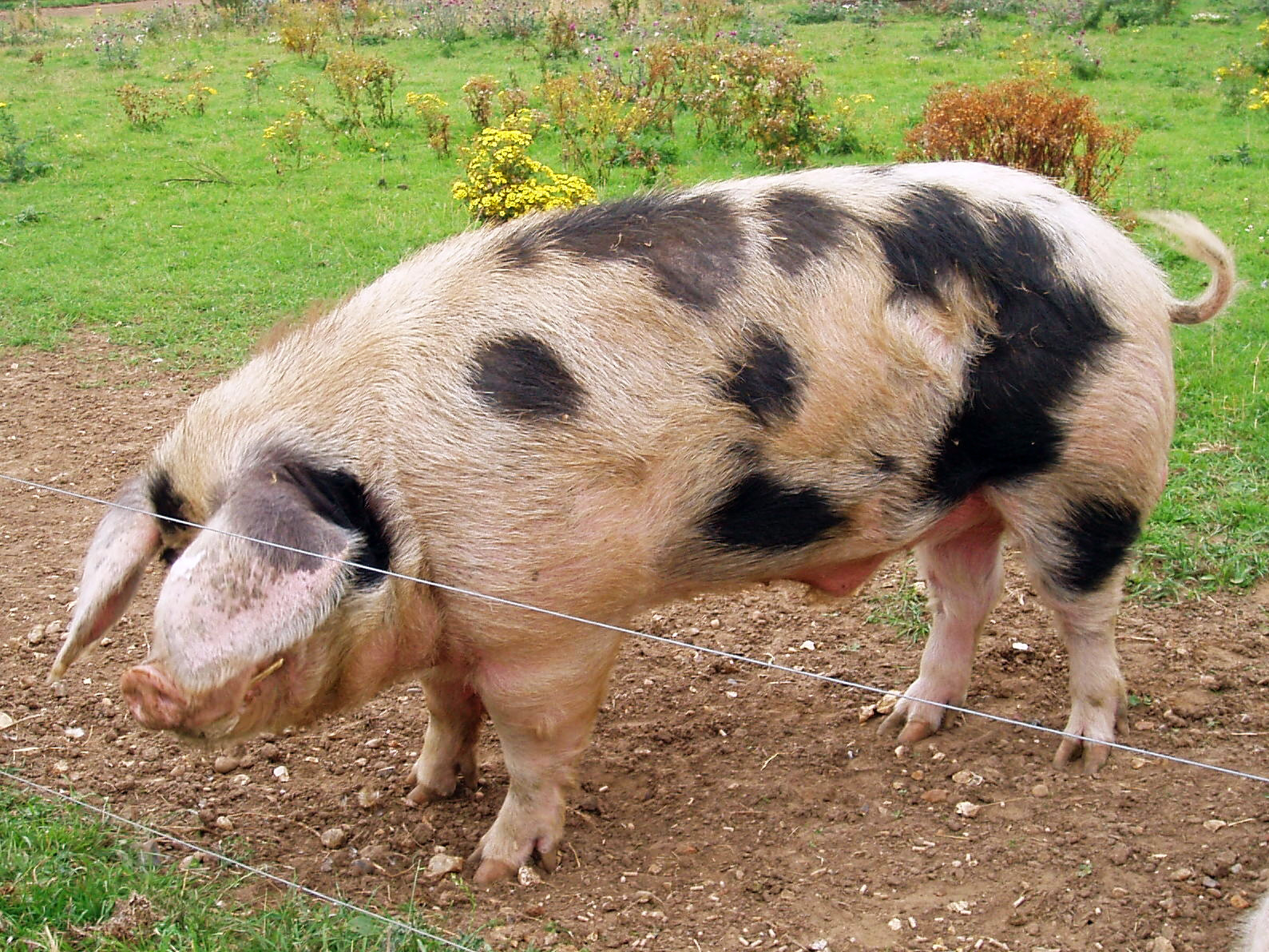
Gloucestershire Old Spots developed in England’s Vale of Berkeley. Their farm history includes orchards and dairy by-products, linking a spotted, lop-eared pig with practical small-farm resource use.Photographic introduction · Gloucestershire Old SpotsMeat, Lard/Back Fat
Amanda Slater · CC BY-SA 2.0 ↗
Story · identity · living heritageMeet the breedFollow this population through its origins, people, traits and changing place in the world.Enter →Knowledge · sources · memoryLibrary & archiveOriginal articles and this breed’s own collection, with general species knowledge identified separately.Enter →Pedigrees · families · future recordsBloodlines · coming soonA future workspace for verified animals, families and documented relationships.Enter →People · places · connectionNear You & world mapFind documented connections to this breed, or choose another animal on the map.Enter →
Enter the knowledge
behind gloucestershire old spots.
Each chapter belongs to this population. Its library brings the original teaching and official sources together.
This breed’s chapter
Ecology & landscapes
Explore habitats, domestication and the human landscapes around this animal.
Enter this chapter →This breed’s chapterHistory & heritage
Meet the people, places and choices that shaped this animal.
Enter this chapter →This breed’s chapterMeet the animal
Understand its traits, traditional roles and distinct population.
Enter this chapter →This breed’s chapterScience & biology
Explore family, genus, species and naming authorities.
Enter this chapter →This breed’s chapterCare & daily life
Learn the reasons behind nutrition, observation and husbandry.
Enter this chapter →This breed’s chapterChallenges & future
Read the status, pressures and population evidence in context.
Enter this chapter →This animal’s own collectionLibrary & Archive
Read original articles and reports, with general species knowledge clearly identified.
Enter the library →Read the stories.
Understand the animal.
Original articles connect this population’s history, traits and preservation with the evidence behind them.
History & heritage
Explore the full 4-article collection →Interpreting the breed's agricultural heritage
The orchard pig belongs to a farm economy in which dairying, fruit growing, and animal husbandry supported one another. That relationship makes an engaging environmental history, b…
Read the original →Care foundationsFunction, care, and continuing stewardship
Conservation protects more than spotted color. Breed organizations provide a place to explore standards and breeding continuity; historical sources explain the mixed-farm setting. …
Read the original →Animal identityThe structure beneath the spotted coat
Gloucestershire Old Spots of America's breed page connects the familiar color with a complete functional type. It describes a medium-length head with a slightly dished nose, forwar…
Read the original →Conservation & challengesStewardship of the national herd
GOSA's ethics statement describes members as stewards of both the national herd and the information that establishes its continuity. It connects welfare, honest representation, and…
Read the original →Get to know Gloucestershire Old Spots.
Read this breed’s history, traits and conservation story here. Each article includes the evidence behind it and links for further learning.
Open the Gloucestershire Old Spots library →Size, details & appearance
Look closely at the features that make this animal distinctive.
Amanda Slater · CC BY-SA 2.0 · License
Size reference
Source-reported weight references ↗ · checked October 5, 2026.
Market weight and adult weight describe different stages. Values are reference information, not individual growth guarantees.
Docile
History & heritage1 expanded article
Interpreting the breed's agricultural heritage
The orchard pig belongs to a farm economy in which dairying, fruit growing, and animal husbandry supported one another. That relationship makes an engaging environmental history, but a list of traditional by-products is not a nutritionally complete modern ration. Explain how the system worked before drawing conclusions about what an individual pig should eat.
The apple-bruising story is memorable precisely because it joins coat pattern to local farming. It belongs in a folklore discussion, with its status explicit. A biological account should not convert that story into an explanation of inherited pigmentation. Readers can enjoy the tradition while learning to distinguish cultural meaning from mechanism.
Appearance & working traits1 expanded article
The structure beneath the spotted coat
Gloucestershire Old Spots of America's breed page connects the familiar color with a complete functional type. It describes a medium-length head with a slightly dished nose, forward-dropping ears, a long level back, and broad loin. Straight strong legs and well-filled hams accompany that outline; the spots alone do not explain the animal.
The page calls for at least fourteen well-placed teats. That detail introduces maternal function as part of breed assessment rather than an afterthought. It also lists objections involving structure and coat, showing that the selection framework concerns more than keeping one black patch on white skin.
An October 2025 update changes pedigree naming so that females take their dam's name and males their sire's. The older colored family groups described farther down the page are identified as historical. Those group colors denote lineage labels, not differently colored coats. Preserving the distinction prevents a reader from expecting a red or blue Old Spots pig.
Science & inheritanceFoundations & evidence
Scientific identity
Pigs are not ruminants. Their omnivorous evolutionary background differs from the forage fermentation strategy of cattle and sheep. Rooting is a characteristic way of exploring and obtaining food. An outdoor pig can forage, but pasture alone does not necessarily satisfy the nutritional needs of growth or reproduction.
Management affects what those behaviors mean. A balanced diet, water, shade and a suitable environment support welfare in outdoor systems. Nutrient demand changes as animals mature and during gestation and lactation. The behavior of wild boar sounders provides ecological background, while group structure on a farm is shaped by human decisions and individual animals.
Landscapes & adaptationFoundations & evidence
Ecology & human landscapes
Rooting changes soil and vegetation. In a managed pasture system, rotation and recovery are therefore part of the animal's story, not merely background farm details. Feral and introduced wild pigs can cause serious ecological damage; that problem should not be confused with preserving a rare domestic breed in a controlled herd.
Good teaching holds both ideas together: an animal may be an important agricultural genetic resource while its unmanaged relatives create habitat conflicts. A heritage page should explain what makes the breed distinctive, what pressures reduced it, and how suitable human management connects preservation with land care. Pasture suitability should never become a promise that feeding or fencing is unnecessary.
Conservation & the future1 expanded article
Stewardship of the national herd
GOSA's ethics statement describes members as stewards of both the national herd and the information that establishes its continuity. It connects welfare, honest representation, and sound breeding choices. Animals with doubtful parentage should not be registered, and animals known to carry inherited defects or undesirable breeding attributes should not be represented as suitable breeding stock.
The significance for a learning library is broader than paperwork. A breed can retain attractive photographs while losing the reliable relationships that explain which animals belong to its population. Equally, preserved pedigrees mean little if the living animals are poorly cared for. The association treats these responsibilities as connected.
The statement also encourages reasonable support for new owners and a collaborative educational role. That makes conservation a transfer of practical knowledge as well as animals. These principles can inform the public account of the breed now, without requiring this app to collect individual records before its educational foundation is built.
Care & daily life1 expanded article
Function, care, and continuing stewardship
Conservation protects more than spotted color. Breed organizations provide a place to explore standards and breeding continuity; historical sources explain the mixed-farm setting. Keeping those roles separate makes the library useful. For everyday care, group behavior and food access require observation even in a breed described as accommodating, because a breed reputation cannot predict every interaction.
Science · identity · inheritance
A shared species. A distinct population.
Domestic pigs are associated with Sus scrofa; some classifications use the domestic designation Sus scrofa domesticus. The wild-boar species account supplies biological context, not a breed-specific risk assessment.KingdomAnimalia
PhylumChordata
ClassMammalia
OrderArtiodactyla
FamilySuidae
GenusSus
Scientific treatmentSus scrofa Linnaeus, 1758
Domestic populationGloucestershire Old Spots
Breed identity is separate from species-level assessment. Sus scrofa Linnaeus, 1758 · GBIF ↗
Breed identity · documented sources
Evidence that belongs to this animal.
The Livestock Conservancy lists Gloucestershire Old Spots as Threatened. This domestic-population category is distinct from an IUCN assessment of a wild species.Conservancy breed account ↗ · Assessment framework ↗ · www.gosamerica.org ↗. These references support the teaching in this world and offer independent perspectives.
Why this is its own conservation world
Identity, usefulness and inherited history belong together.
This world connects gloucestershire old spots with its documented development, characteristics and conservation context.Our evidence standard: source-reported facts, original interpretation and unresolved evidence remain distinguishable.
A breed is more than a familiar appearance.
Ancestry, documented population history and a photograph answer different questions.
Explore in this world →Purpose belongs beside the animal.
Meat, Lard/Back Fat
Explore in this world →A category is not a current census.
Dates, scope and the definition of the animals counted belong beside population evidence.
Explore in this world →Knowledge becomes stewardship.
Education, appropriate care and documented contributions carry living heritage forward.
Explore in this world →Care · daily life · practical stewardship
Understand what it takes to raise the animal.
Species foundations belong beside the breed’s documented traits and the individual’s condition.From a newborn piglet to a capable forager.
Follow the animal from its beginning through the changes in feeding, shelter, behavior and care. Select a stage to look closer.
114 daysGestation · approximate species reference
Healthy adults can contribute to the next generation; care and documented ancestry connect the cycle.

Warmth & first milk
Piglets need rapid colostrum access. Chilling can make a weak piglet less able to compete for milk.
What to observe
Watch successful nursing, warmth, contact with the mother and the condition of each youngster.
Sow and litter
The sow supplies milk, while safe farrowing space protects resting piglets from accidental crushing without blocking nursing.
Fostering & supplemental care
Where milk access is inadequate, experienced keepers may use planned fostering or supplementation. Warmth, dryness, cleanliness and monitored intake work together.
Life-stage teaching sources
- Merck Veterinary Manual · approximate gestation periods ↗
- Virginia Cooperative Extension · reducing preweaning piglet losses ↗
Conservation Legacy original teaching. Image captions identify the pictured animal; general species examples remain separate from selected-breed images.
See when life changes.
Body growth, reproductive development and managed weaning describe different changes. Explore the reference windows beside the care they help explain.
Gestation
114 daysApproximate species reference for planning.
Evidence ↗After birth or hatch · reference windows
General domestic pigs; husbandry context. Bars share a time axis measured from birth or hatch; each label retains its source units.
Often managed weaning3–4 weeks
management reference
Some systems 6–8 weeks; not a breed average.
Source for this window ↗Later managed weaning in some systems6–8 weeks
management referenceSource for this window ↗
Female puberty6–7 months
species referenceSource for this window ↗
Birth / hatch · 0214 days
Husbandry sources
What we risk losing
Keep a living inheritance within reach.
Threatened · The Livestock Conservancy, 2026. Preservation includes the living animals, their families and the people able to keep them. The sequence beside this text explains a process; it is not a measured decline for this breed.Explore this breed’s conservation →- Historic family
Recorded families connect today’s animals with the people and places that shaped them.
- Funneling begins
Some branches stop reproducing, or their records become difficult to follow.
- Bottleneck
Representation can concentrate into fewer animals and fewer distinct breeding options.
- Preservation window
Age, health, living animals, reliable records and available homes influence what can continue.
- Action or loss
Education, care, documentation and coordinated stewardship shape what survives.
Population · dates · scope
Numbers need their context.
A status, registration count and breeding-population estimate answer different questions. Their dates and definitions matter.Conservation status and source-reported population evidence
A directly verified population measure has not yet been established for this page. Its conservation category remains useful, but does not supply a current head count.
The community carries it forward
The future needs people who keep its knowledge alive.
A dated photograph, a keeper’s experience, a historical source or a documented correction can help the next generation understand gloucestershire old spots.What you know today can become part of what this breed still has tomorrow.
Breed knowledgeKeep traits connected to the documented population.Teach what sources establish and identify what still needs evidence.Stories & historyPreserve the people and places behind the animal.Dates, locations and source context make a memory more useful.Documents & photographsKeep the creator and meaning with the record.Share material with permission, accurate captions and provenance.Practical stewardshipConnect learning with responsible care.Use the species foundations and individual needs to guide further questions.Keep exploring
One world. Many ways to enter.
Gloucestershire Old Spots Library & ArchiveOriginal articles, general foundations and source evidence→Near You & world mapDocumented breed connections and nearby places→This breed’s common areaLearning, contributions and community connections→Bloodlines & records · coming soonVerified animals and relationships will come later→Our founding Puerto Rican Paso Fino worldThe design and preservation foundation for every breed world→