
Gloucestershire Old Spots
History & heritage
One living story. Knowledge kept together.
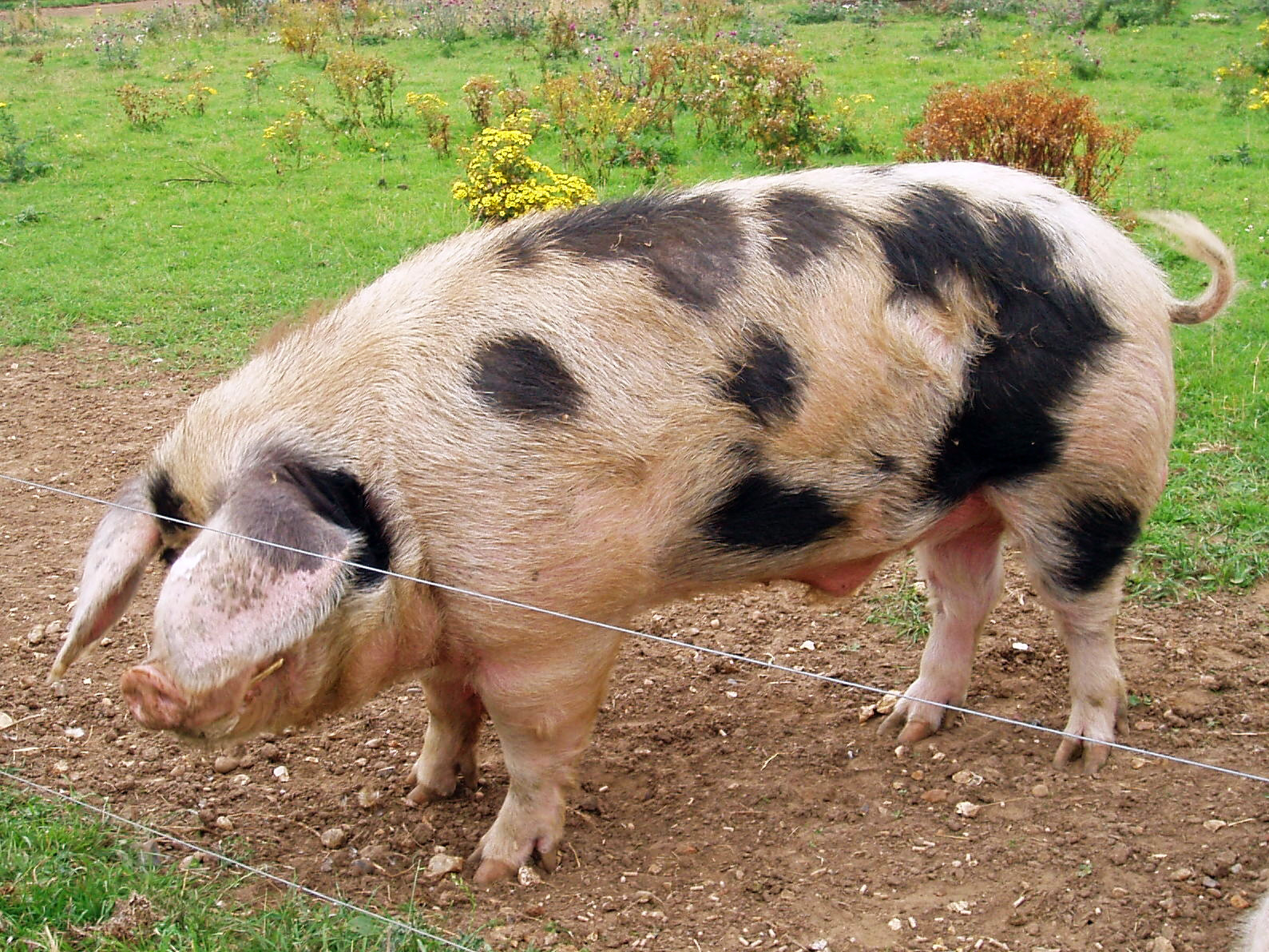
Gloucestershire Old Spots boar on an English farm in 2008. · Amanda Slater · CC BY-SA 2.0 · License terms
Follow the story behind the name.
Gloucestershire Old Spots developed around the Vale of Berkeley in England during the nineteenth century. Small farms kept them around dairies and orchards, using whey, fallen fruit, and other available feed resources. Their nicknames include cottage pig and orchard pig. The story that apples caused their spots is folklore rather than a biological explanation.
A pale coat with black spots and large lop ears distinguishes the breed. Its heritage reflects a mixed-farm economy in which livestock used agricultural by-products. Coat pattern is useful for recognition, but documented breeding background and overall type remain important.
Interpreting the breed's agricultural heritage
The orchard pig belongs to a farm economy in which dairying, fruit growing, and animal husbandry supported one another. That relationship makes an engaging environmental history, but a list of traditional by-products is not a nutritionally complete modern ration. Explain how the system worked before drawing conclusions about what an individual pig should eat.
The apple-bruising story is memorable precisely because it joins coat pattern to local farming. It belongs in a folklore discussion, with its status explicit. A biological account should not convert that story into an explanation of inherited pigmentation. Readers can enjoy the tradition while learning to distinguish cultural meaning from mechanism.
Sources for general species learning
Sources behind the breed’s story.
The original history, identity and conservation teaching above draws on these cited accounts. Official links open the full material for further study.
Keep learning from official information.
These research portals help locate further material. A search link is a route for exploration; it is separate from the sources used for the article above. Domestic breed information, wild-species assessment, historical books and new research need their own context.
- FAO DAD-IS · Domestic breed information
- IUCN Red List · Species assessments
- Biodiversity Heritage Library · Historical literature search
- USDA National Agricultural Library · Research search
- Google Scholar · Scholarly literature search
- Open Library · Book catalogue search
- HathiTrust · Digitized catalogue search