
Gloucestershire Old Spots
Animal identity
One living story. Knowledge kept together.
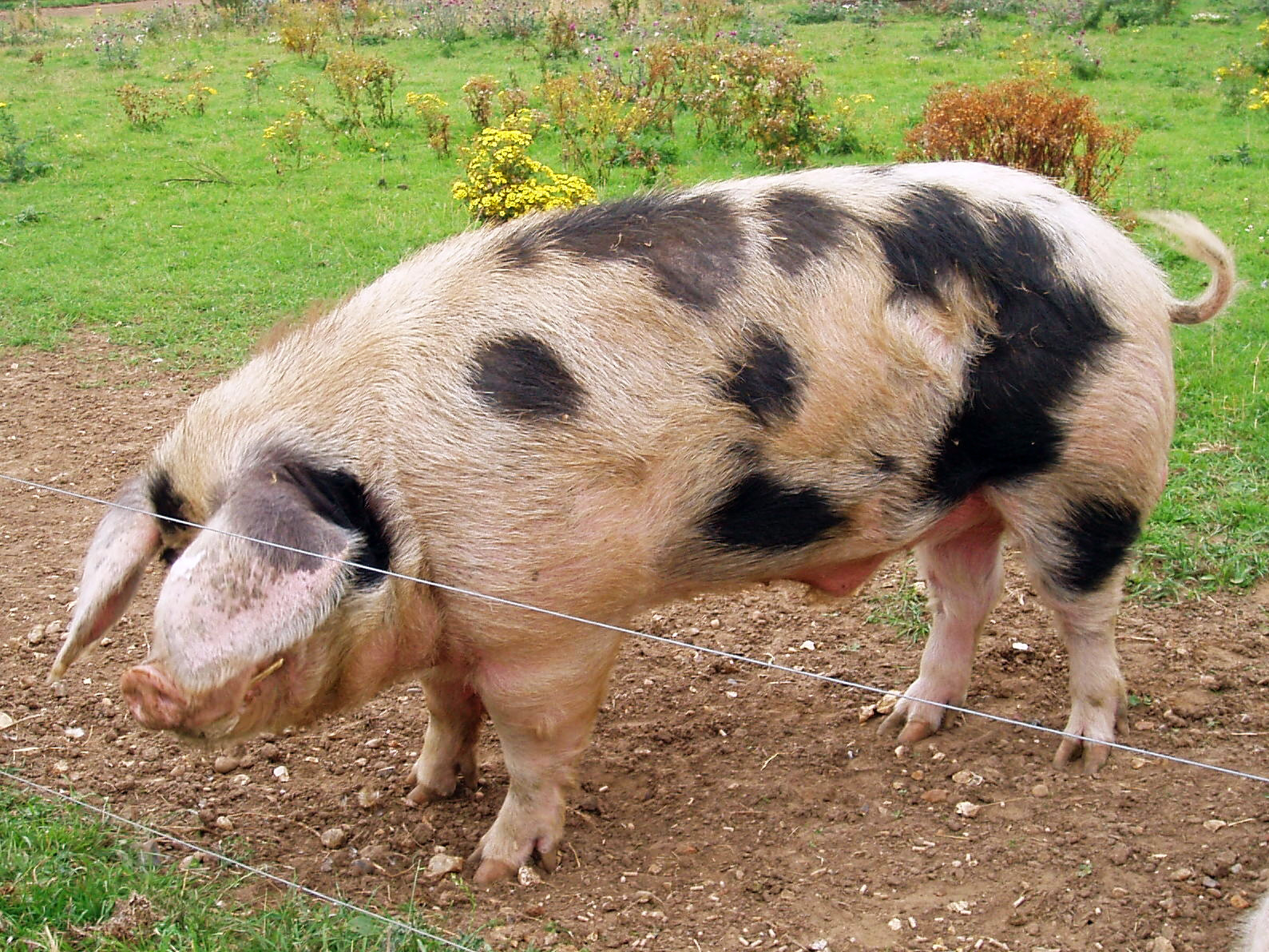
Gloucestershire Old Spots boar on an English farm in 2008. · Amanda Slater · CC BY-SA 2.0 · License terms
Recognize what makes this population itself.
A pale coat with black spots and large lop ears distinguishes the breed. Its heritage reflects a mixed-farm economy in which livestock used agricultural by-products. Coat pattern is useful for recognition, but documented breeding background and overall type remain important.
Appearance introduces the animal; a registry standard explains a documented breeding population. A photograph, color or familiar informal name alone cannot establish every individual’s membership.
- Recorded roles
- Meat, Lard/Back Fat
- Adult Weight
- Male - 600 lbs. Female - 500 lbs.
- Temperament
- Docile
- Experience Level
- Beginner – Intermediate
Reference values from the breed’s conservation profile. Weight describes a reference animal, not a universal feeding or fitness target. Temperament varies with breeding, individual experience and handling.
The structure beneath the spotted coat
Gloucestershire Old Spots of America's breed page connects the familiar color with a complete functional type. It describes a medium-length head with a slightly dished nose, forward-dropping ears, a long level back, and broad loin. Straight strong legs and well-filled hams accompany that outline; the spots alone do not explain the animal.
The page calls for at least fourteen well-placed teats. That detail introduces maternal function as part of breed assessment rather than an afterthought. It also lists objections involving structure and coat, showing that the selection framework concerns more than keeping one black patch on white skin.
An October 2025 update changes pedigree naming so that females take their dam's name and males their sire's. The older colored family groups described farther down the page are identified as historical. Those group colors denote lineage labels, not differently colored coats. Preserving the distinction prevents a reader from expecting a red or blue Old Spots pig.
Sources for general species learning
Sources behind the breed’s story.
The original history, identity and conservation teaching above draws on these cited accounts. Official links open the full material for further study.
Keep learning from official information.
These research portals help locate further material. A search link is a route for exploration; it is separate from the sources used for the article above. Domestic breed information, wild-species assessment, historical books and new research need their own context.
- FAO DAD-IS · Domestic breed information
- IUCN Red List · Species assessments
- Biodiversity Heritage Library · Historical literature search
- USDA National Agricultural Library · Research search
- Google Scholar · Scholarly literature search
- Open Library · Book catalogue search
- HathiTrust · Digitized catalogue search