
The structure beneath the spotted coat
Knowledge for understanding and preserving Gloucestershire Old Spots.
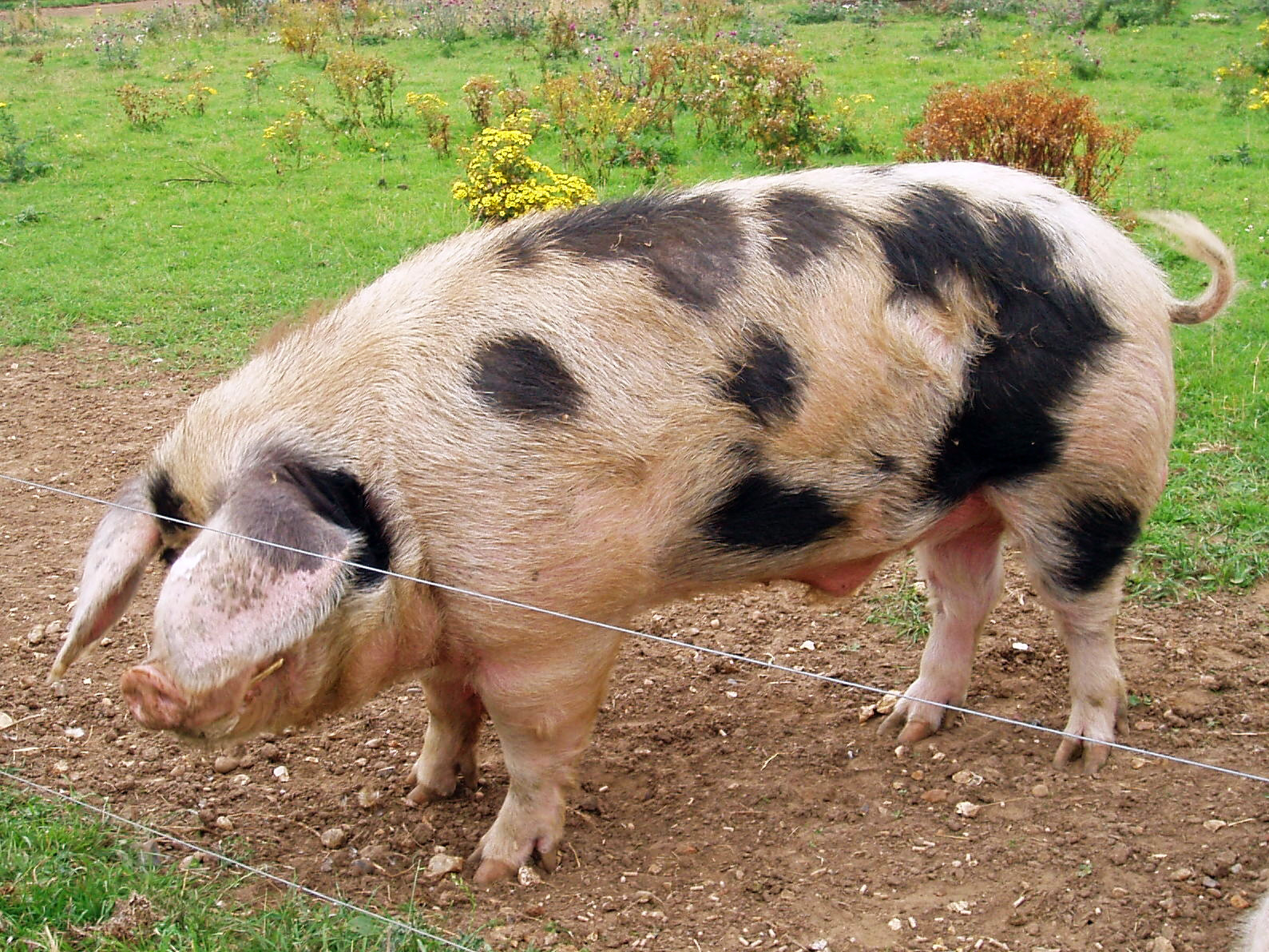
Gloucestershire Old Spots of America's breed page connects the familiar color with a complete functional type. It describes a medium-length head with a slightly dished nose, forward-dropping ears, a long level back, and broad loin. Straight strong legs and well-filled hams accompany that outline; the spots alone do not explain the animal.
The page calls for at least fourteen well-placed teats. That detail introduces maternal function as part of breed assessment rather than an afterthought. It also lists objections involving structure and coat, showing that the selection framework concerns more than keeping one black patch on white skin.
An October 2025 update changes pedigree naming so that females take their dam's name and males their sire's. The older colored family groups described farther down the page are identified as historical. Those group colors denote lineage labels, not differently colored coats. Preserving the distinction prevents a reader from expecting a red or blue Old Spots pig.
Sources behind this article
This is original Conservation Legacy teaching informed by the sources below. Follow the official material for the full account and its context.