
Gloucestershire Old Spots
Ecology & human landscapes
One living story. Knowledge kept together.
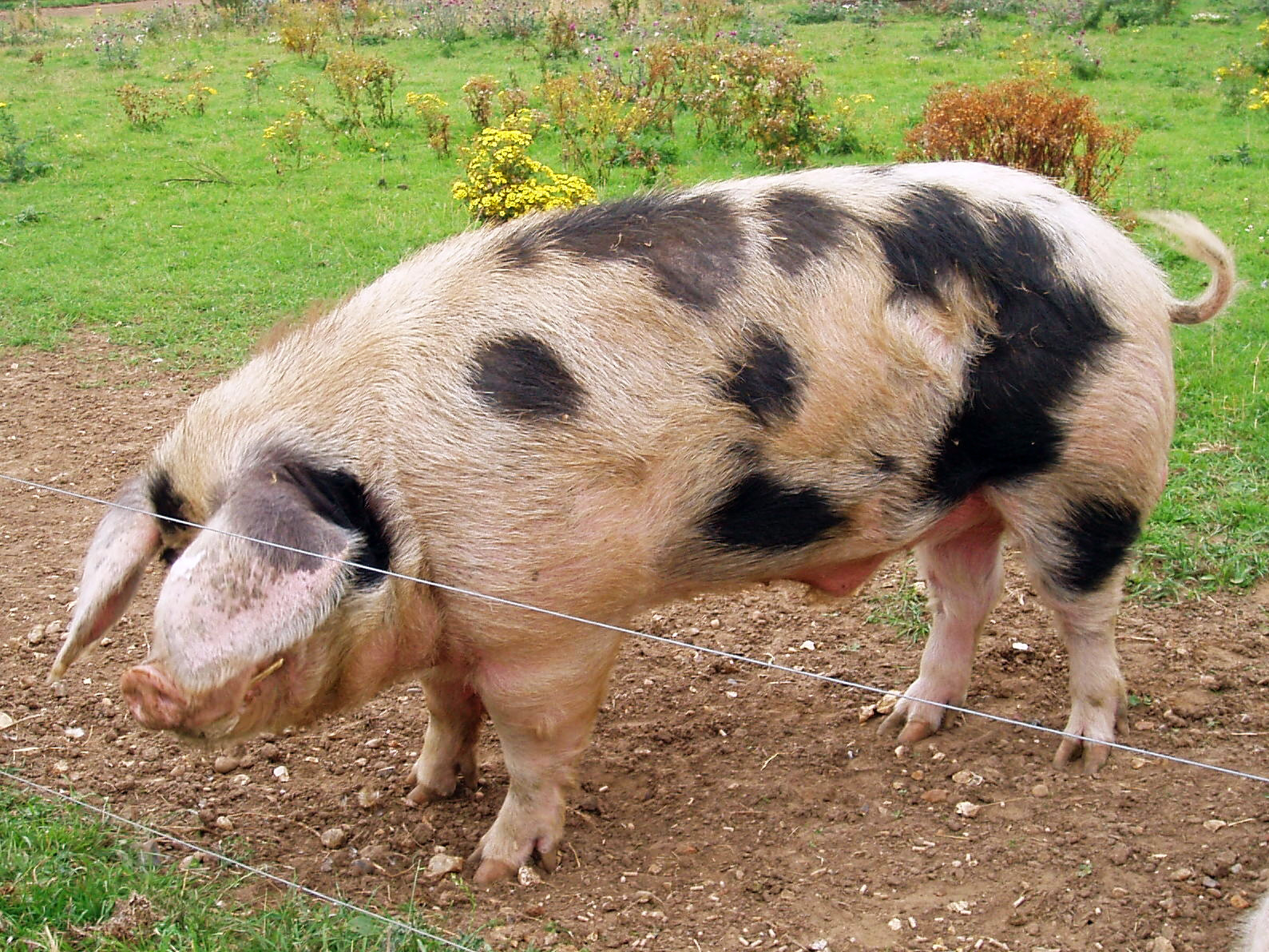
Gloucestershire Old Spots boar on an English farm in 2008. · Amanda Slater · CC BY-SA 2.0 · License terms
Animal, landscape
and the people between them.
Rooting changes soil and vegetation. In a managed pasture system, rotation and recovery are therefore part of the animal's story, not merely background farm details. Feral and introduced wild pigs can cause serious ecological damage; that problem should not be confused with preserving a rare domestic breed in a controlled herd.
Good teaching holds both ideas together: an animal may be an important agricultural genetic resource while its unmanaged relatives create habitat conflicts. A heritage page should explain what makes the breed distinctive, what pressures reduced it, and how suitable human management connects preservation with land care. Pasture suitability should never become a promise that feeding or fencing is unnecessary.
This population’s place in that story.
Gloucestershire Old Spots developed around the Vale of Berkeley in England during the nineteenth century. Small farms kept them around dairies and orchards, using whey, fallen fruit, and other available feed resources. Their nicknames include cottage pig and orchard pig. The story that apples caused their spots is folklore rather than a biological explanation.
A breed’s historical setting helps explain its development. Present-day housing, feeding and land management still need to suit the individual animals and the actual site.
Sources for general species learning
Sources behind the breed’s story.
The original history, identity and conservation teaching above draws on these cited accounts. Official links open the full material for further study.
Keep learning from official information.
These research portals help locate further material. A search link is a route for exploration; it is separate from the sources used for the article above. Domestic breed information, wild-species assessment, historical books and new research need their own context.
- FAO DAD-IS · Domestic breed information
- IUCN Red List · Species assessments
- Biodiversity Heritage Library · Historical literature search
- USDA National Agricultural Library · Research search
- Google Scholar · Scholarly literature search
- Open Library · Book catalogue search
- HathiTrust · Digitized catalogue search