
Conservation Legacy · Founding world
Pure Puerto Rican Paso Fino
A living digital campus dedicated to preserving, understanding, teaching, and carrying forward Puerto Rico's native Paso Fino—its bloodlines, people, history, records, knowledge, and future.
Founding worldPuerto RicoOpen now
Puerto Rico · Drought, horse care & farm recovery · 2026
The rain can return before a farm recovers.
Puerto Rico's horse community needs support beyond the first rainfall. A dry summer left farmers facing lost forage, stressed pastures, water restrictions and extra costs. For a threatened breed like the Pure Puerto Rican Paso Fino, losing farms and breeding capacity can mean losing irreplaceable bloodlines.
The October 8 federal drought update reported improvement across much of the island after late-September rain, but extreme drought still persisted in the southern plains, with agricultural losses and irrigation restrictions reported. Conditions vary by area.
External GoFundMe organized by Heart Throbs Puerto Rican Paso Finos and Conservation Legacy. Donations are handled by GoFundMe; please review the fundraiser before contributing.
From the PPR community · October 2026
Revisit the Classic Celebration.
Official show footage, a guide to the organizer’s class announcements, and the sources behind the October 20–21 gathering in Columbia, South Carolina.Puerto Rico · the place behind the horse
A past that shaped both a horse and an island.
Puerto Rico's history and the Paso Fino's history grew alongside one another. Mountain roads, farms, cattle work, trade, family travel and celebration placed real demands on the horses people depended on. The horses that handled that life best—sure-footed, enduring, smooth to ride, willing and proud—were valued and bred forward. At the same time, those horses carried people, goods, work, news and tradition across the island. Puerto Rico shaped the horse, and generations of horses helped carry Puerto Rico forward.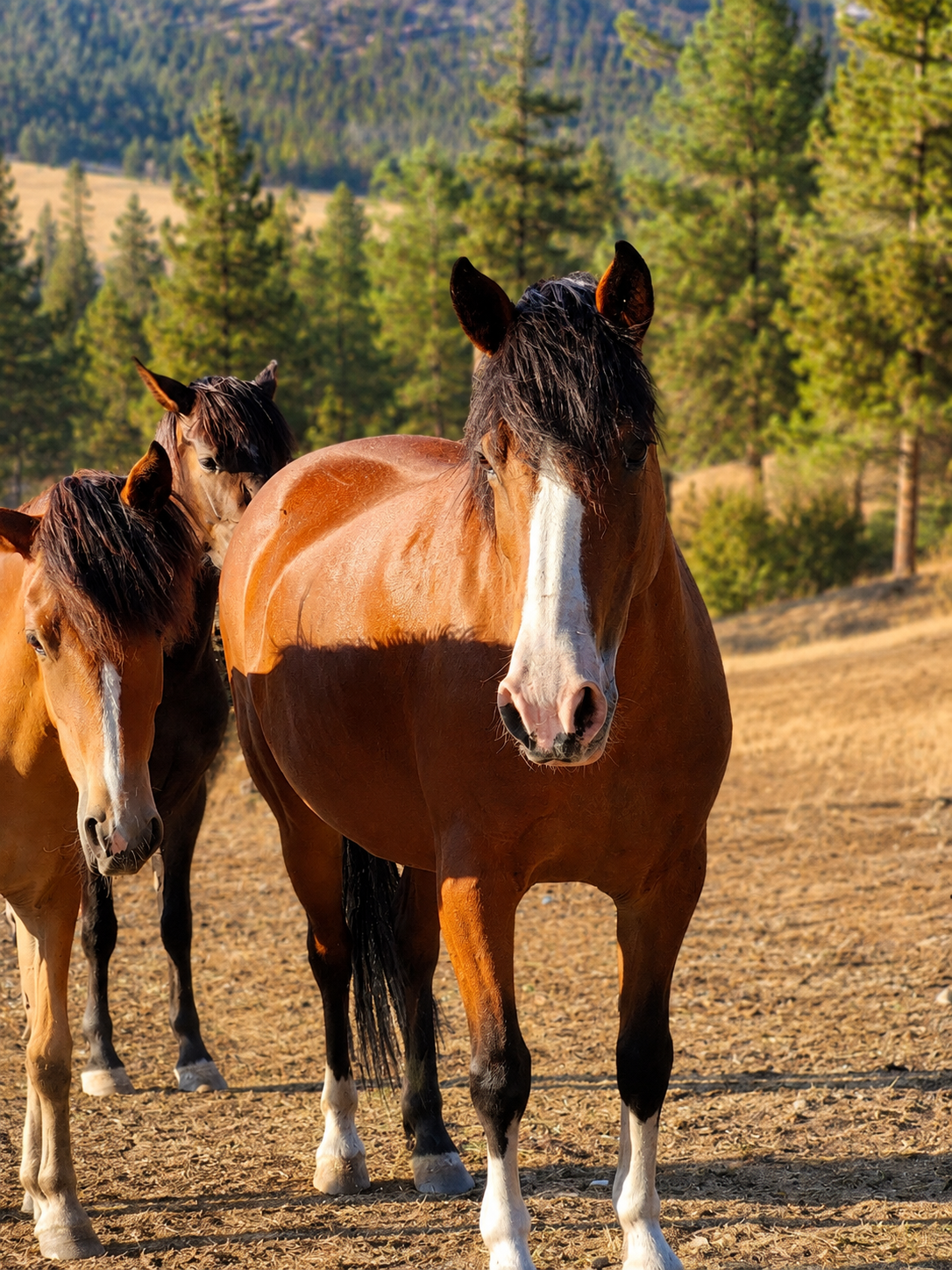
Puerto Rico · BorinquenPuerto Rico shaped what people needed from the horse—and the horse became part of Puerto Rico's own living culture.
Story · culture · historyMeet the breedBegin in Puerto Rico and follow the horse through farms, daily life, famous horses, registries, migration, science and the living population.Enter
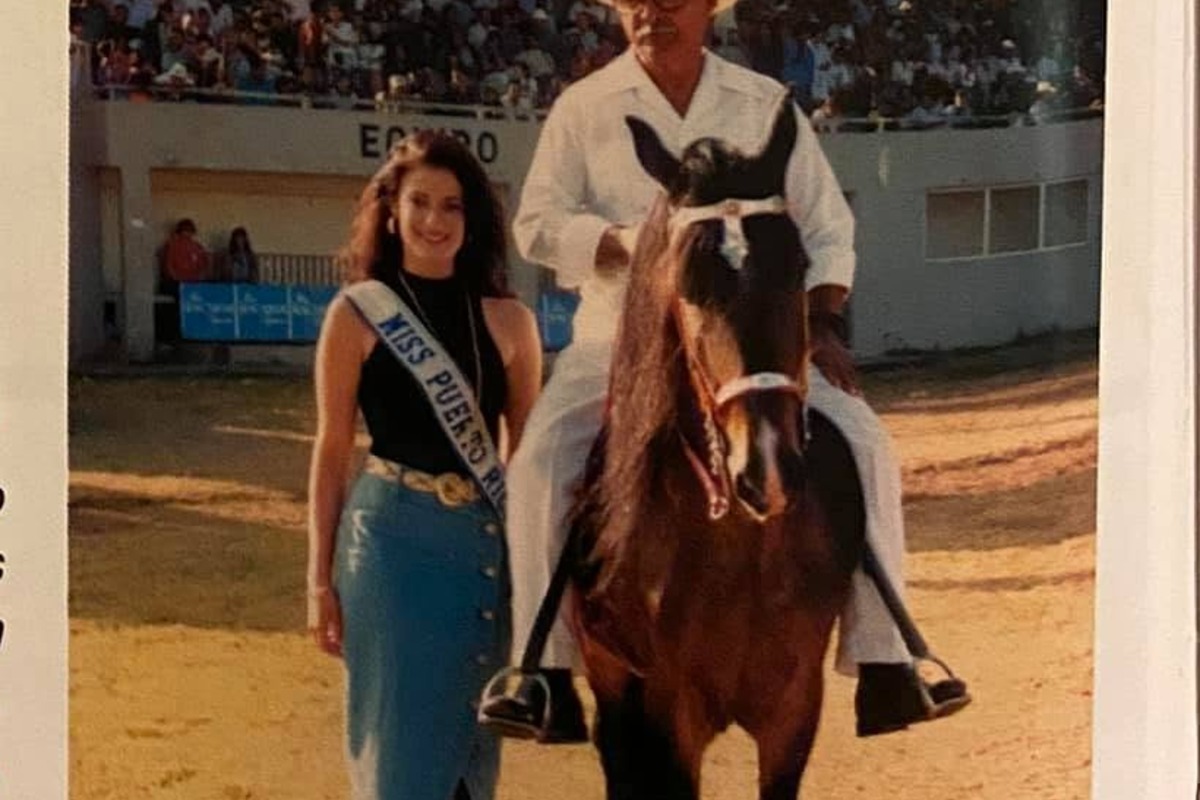
Living & remembered horsesBrowse horsesGo directly to living horses, horses of the past, or the complete published horse hall.Enter
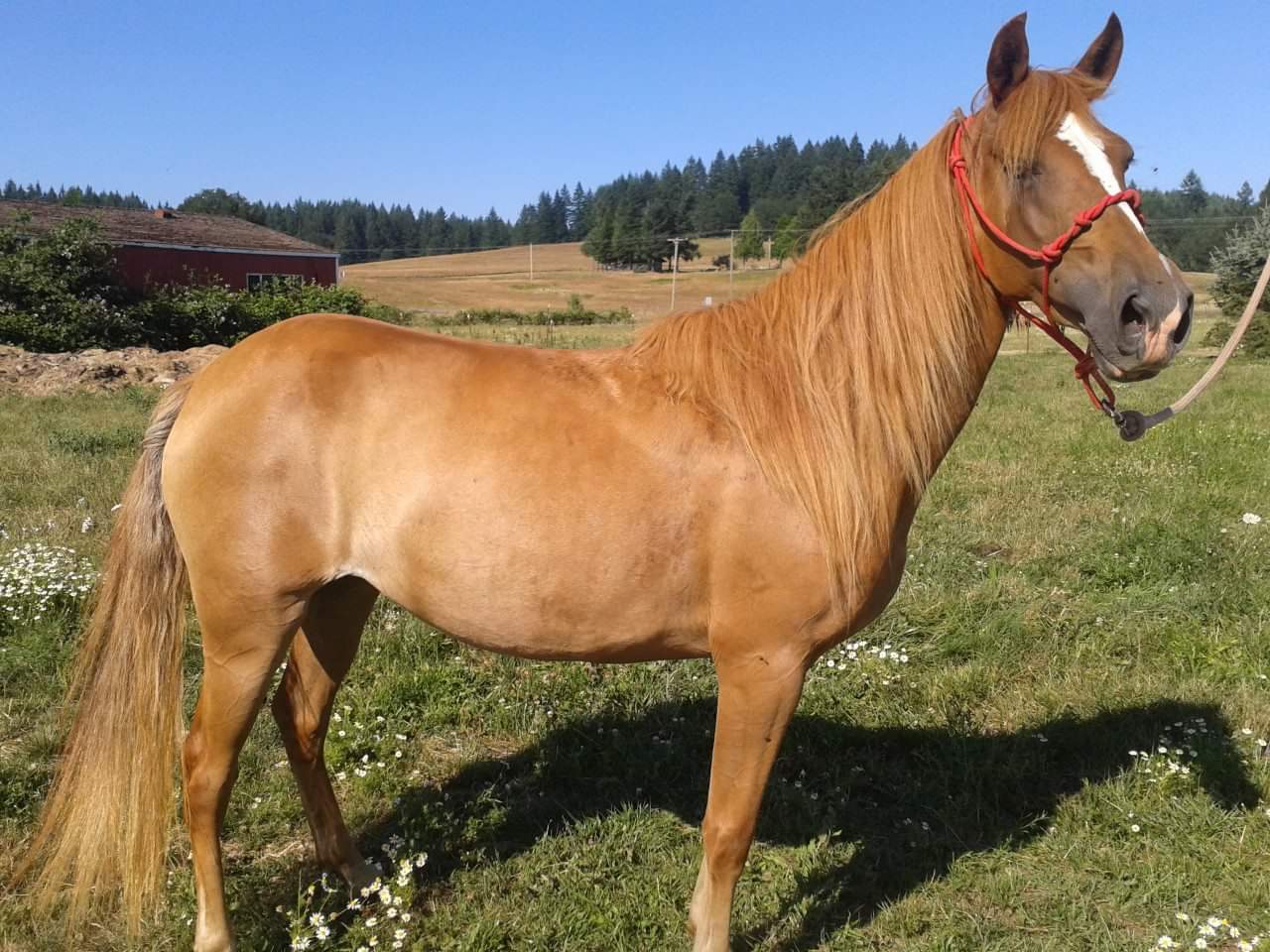
Pedigrees · families · future recordsBloodlines · coming soonRecords and pedigree expansion will come later. Existing founding records remain preserved.Enter
Population · trends · rare linesPopulation & statisticsSee documented births, living estimates, maternal and paternal representation, rare lines, lost lines and bottleneck signals.Enter
Enter the knowledge
behind puerto rican paso fino.
Each chapter belongs to this population. Its library brings the original teaching and official sources together.
This breed’s chapter
Ecology & landscapes
Explore habitats, domestication and the human landscapes around this animal.
Enter this chapter →This breed’s chapterHistory & heritage
Meet the people, places and choices that shaped this animal.
Enter this chapter →This breed’s chapterMeet the animal
Understand its traits, traditional roles and distinct population.
Enter this chapter →This breed’s chapterScience & biology
Explore family, genus, species and naming authorities.
Enter this chapter →This breed’s chapterCare & daily life
Learn the reasons behind nutrition, observation and husbandry.
Enter this chapter →This breed’s chapterChallenges & future
Read the status, pressures and population evidence in context.
Enter this chapter →This animal’s own collectionLibrary & Archive
Read original articles and reports, with general species knowledge clearly identified.
Enter the library →Read the stories.
Understand the animal.
Original articles connect this population’s history, traits and preservation with the evidence behind them.
History & heritage
Explore the full 14-article collection →Reading the island story through horses and documents
Separate the long history of horses on Puerto Rico from the later organization of a named breed.
Read the original →History & heritageHow organizations carry the breed across generations
Registry history is part of the breed's living infrastructure.
Read the original →Animal identityA national and cultural heritage that remains alive
Cultural recognition should lead readers toward the people and practices that sustain the horse.
Read the original →Animal identityWhat a registry record can tell a learner
Ancestry, identity and ownership answer different questions.
Read the original →Scientific identityHow to read research about a cherished breed
A study can answer a defined question without answering every question about the breed.
Read the original →Conservation & challengesWhy more horses and more inherited diversity are different goals
A conservation plan must look beyond a total number of animals.
Read the original →Get to know Puerto Rican Paso Fino.
Read this breed’s history, traits and conservation story here. Each article includes the evidence behind it and links for further learning.
Open the Puerto Rican Paso Fino library →Size, details & appearance
Look closely at the features that make this animal distinctive.
Adult weight references
Height reference ruler

The profile gives 700–1,100 lb; the 2026 comparison chart gives 700–1,000 lb. Those source ranges remain separate. In hands notation, .2 means two inches.
Enjoys human contact, is friendly, spirited, and responsive
History & heritage2 expanded articles
Reading the island story through horses and documents
Separate the long history of horses on Puerto Rico from the later organization of a named breed.
The Puerto Rican Paso Fino belongs to the history of Puerto Rico, rather than to a single modern show ring. The Federación del Deporte de Caballos de Paso Fino traces the island's first breeding mares to Juan Ponce de León's arrival from Hispaniola in 1509. Its historical account also identifies descriptions of local horses by André-Pierre Ledrú in 1797 and Adolfo de Hostos concerning the nineteenth century. These are useful documentary landmarks, although the federation's modern account should be distinguished from an examination of the original manuscripts.
The timeline separates several stages of the horse's development. Imported breeding stock belongs to the early colonial period. Descriptions of local movement show that distinctive island horses were recognized before a modern registry existed. Dulce Sueño's place in twentieth-century ancestry marks a later concentration of the modern breed. These stages should not be collapsed into a single founding date.
The federation identifies Dulce Sueño, born in Guayama in the early 1920s, as the central ancestor of the modern breed. This makes lineage history an important part of understanding the Puerto Rican horse. It does not turn a named ancestor into a substitute for the intervening generations in an individual pedigree.
A horse can carry history in several different ways. Its pedigree records connections between generations; its movement expresses a characteristic selected by breeders; its name may commemorate a person, place or family. Reading those features together helps explain why the Puerto Rican Paso Fino is more than a generic smooth-riding horse. Its island history gives the animal a particular identity, while each living individual adds another chapter to that history.
How organizations carry the breed across generations
Registry history is part of the breed's living infrastructure.
The Puerto Rican federation dates its establishment to 1943 and says it established and continues to maintain its genealogical registry. Its history describes the earlier organization as the Asociación de Dueños de Caballos de Silla de Puerto Rico. The Pure Puerto Rican Paso Fino Federation of America identifies 1987 as its founding year. These dates describe two organizations; they are not interchangeable founding dates for the horse itself.
The American federation's stated purposes include education, preservation of the four-beat Puerto Rican horse, group activities and maintenance of an accurate registry. This is a helpful picture of how a breed organization can serve more than one role. Documentation gives a framework for ancestry, while teaching and contact among owners help keep knowledge circulating.
The American federation's own history names Creighton Shull and Edwin Sanchez as its founders in Columbia, South Carolina, in 1987. It dates incorporation as a South Carolina nonprofit to January 2, 1992. Founding and incorporation are separate events: the first describes the beginning of a group, while the second describes its formal legal establishment.
The federation also offers pleasure-riding and trail programmes in which participants record hours or miles. These activities place the horse's everyday use beside organized competition. They give a learner a practical reminder that a breed can be sustained through riding, relationships and education as well as through show results.
The institutional timeline therefore runs from organized island genealogy in 1943, through the American federation's founding in 1987, to its incorporation in 1992. For an individual horse, the issuing organization and registration identifier remain important: a federation's history explains the system, while the certificate and underlying pedigree identify the animal within it.
Appearance & working traits2 expanded articles
A national and cultural heritage that remains alive
Cultural recognition should lead readers toward the people and practices that sustain the horse.
Puerto Rico's Law 34, approved on February 3, 2023, declares the Paso Fino breed national and cultural heritage, referring to the definition in Law 169-1988. The law also assigns a role in communicating this recognition to the Instituto de Cultura Puertorriqueña and the Department of Agriculture. This makes the horse's cultural significance an explicitly recognized public responsibility.
This recognition is an important cultural milestone. It does not, by itself, establish a population count, demonstrate that every lineage is secure, or prove that a particular conservation programme has been funded. Those questions require their own evidence. Keeping recognition and implementation separate allows the heritage story to remain accurate.
The cultural meaning of the horse includes the work surrounding it. Breeding decisions connect generations; riding teaches a physical understanding of movement; farriery and daily care keep the animal comfortable enough to participate. Families may preserve memories of an important mare, a first ride or a horse that became associated with a particular place. Such accounts explain the relationship between an animal and the people who know it, even when they are not population statistics.
The word paso refers to the step or gait, and fino gives the breed's name its sense of a fine gait. In its description of the Puerto Rican horse, the federation uses the image pisa flores: a horse stepping over flowers gently. This is a cultural description of delicacy, not a literal test of soundness. The expression helps explain why rhythm and the impression of a light footfall have become part of how people speak about the animal.
Cultural recognition and animal care consequently belong together. The horse remains a living individual with needs for food, water, safe movement and competent handling. Preserving a tradition means retaining the knowledge needed to support those needs, alongside the stories, terminology and documents that give the breed its place in Puerto Rican life.
What a registry record can tell a learner
Ancestry, identity and ownership answer different questions.
Law 169-1988 established a legal framework for the Pure Puerto Rican Paso Fino industry and its central genealogical registry. Its definition combines a characteristic gait with documented ancestry, including reference to Dulce Sueño and ascertainable generations. The law describes the registry as holding names, colours, identifying marks, owners and other information. This is the statute's framework, not a substitute for checking an issuing authority's present procedures.
The PPRPFFA forms page separately offers horse registration, ownership transfer, DNA typing and stallion breeding reports. These categories teach an important distinction. Registration concerns entry in a record system; transfer concerns ownership; DNA typing supplies laboratory information; a breeding report records matings. The presence of one document should not be treated as proof that all the others are complete.
A registered name and a stable nickname can refer to the same horse, but they serve different purposes. The registered name and identifier make it possible to follow the animal through a record system. The nickname belongs to daily life. Colour and identifying marks help describe appearance; ownership information describes a relationship at a particular time. None of these should be mistaken for a complete ancestry on its own.
A learner can also ask what is missing without discrediting the horse. An incomplete family account may reflect lost paperwork rather than a biological conclusion. The appropriate next step is to seek the underlying record and preserve the uncertainty in the meantime.
Appearance, ancestry and a laboratory result therefore need to be read at their appropriate levels. A horse can resemble a breed without the resemblance proving its documented genealogy. A test can answer the specific biological question for which it was designed without replacing every registry requirement. The responsible registry remains the place to verify eligibility and interpret its current rules.
Science & inheritance1 expanded article
How to read research about a cherished breed
A study can answer a defined question without answering every question about the breed.
The 2022 Scientific Reports study by Wolfsberger and colleagues provides genomic evidence connecting the Puerto Rican Paso Fino with Puerto Rican Criollo horses and examining their differentiation. Its conclusions are based on sampled animals and comparisons with specified populations. Our existing genetics article explains the study's datasets and trait findings; this chapter concentrates on how a reader can assess the evidence.
Begin with the question the researchers asked. A study of population relationships is different from a parentage test, a veterinary investigation or a count of living horses. Its sample is a tool for answering that question, not automatically a census. The publication date tells when an analysis appeared, while the sampling description tells what animals the analysis actually represents.
Next distinguish an observation from an explanation. A pattern in genetic data may support a historical relationship. A region of the genome associated with selection can suggest a candidate for further investigation. Neither warrants inventing a precise health prediction for an individual horse. Strong educational writing preserves the researchers' level of certainty instead of turning cautious scientific language into a promotional claim.
Readers should also be able to follow the evidence. A complete research note identifies the paper, its methods, its comparison groups and any stated limitations. When later work changes an interpretation, a dated revision can explain what changed and why.
Scientific evidence also changes the questions worth asking. If a study supports a historical relationship, later work may investigate how much variation remains or how particular traits function. These are connected questions, but they require different methods. Learning to recognize that distinction lets a reader appreciate a discovery without expecting one paper to provide a complete account of every living horse.
Landscapes & adaptation1 expanded article
The landscape behind a healthy horse
Pasture quality includes access, safety and management as well as grass.
Merck Veterinary Manual describes good pasture as an opportunity for grazing and exercise, with benefits for digestive health and behaviour. Its guidance also warns that overstocking and overgrazing can contribute to mud or dust, parasite exposure and undesirable plants. A paddock's appearance alone does not show whether every horse is receiving adequate forage.
Group feeding deserves attention. Merck advises sufficient space so that submissive horses can obtain their share. For a Puerto Rican Paso Fino herd, the general equine lesson is to observe the individual within the group rather than judging care only by the feed offered. This is species-level guidance, not evidence of a unique nutritional requirement in this breed.
A pasture can be understood through the movement of both water and horses. Areas near gates and feeding places receive repeated traffic; places where water collects may have very different footing from the rest of the field. Observing these differences helps a caretaker ask why one part of a property is deteriorating while another remains well covered.
The individual horse provides another view of the same environment. A less assertive animal may stand near feed without getting an adequate share. A horse's access to shade, water and a comfortable resting place matters as much as whether those resources are somewhere on the property. Direct observation connects the facilities with the animal actually using them.
The important educational point is that a breed's historical association with an island does not prescribe one identical environment for all its modern horses. Soil, weather, workload, age and available facilities differ among homes. A responsible article connects general principles to a clearly described situation and directs individual feeding or health decisions to the professionals who can assess that horse and that property.
Conservation & the future4 expanded articles
Why more horses and more inherited diversity are different goals
A conservation plan must look beyond a total number of animals.
FAO conservation guidance distinguishes preserving an individual inherited characteristic from preserving a breed population with its wider combination of characteristics. It also explains that effective population size depends on how animals contribute genetically to later generations. A living headcount and the distribution of ancestry therefore answer different conservation questions.
This principle matters when discussing a cherished founder. Shared ancestry can help explain breed identity, while repeated concentration on a few more recent families can narrow the inheritance represented in future generations. This is a general conservation concern, not a measured diagnosis of today's Puerto Rican Paso Fino population. We do not publish a current effective population estimate because the evidence assembled here does not establish one.
Consider an illustrative breeding population in which many foals share the same recent sire. The number of young horses has increased, but paternal ancestry remains concentrated. This example explains why total births and the breadth of parental representation need separate attention. It is a teaching example, not a description or numerical estimate of the current Puerto Rican Paso Fino.
Decisions should also respect the whole animal. A genetic objective cannot replace evaluation of health, reproductive suitability, soundness and responsible long-term care. A breeding recommendation for a particular mare and stallion requires information beyond a general educational article.
Maintaining documented breed identity and retaining inherited variation are linked conservation aims. A pedigree can show repeated ancestors, but the significance of those repetitions depends on the wider population and the depth and completeness of the records. Assessing that pattern responsibly requires coordinated evidence rather than judging one horse's value from a famous name or a single coefficient.
What living conservation must preserve
Breeding populations, practical knowledge and reliable evidence support one another.
FAO's in vivo conservation guidance concerns the maintenance of living animal populations. It distinguishes this from the storage of genetic material and examines the institutions, breeding programmes and sustainable uses needed to support conservation. These are general livestock principles; applying them to a particular horse breed requires knowledge of its animals, owners and established rules.
A living horse population has several dimensions. There must be animals able to reproduce, people capable of caring for them, and continuity between one generation of breeders and the next. A historical pedigree may document what once existed, but it cannot show by itself which animals are alive and contributing today. Equally, a count of living horses does not show how closely they are related.
Useful records therefore connect identity with time. A foal's birth, a transfer of ownership and a breeding report describe different events. When those events are dated, they can help distinguish an accumulated registry total from the number of animals believed to be living at a defined moment. A cumulative total must not be presented as a current census.
The horse also needs a viable place in people's lives. Pleasure riding, education and organized activities can provide reasons to keep learning about and caring for the breed. Whether a particular activity helps conservation must be evaluated through participation and animal outcomes rather than assumed from its name.
Preservation is consequently an ongoing relationship between biology and human capacity. The descendants of today's horses will need informed caretakers as well as ancestry. A programme that retains documents but loses practical knowledge is incomplete; one that keeps breeding without understanding relationships may miss important genetic questions. Good conservation brings these forms of continuity together.
Three measures, three different questions
How to read the PPR’s conservation category, United States registry figure and global estimate without turning unlike measures into a false census.
The Puerto Rican Paso Fino is listed as Threatened on The Livestock Conservancy’s 2026 Conservation Priority List. Threatened is a priority category under that organization’s criteria; it is not an IUCN assessment and it is not itself a count of living horses. The category signals that population monitoring and continued conservation breeding matter, but it cannot tell a reader how many horses are alive on a particular date.
The Conservancy’s breed profile, updated August 20, 2025, gives two additional statements: fewer than 500 Puerto Rican Paso Finos are registered in the United States, and fewer than 2,500 can be found globally. The first is registry-bounded and geographically limited. The second is a broader global estimate. Because the definitions and scopes differ, subtracting one from the other would not produce a defensible Puerto Rico total.
A registration record is also not automatically a living-animal census. Registries preserve identity and pedigree across time, so their historical records may include horses that are no longer alive. A living-population estimate needs a stated census date, a way to identify current status, and rules for avoiding duplicates. Annual registrations answer yet another question: how many new records were created in a year, not how many horses survive.
Registry infrastructure still matters. A 2022–23 Livestock Conservancy microgrant announcement described an upgrade for the Pure Puerto Rican Paso Fino Federation of America’s pedigree-search and hypothetical-mating tools, with services intended to expand to Puerto Rico. That announcement documents a records project, not a population count. It shows why preservation requires both reliable source records and careful interpretation.
Conservation Legacy’s working method keeps four layers separate: the original registry or association record; a canonical horse identity when duplicate records can be reconciled; a likely-living status supported by dated evidence; and a verified-living status confirmed through an authorized current source. Private owner, farm and horse details remain private unless permission is granted. Aggregate teaching should report its date, geography, inclusion rules and uncertainty rather than exposing individual records.
Five ways one horse can help preserve the Puerto Rican Paso Fino
Breeding is one preservation role, not the only one: sound use, accurate teaching, connected records and lifelong care also keep a living breed visible and knowable.
A rare-breed horse does not need to produce a foal to have conservation value. The Puerto Rican Paso Fino is listed as Threatened by The Livestock Conservancy, but that category describes the breed population rather than assigning a breeding duty to every individual. A living breed also needs healthy horses in appropriate work, knowledgeable owners, accurate records, public understanding and safe homes throughout old age.
Breeding is the role that requires the narrowest evidence. Before a mating, owners should verify the horse's registry identity and eligibility, understand the documented pedigree rather than a nickname or family story, assess health, soundness, conformation and temperament, and ask how the proposed foal would add to—not merely enlarge—the breeding population. FAO guidance for small populations emphasizes defined breeding objectives and management of genetic diversity. Rarity by itself is not a reason to reproduce a horse.
A riding horse can preserve the breed through useful, humane work. Trail riding, pleasure riding, exhibitions and carefully managed demonstrations let people encounter the Puerto Rican Paso Fino as a functional horse rather than a museum label. The work must fit the individual horse's training, health and disposition. Visibility helps only when it presents sound horsemanship and does not turn gait, speed or spectacle into the horse's entire identity.
A teaching horse can connect movement with history and culture. An owner may document how the horse is handled, explain the natural four-beat gait without exaggeration, record oral history with permission, or help a youth audience compare the breed with the broader Paso Fino community. Good teaching labels what is directly observed, what comes from a registry or publication, and what remains a family account awaiting corroboration.
A record-keeping home protects evidence that is easily lost. The PPRPFFA publishes separate forms for registration, ownership transfer, DNA typing and stallion breeding reports because these documents answer different questions. Keeping the registered name and number connected with transfer papers, dated photographs and care history helps the next owner and the wider community understand which horse is being discussed. Public education does not require publishing a private address or confidential veterinary detail.
Lifelong stewardship is itself a preservation role. A gelding, retired mare, nonbreeding stallion or horse that never enters a show can still represent the breed through excellent daily care and an intact identity trail. Responsible conservation includes a realistic plan for ordinary care, emergencies, rehoming and end-of-life decisions. The goal is not the largest number of foals; it is a viable, diverse and well-cared-for population whose horses remain connected to trustworthy knowledge.
Care & daily life4 expanded articles
A beautiful gait must belong to a comfortable horse
Observe the whole horse, and treat changes in movement as information.
Merck Veterinary Manual explains that soundness includes freedom from pain and means more than the absence of visibly obvious lameness. Hoof balance and regular professional foot care support mobility. Its lameness chapter describes lameness as a sign with several possible causes, including pain, mechanical problems and neurological dysfunction; diagnosis belongs with a veterinarian.
For the Puerto Rican Paso Fino, this provides an essential educational boundary. An attractive rhythm or a smooth sensation for the rider is not a complete assessment of the horse's comfort. We should admire the breed's characteristic movement while remaining attentive to the animal producing it. General equine causes of lameness should not be represented as demonstrated breed-specific diseases.
A change in movement is most useful when described precisely: what changed, when it was first noticed, what activity preceded it and whether it persists. A dated video may help document a concern, but it cannot provide a complete examination. A horse showing significant pain needs professional assessment rather than continued exercise to demonstrate its gait.
Foot care concerns the distribution of weight as well as appearance. The hoof is the horse's contact with the ground; its condition and balance contribute to how the animal moves. At the same time, discomfort may originate elsewhere in the limbs, back or neck. This is why an assessment of a movement problem considers the whole horse rather than only the foot that appears different.
The breed's celebrated rhythm should therefore be considered within an ordinary equine welfare framework. The horse's response to handling, willingness to move and changes from its usual behaviour give context to the movement being admired. Rhythm and heritage remain meaningful, but comfort is necessary for both everyday use and the long-term life of the animal.
Feeding the horse in front of you
Breed identity does not replace individual nutritional assessment.
Merck Veterinary Manual describes equine nutritional requirements as varying with body size, physiological state and activity. Water, forage and the balance of energy and nutrients must be considered together. A growing horse, a lactating mare and an adult at maintenance are not interchangeable feeding situations. These are general equine principles, not a special diet demonstrated for every Puerto Rican Paso Fino.
The first useful question is what the horse is actually consuming. Feed offered is not always feed eaten, particularly in a group. Forage quality also changes what a ration supplies. A familiar scoop or a habitual schedule describes a feeding practice, but it does not by itself establish the amount of energy, protein or minerals obtained.
Body condition gives a second kind of information. It helps distinguish an animal's nutritional state from its height or breed description. Looking at a horse regularly allows changes to be noticed earlier than an occasional photograph. Weight and condition should be interpreted with age, work and health rather than treated as a competition for the largest or fullest-looking animal.
A practical feeding history can record the forage, other feeds, access to water and any recent change. It can also identify who is feeding the horse and whether different caretakers are working from the same information. Such a history gives a veterinarian or equine nutrition professional a more useful starting point than a description such as eating well.
For the learner, the central lesson is individual assessment. Knowing the breed introduces the horse's heritage, but an appropriate ration depends on the living animal and its circumstances. Changes should be discussed with a qualified professional who can assess the horse, available forage and the complete diet.
When drought changes the horse’s whole ration
A dated Puerto Rico drought snapshot, practical forage-transition guidance and a conservation-minded plan for keeping horse care records useful.
On October 13, 2026, the U.S. Drought Monitor’s Puerto Rico snapshot placed 47.9 percent of the archipelago in Moderate through Extreme Drought (D1–D3), with no area in Exceptional Drought (D4). A further 9.1 percent was Abnormally Dry (D0). The map describes land area and drought intensity on that date—not a count of affected horses, a mortality report or a measurement of every farm’s water supply. Keeping those definitions attached prevents a weather statistic from becoming an invented breed statistic.
Drought can change several parts of a horse’s ration at once: pasture growth and plant composition, hay availability, the amount of dry forage fed, water demand and the temptation to switch feeds quickly. The Merck Veterinary Manual explains that a mature 500-kilogram horse may drink roughly 21–29 liters per day on mixed feed or pasture, while a dry-hay diet can nearly double that need; work, lactation and hot weather can raise it further. These are physiological reference points, not a single prescription for every Puerto Rican Paso Fino. Clean water should remain freely available unless a veterinarian directs otherwise.
When hay, pasture or concentrate changes, protect the hindgut from an abrupt transition. Merck recommends making dietary changes gradually over approximately 10–14 days because the microbial population that ferments fiber needs time to adjust. Record the old and new forage, lot or cutting when known, start date, daily amount, water access, appetite and manure. Appetite loss, reduced manure, signs of colic or a sudden change in drinking warrant prompt veterinary attention rather than another improvised feed change.
Pasture can look green before it is ready to carry normal grazing pressure. University of Minnesota Extension recommends using a dry lot and supplemental hay to prevent overgrazing during drought, and waiting until regrowth reaches about six to eight inches before returning horses to recovering pasture. That height is general extension guidance, not a Puerto Rico-specific stocking rule. Soil, forage species, slope, rainfall and farm density still require local judgment.
For a conservation population, continuity of care is part of continuity of the breed. A useful drought record keeps weather conditions separate from horse outcomes and notes which animals are growing, pregnant, lactating, working, elderly or managing a medical condition. It also records substitute feeds and the dates they were introduced. Those observations help a veterinarian and owner make decisions for individuals; when shared in aggregate and with permission, they can later help the community understand recurring pressures without exposing private farm or horse records.
Before you bring home a Puerto Rican Paso Fino
A breed-aware ownership guide for matching the living horse, rider, home, records and long-term preservation responsibility.
A Puerto Rican Paso Fino should not be chosen only because the breed is rare, beautiful or famous for a smooth four-beat gait. The Conservancy describes a 13–15 hand, sure-footed and intelligent saddle horse, but a population description cannot predict the training, confidence, sensitivity, health or handling history of one individual. The first question is whether the horse in front of you fits the rider and home that actually exist.
Define the intended life before evaluating a sale description. A family trail horse, youth mount, breeding animal and advanced performance prospect ask different things of the horse and owner. Observe the horse being caught, led, groomed, tacked and ridden in circumstances relevant to that intended use. A gait video can show rhythm on one day; it cannot replace direct observation of transitions, steering, stopping, comfort, behavior away from stablemates and recovery after work.
Arrange a pre-purchase examination with a veterinarian working for the buyer. AAEP guidance treats the examination as a documented health snapshot and leaves the final suitability decision to the buyer. The veterinarian determines the appropriate examination and diagnostics; the buyer supplies the intended use, risk concerns and available history. A clean-looking advertisement, registry certificate or familiar bloodline is not a veterinary finding or a warranty of future soundness.
Read identity records by their actual purpose. Registration, transfer, DNA typing and stallion breeding reports answer different questions. Match the horse’s registered name, identifier, markings and current ownership documents, then ask the responsible registry about current requirements. A nickname, photograph or visual resemblance does not establish a complete pedigree. Missing paperwork should remain an identified uncertainty until the underlying record is found.
Test the home plan against an ordinary difficult week. Who provides daily water, forage, turnout, hoof care and observation when the primary owner is ill or away? Is there safe fencing, shelter, transport access, quarantine space and a relationship with an equine veterinarian and hoof-care professional? Breed hardiness never removes those needs. Budget and labor should include routine care, emergencies and a humane plan for the horse’s later years.
Breeding adds a conservation obligation; rarity alone is not a reason to reproduce an individual. A responsible plan considers registry eligibility, documented ancestry, reproductive and general health, conformation, temperament, soundness, the representation of recent families and a lifelong placement plan for the foal. A riding-only or non-breeding home can still support preservation by providing excellent lifelong care, sharing accurate education and keeping identity records intact.
A horse first. A distinct breed within it.
The Pure Puerto Rican Paso Fino belongs to the domestic horse species. Its breed identity describes a documented breeding population; it is not a separate species.
- Kingdom
- Animalia
- Phylum
- Chordata
- Subphylum
- Vertebrata
- Class
- Mammalia
- Order
- Perissodactyla
- Family
- Equidae
- Genus
- Equus
- Species
- Equus caballus
- Name authority
- Linnaeus, 1758
Reading the scientific name
Classification follows Animal Diversity Web’s domestic-horse account. Other taxonomic treatments use Equus ferus caballus for the domestic horse. Preserve the naming convention used by a source when comparing records.
One species, many legacies
Taxonomy places an animal in the wider tree of life. A pedigree follows particular parents and ancestors. Breed conservation asks which documented families can continue into the next generation.
Breed risk categories and IUCN assessments describe different conservation questions. An IUCN category should not be assigned to a breed from another horse population’s assessment.What DNA reveals about an island horse — our original guide to PPR ancestry, gait, tiger-eye inheritance and the limits of research samples.
Breed identity · documented sources
An island breed, with records that matter.
The Livestock Conservancy currently lists the Puerto Rican Paso Fino as Threatened. Its four-beat lateral gait belongs to a domestic horse breed developed in Puerto Rico. This breed category is separate from IUCN species assessments. Status checked October 4, 2026.Use the PPRPFFA registration and breeding forms to locate current mainland registry requirements. Explore the Puerto Rican federation for island breed and cultural resources, and The Livestock Conservancy’s breed profile for conservation context. A shared gait or broad Paso Fino registration alone does not establish Pure Puerto Rican ancestry.
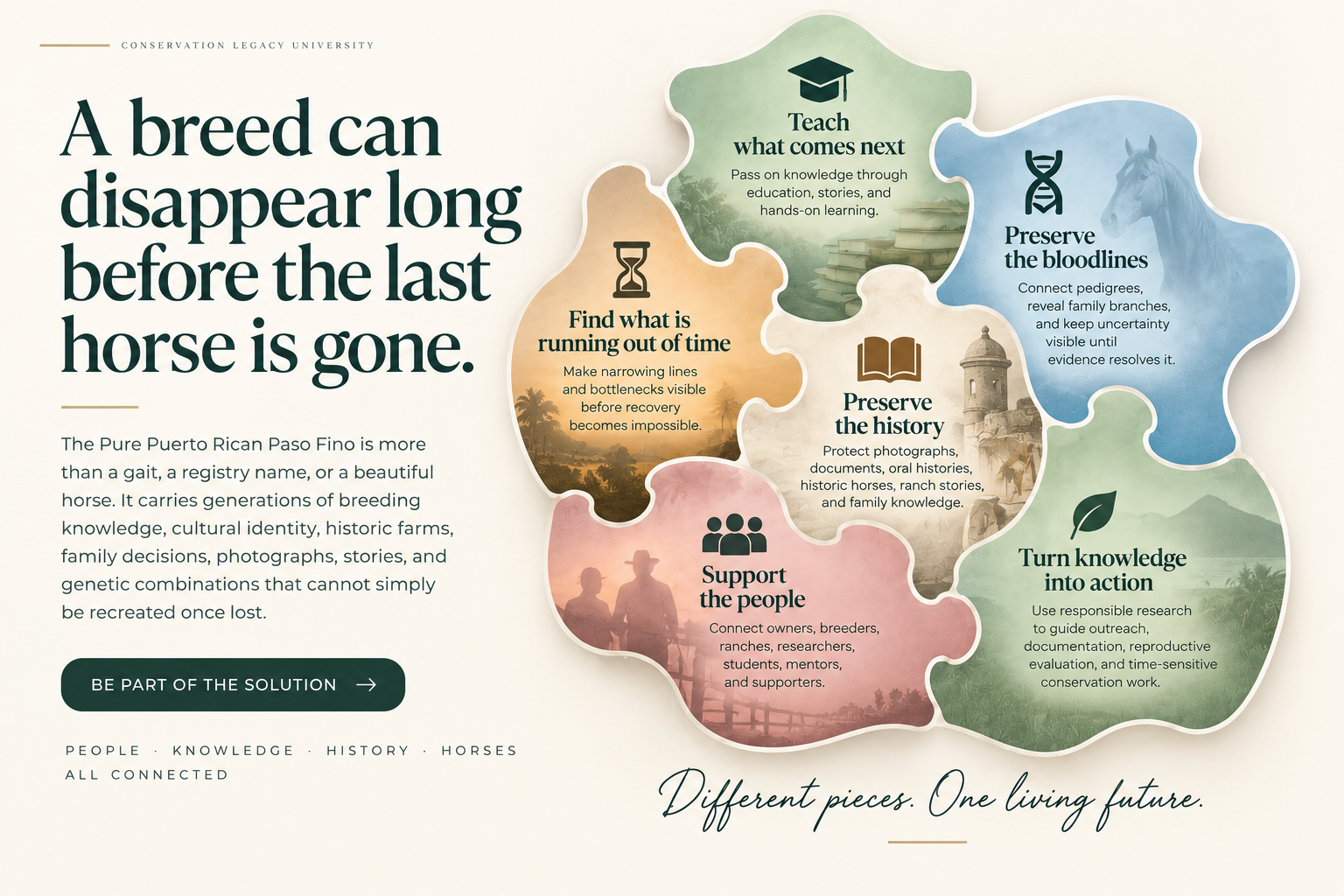
Why this is its own conservation world
A breed is more than horses that look or move alike.
The Pure Puerto Rican Paso Fino is presented here as its own documented conservation population. Its identity is carried through its horses, pedigrees, registries, studbook history, breeding decisions, and cultural development in Puerto Rico. Closely related populations can be respected without being counted as replacements for what this breed could lose.Our evidence standard: documented fact, cross-registry corroboration, unresolved evidence, and interpretation are kept visibly different. When the record does not support a conclusion, we say so.
Studbooks
A studbook defines a breeding population
A closed or defined studbook is more than paperwork. It records which horses belong to the population, how ancestry is carried forward, and where missing evidence must remain unresolved instead of being guessed.
Explore registry & studbook resourcesBreed identity
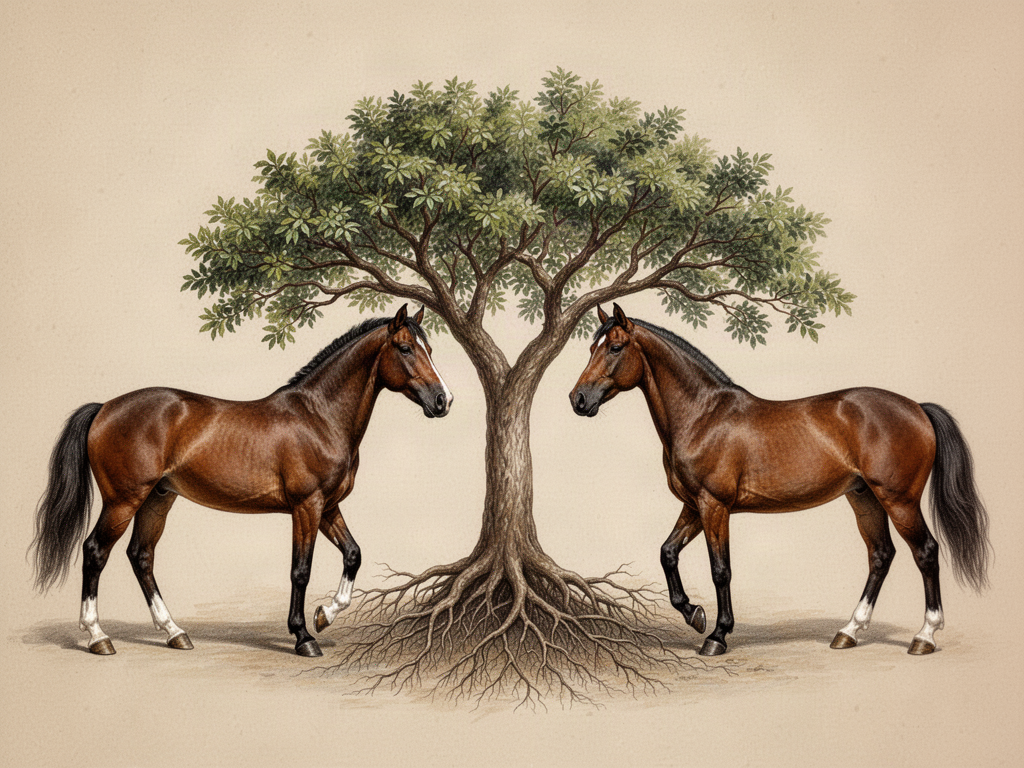
Related does not mean interchangeable
Two horse populations can share ancestry, gait, appearance, or history without being the same conservation population. Conservation protects the documented population itself—not a larger related population used as a substitute.
Learn how breed identity is definedConservation status
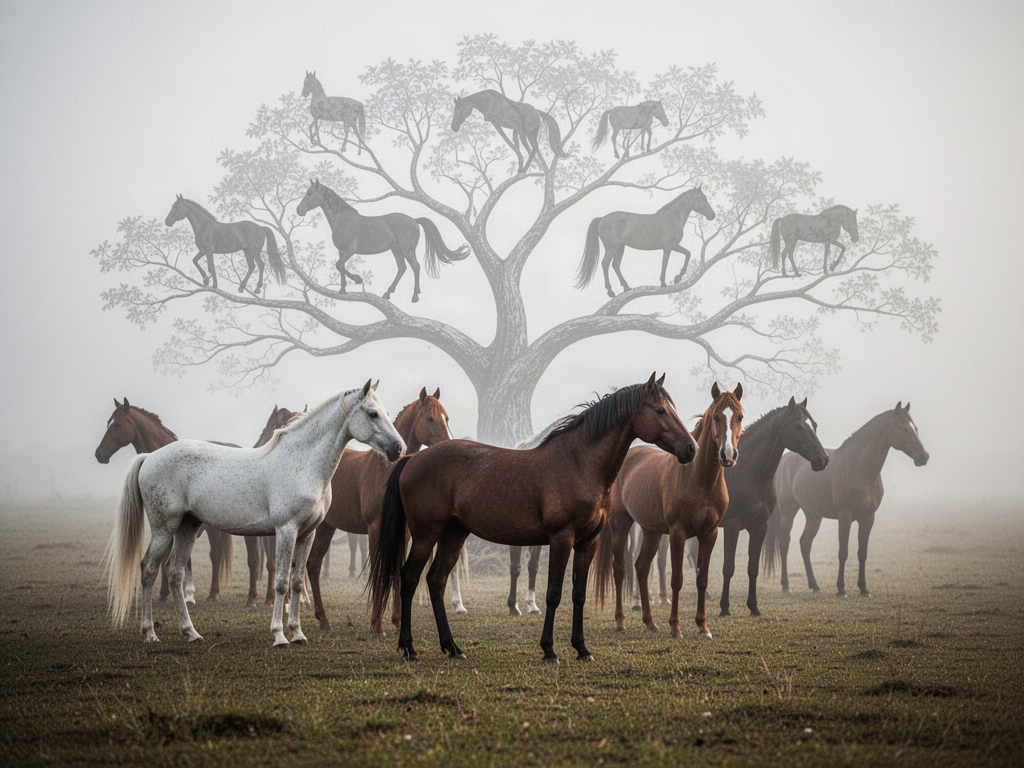
Why a breed can be threatened while horses still exist
Risk is not measured only by whether any horses remain. Population size, breeding-age representation, narrowing direct lines, lost branches, geographic concentration, and the number of realistic breeding choices all matter.
Understand the preservation riskOur response
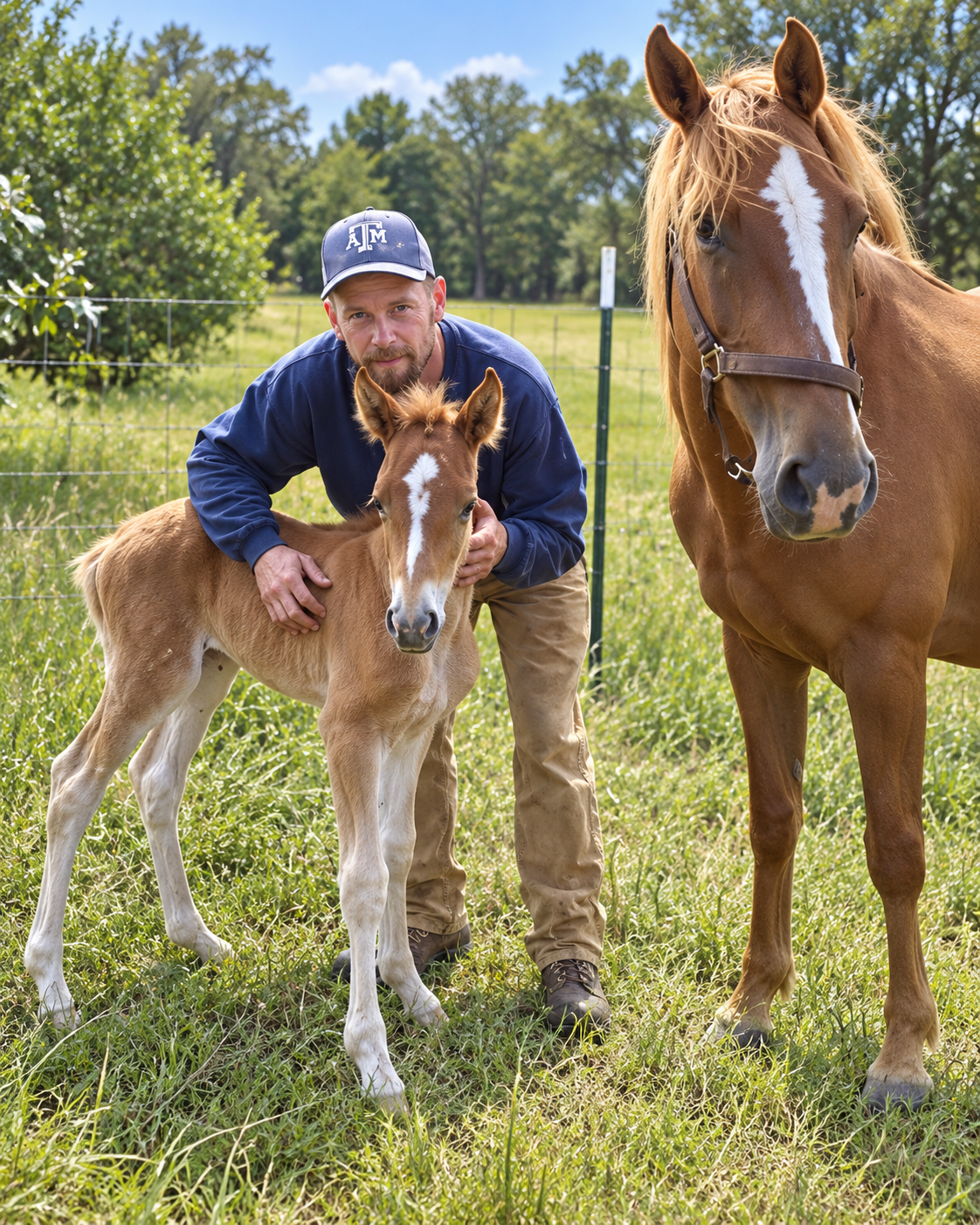
We are turning records into action
Conservation Legacy connects registry evidence, pedigrees, living horses, lost lines, reproductive options, ranch needs, education, and public support so preservation work can happen before another line disappears.
See how we are stepping upCare · life stages · daily stewardship
Understand what it takes to raise the horse.
Follow development, maternal care and managed rearing beside this breed’s identity.From a foal to a lifelong partner.
Follow the animal from its beginning through the changes in feeding, shelter, behavior and care. Select a stage to look closer.
11 monthsGestation · approximate species reference
Healthy adults can contribute to the next generation; care and documented ancestry connect the cycle.

Newborn foal
Confirm nursing and colostrum intake early. Colostrum provides protective antibodies; ordinary milk replacer does not perform that same job.
What to observe
Watch successful nursing, warmth, contact with the mother and the condition of each youngster.
Raised with the mare
The mare supplies milk and social contact. Observe successful nursing and the condition of both animals; simply standing beside the mare does not establish adequate intake.
Foster or orphan care
An orphan needs an early antibody assessment, a suitable equine milk plan and frequent monitored meals. Clean equipment and horse companionship matter. Milk calories alone do not replace maternal contact or colostrum.
Life-stage teaching sources
- Merck Veterinary Manual · approximate gestation periods ↗
- University of Minnesota Extension · feeding orphaned foals ↗
Conservation Legacy original teaching. Image captions identify the pictured animal; general species examples remain separate from selected-breed images.
See when life changes.
Body growth, reproductive development and managed weaning describe different changes. Explore the reference windows beside the care they help explain.
Gestation
11 monthsApproximate species reference for planning.
Evidence ↗After birth or hatch · reference windows
General growing horses. Bars share a time axis measured from birth or hatch; each label retains its source units.
Usual managed weaning4–6 months
species referenceSource for this window ↗
Female puberty10–24 months
species referenceSource for this window ↗
Birth / hatch · 0731 days
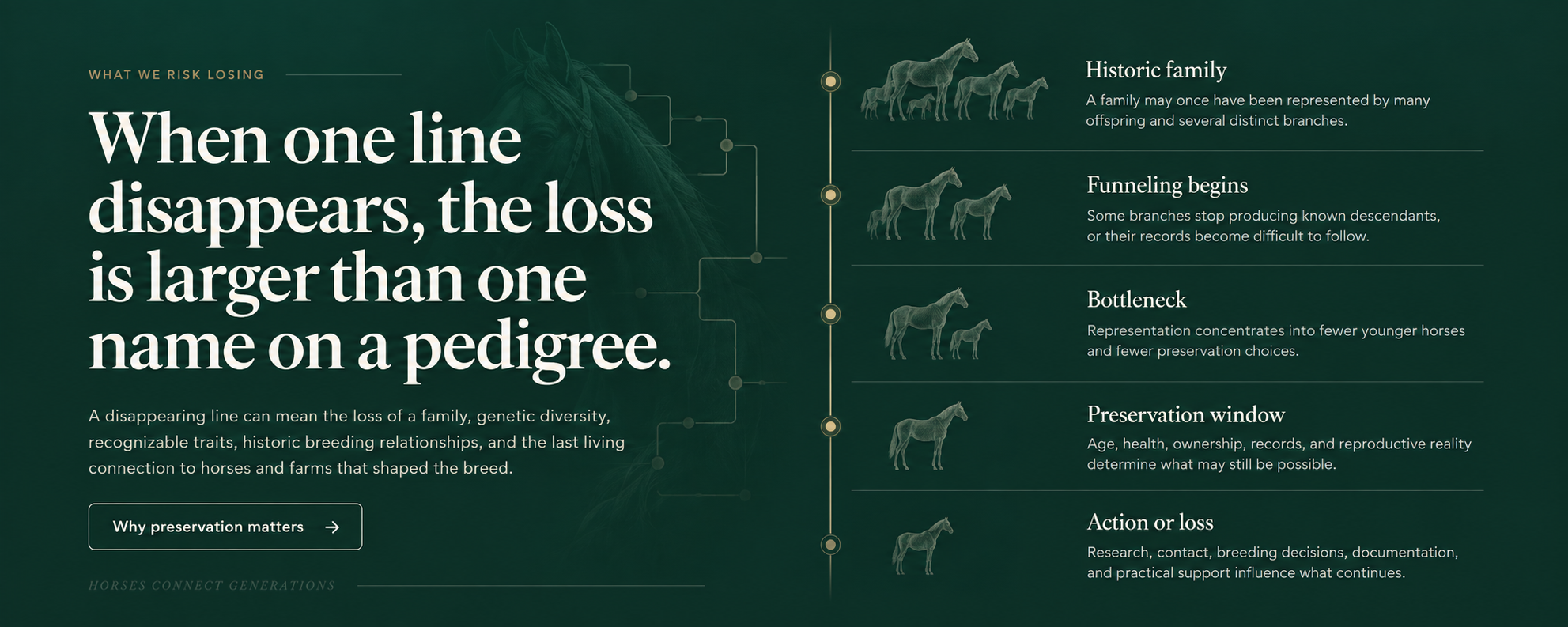
What we risk losing
When one line disappears, the loss is larger than one name on a pedigree.
A disappearing line can mean the loss of a family, genetic diversity, recognizable traits, historic breeding relationships, and the last living connection to horses and farms that shaped the breed.
- Historic familyA family may once have been represented by many offspring and several distinct branches.
- Funneling beginsSome branches stop producing known descendants, or their records become difficult to follow.
- BottleneckRepresentation concentrates into fewer younger horses and fewer preservation choices.
- Preservation windowAge, health, ownership, records, and reproductive reality determine what may still be possible.
- Action or lossResearch, contact, breeding decisions, documentation, and practical support influence what continues.
The community carries it forward
The future of the Puerto Rican Paso Fino will be built by the people who save its past.
History survives when someone chooses to share it. A photograph in a drawer, a breeder's memory, a registration paper, a ranch story, a correction to a pedigree—each piece can help future breeders, students, families, and researchers understand what came before and make better choices for what comes next.What you know today can become part of what this breed still has tomorrow.
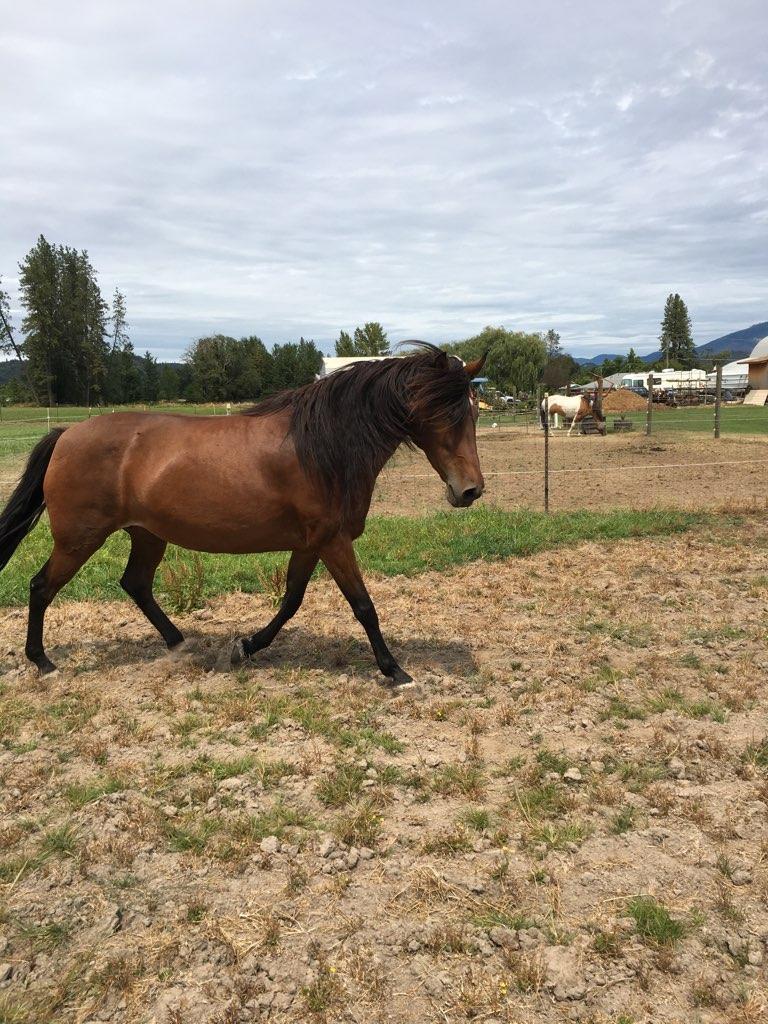 Horse knowledgeIdentify horses, families, breeders, ranches, and relationships.Help connect living memory to the permanent record without guessing where evidence is missing.
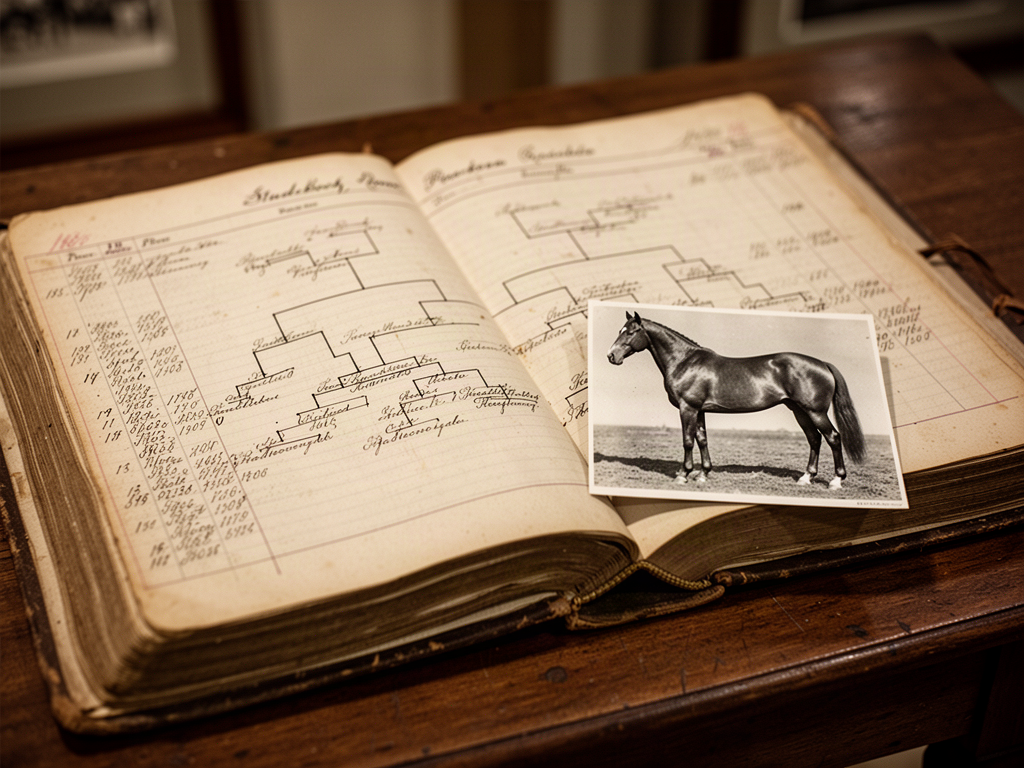 Stories & historyPreserve what official records could never contain.Memories, achievements, traditions, people, places, and the context behind a bloodline all matter.
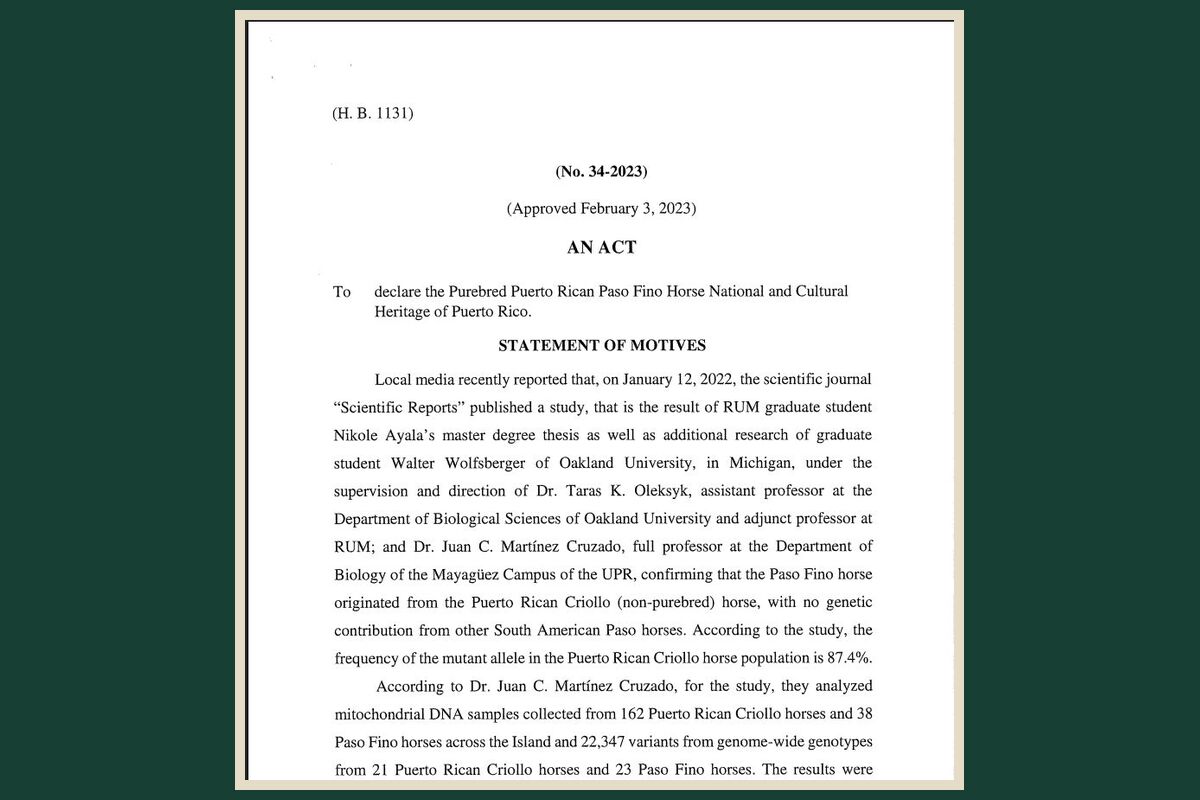 Documents & photographsKeep papers and images from disappearing in drawers, moves, storms, or time.Reviewed contributions can become part of horse, ranch, Library, or archive records with attribution and privacy controls.
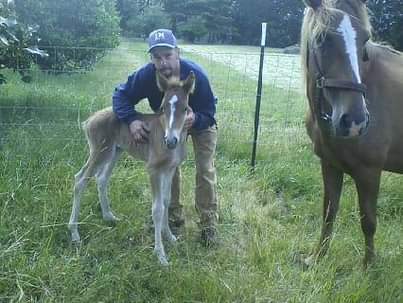 Community stewardshipCorrect, contribute, teach, and carry the knowledge forward.Conservation Legacy is strongest when the people closest to the breed help shape what future generations can still find.
Keep exploring
One world. Many ways to enter.
Legacy LibraryRecords, photographs, memories, and sourcesConservation Legacy LibraryLearn the breed, culture, care, and conservationNear You & world mapExplore the global network, then search ranches and events near youHeart Throbs preservation projectFollow the first live ranch preservation funding project