
A pasture pig still needs a ration: rooting, nutrition and weather
Pasture can enrich a pig’s life, but feeding and thermal protection need their own plan.
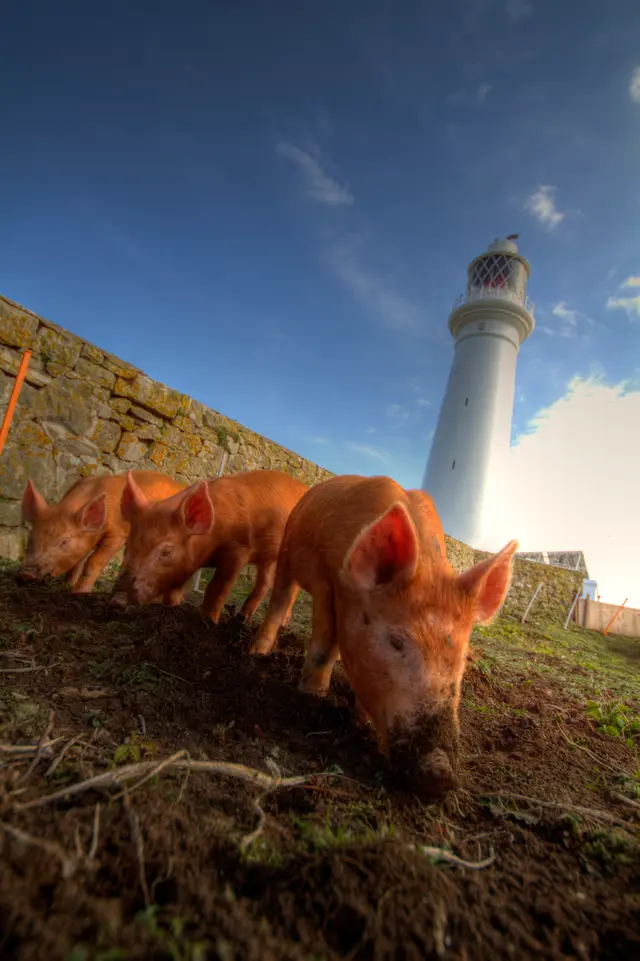
Rooting is an opportunity
A pig exploring soil and vegetation is doing more than finding calories. Oregon State University Extension describes pasture as an opportunity for movement and mental stimulation. These benefits help explain the appeal of heritage pigs on small farms. They do not establish that every pasture system meets every animal’s needs. Shelter, fencing, safe plants and dependable feeding remain part of the design. [1]
Foraging is not a balanced formula
Pasture composition and available food change over time, while pigs still need an appropriate balance of energy, amino acids, vitamins and minerals. Penn State explains that pigs are monogastric animals whose growth and wellbeing depend strongly on diet composition. Grain, roots and kitchen leftovers do not automatically become complete feed when offered together. Use a suitable formulated ration or professional formulation rather than assuming natural variety guarantees adequacy. [1, 2]
Feed the life stage
Growing pigs, gestating sows, nursing sows and breeding boars have different demands. Penn State describes phase feeding as changing the ration as pigs grow. Oregon State emphasises additional nutritional support for young pigs and the high requirements of lactating animals. The feed plan should identify the actual group, rather than treating a breed’s reputation for thriftiness as a ration specification. [1, 3]
Heat protection comes first
Pigs lose heat poorly through sweating. Shade, clean drinking water and suitable cooling opportunities are therefore fundamental during hot weather. Penn State highlights reduced feed intake, health effects and reproductive consequences of heat stress. Plan cooling before animals become distressed, and arrange veterinary help for severe signs. Piglets can also be vulnerable to cold, so one comfortable temperature cannot describe every life stage in a herd. [1, 3, 4]
Watch the land as well as the pig
Rooting changes the ground. Rotation and manure distribution need active management, as Penn State’s small-group guidance explains. A practical inspection should follow where soil is exposed, water collects and animals repeatedly gather. This is a site-management exercise, not proof that outdoor production is environmentally beneficial in every setting. The same breed can perform differently on different land, with different stocking and weather. [3]
Record what the system delivers
Conservation Legacy field exercise: connect animal weights and body-condition observations with ration records, pasture moves, shelter checks and veterinary findings. Describe the feed used rather than writing only pasture-raised. If growth slows, investigate diet, health and environment before deciding the breed is inherently unproductive. For preservation, the useful story includes both the animal’s inherited characteristics and the care system that allowed those characteristics to be expressed.
What the evidence can tell us
Extension guidance supports husbandry principles. Pasture access alone does not establish nutritional adequacy, welfare or an environmental outcome.
The field exercises are Conservation Legacy suggestions for recording observations. They are not clinical tests or breed-specific performance standards.
Sources behind this article
This is original Conservation Legacy teaching informed by the sources below. Follow the official material for the full account and its context.