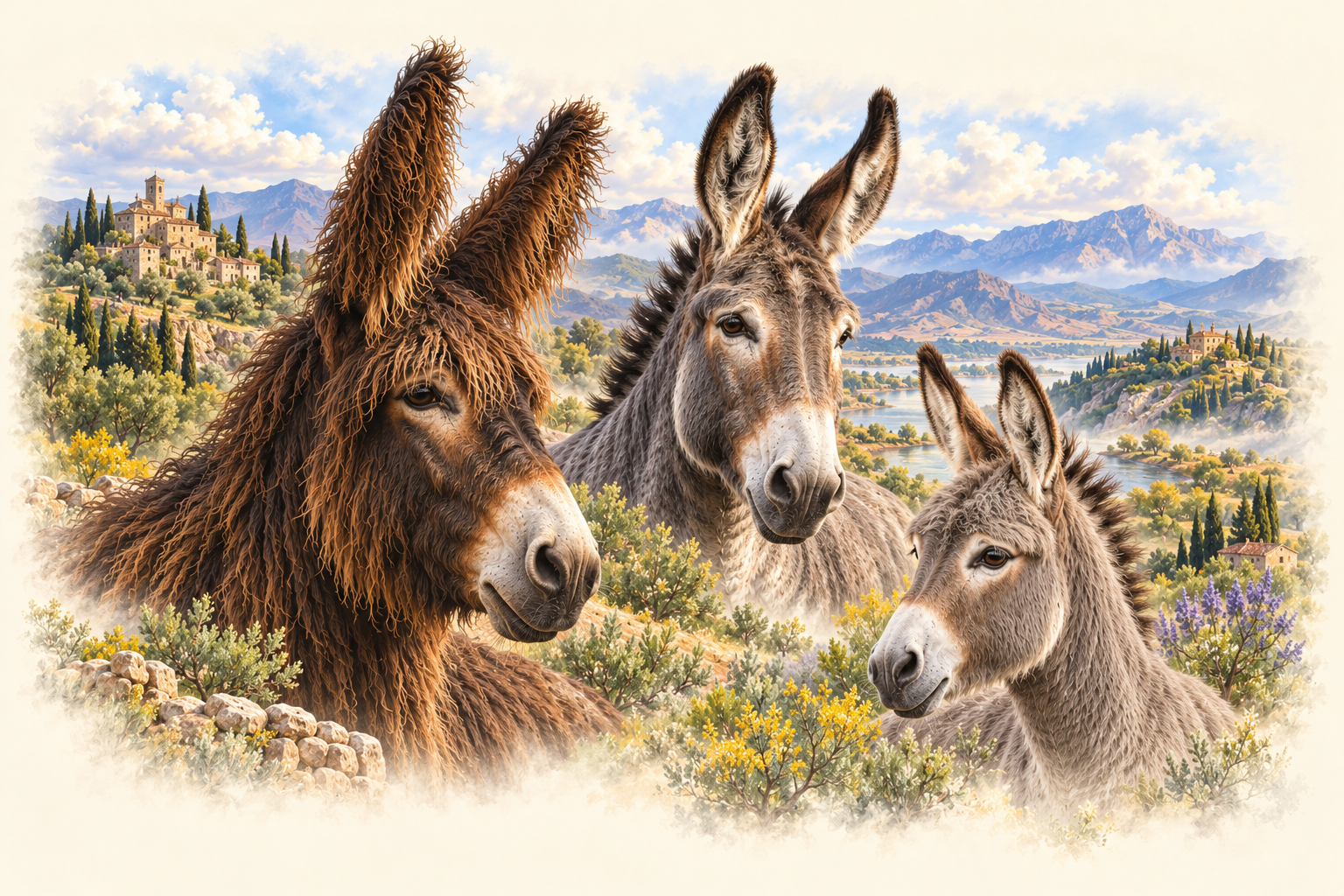
Donkeys deserve a history and care framework of their own. Their roles in transport, farming and mule production connect them to families and landscapes far beyond a show ring. Preserving a donkey breed means following its documented breeding population while respecting the animal as an individual. Size, coat and traditional use help introduce a breed; registration and ancestry establish which conservation population is being carried forward.
Miniature Mediterranean donkeys at the Smithsonian National Zoo, photographed in 2005. · Quadell · CC BY-SA 3.0
Watchbreed
Miniature Donkey
The small stature that attracts modern owners does not erase the donkey's origins as a durable worker. The breed's maximum height is 36 inches at the withers. Gray dun is common, but several other colors occur. Pausing when uncertain is part of a donkey's cautious response and should not automatically be labeled stubbornness.
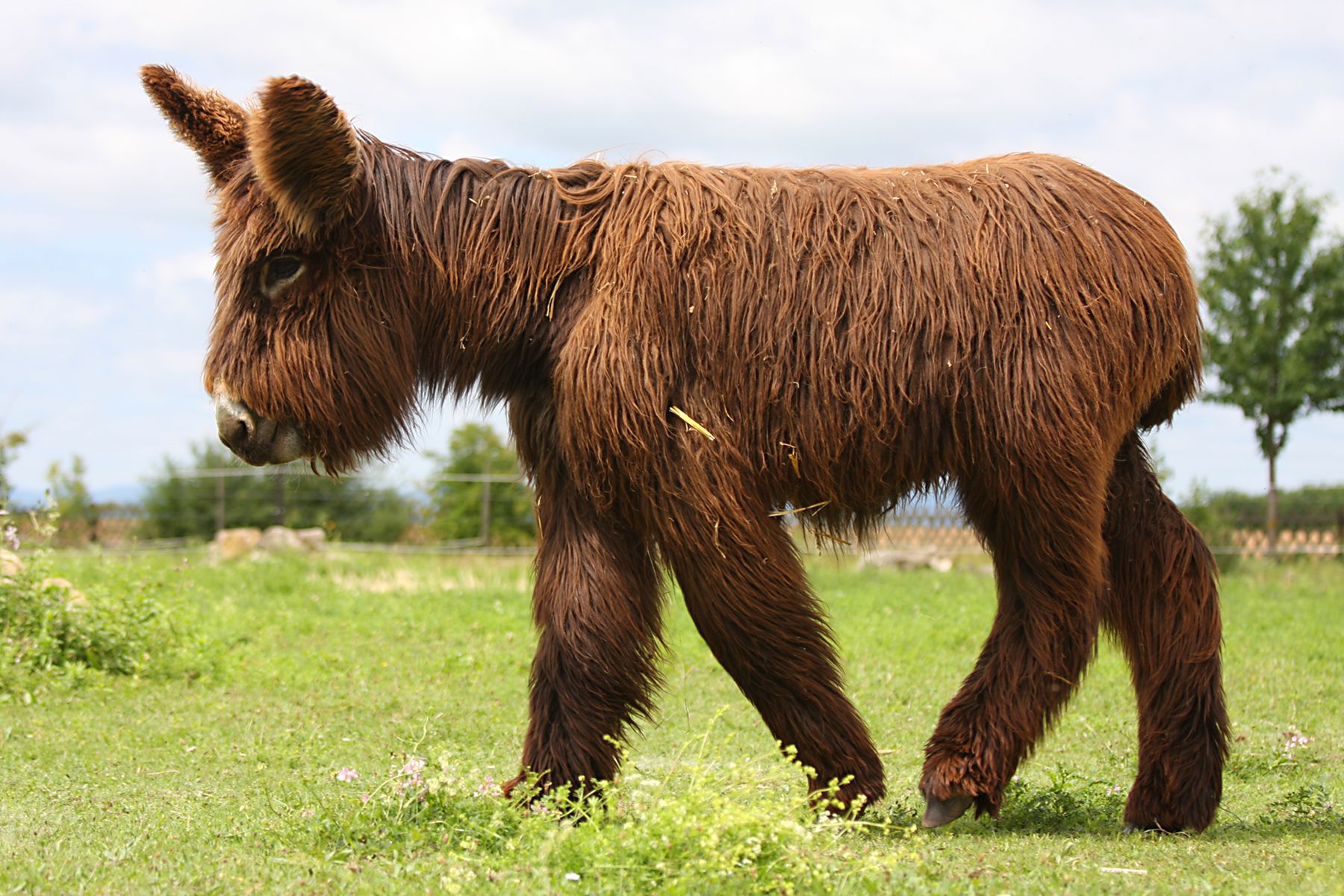
Heavy bone, a large head, extraordinarily long ears, and a dark coat distinguish the breed. Its famous long hair can form hanging cords, although coat length varies. The Conservancy describes mature animals at approximately 14–15 hands; their appearance should be understood together with their historical work.
Enter the breed world →American Mammoth Jackstock donkey Romulus with Cara Barker Yellott in 2013; an exceptionally tall individual, not a typical breed-size example. · PYellott · CC BY-SA 3.0
Criticalbreed
American Mammoth Jackstock
The Mammoth is a large donkey with substantial limbs, a long head, and especially long ears. Its historic importance lies partly in the mules produced by mating jacks to horse mares. A mule is a hybrid offspring, not a smaller version of the donkey breed.
Critical, Threatened, Watch and Recovering are this organization’s domestic-breed categories. Their definitions vary between livestock, rabbits and poultry. A category threshold is not a census of this breed, and a registry’s annual registrations are not a count of every living animal.
Compare future population figures by assessment year, geography and the animals counted. Keep a wild relative’s IUCN assessment separate from a domestic breed’s status.
Scientific field notes
Where these animals belong.
This introduction follows Animal Diversity Web’s Equus asinus treatment. Its account discusses both domestic and wild populations; wild-ass conservation assessments must not be copied onto domestic donkey breeds.
Ranks follow the linked reference’s treatment. Domestic names and wild relatives may be handled differently by other authorities.
Kingdom
Animalia
Phylum
Chordata
Class
Mammalia
Order
Perissodactyla
Family
Equidae
Genus
Equus
Species / domestic context
Equus asinus (domestic donkey)
Explore beyond appearance
Four questions for a living legacy.
01
Donkey-specific husbandry
What does the source actually establish, and which claims still need evidence?
02
Jackstock, miniature and Poitou histories
How did people, place and practical use shape the population we see today?
03
Registration and breeding continuity
Which living breeding families can carry the population into another generation?
04
Working traditions and lifelong partnerships
What would responsible stewardship require in time, facilities and ongoing support?
Knowledge belongs with its animal world.
Explore general donkeys knowledge in the species library. Each population has its own collection for breed-specific history, identity and conservation reports.