
Donkeys
History & heritage
One living story. Knowledge kept together.
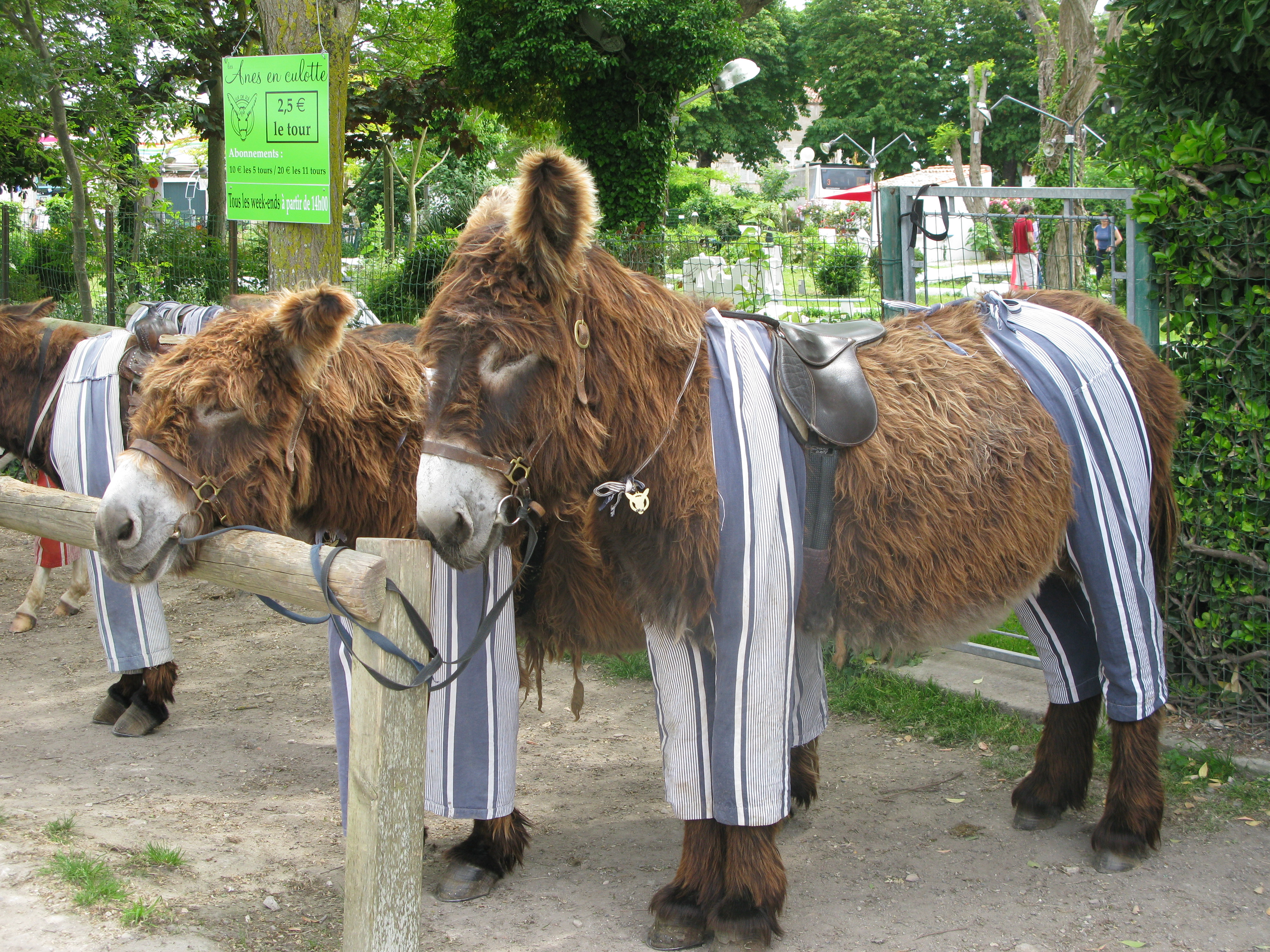
Poitou donkeys in Saint-Martin-de-Ré, photographed in 2013. · Jiel Beaumadier · CC BY-SA 4.0 · License terms
Follow the story behind the name.
Domestic donkeys have African wild-ass ancestry and belong to Equus, alongside horses and zebras. Animal Diversity Web discusses wild asses and domestic donkeys together; the distinction matters. A description of a desert-dwelling wild relative should never be treated as a complete management guide for a donkey living in a wet pasture or a managed farm.
Donkeys have carried goods and supported livelihoods wherever affordable animal power remained important. Their breeds reflect different tasks and selection histories. American Mammoth Jackstock and Poitou histories include mule production, while miniature donkeys occupy a different place in modern ownership. Those purposes belong in separate breed chapters, with the species overview providing the broader relationship between people and working equids.
Domestic animal history is made of many local stories. A species tells us about broad biological relationships; a breed or strain connects those relationships with a landscape, a community and generations of selection. The histories in this world follow those individual populations so regional differences can remain visible.
Some populations were deliberately developed from named foundation stock. Others took shape through long use in a region before a formal standard or studbook existed. The date of a breed society’s founding therefore need not be the date the animals first existed. Historical accounts need to identify which event a date describes.
Begin with a breed’s own story
An African origin and a history of movement
A 2022 genomic study supports a single domestication of donkeys in Africa around 5000 BCE, followed by expansion within Africa and into Eurasia. Later movements also carried ancestry back into Africa. Modern geographic groups therefore reflect a history of migration and differentiation, rather than a simple map in which every region produced its own independently domesticated donkey.
Ancient genomes also revealed that historical management could be highly deliberate. The study found evidence of inbreeding and the production of large donkey bloodlines during the Roman period, when mule production supported transport, economic activity and military work. These findings describe the sampled ancient populations; they do not show that a modern large donkey breed descends directly from a particular Roman animal. The relationship between people and donkeys includes both biological selection and changing demands for labor. Large ears or a familiar coat pattern cannot, by themselves, reconstruct that history.
Sources for general species learning
Keep learning from official information.
These research portals help locate further material. A search link is a route for exploration; it is separate from the sources used for the article above. Domestic breed information, wild-species assessment, historical books and new research need their own context.
- FAO DAD-IS · Domestic breed information
- IUCN Red List · Species assessments
- Biodiversity Heritage Library · Historical literature search
- USDA National Agricultural Library · Research search
- Google Scholar · Scholarly literature search
- Open Library · Book catalogue search
- HathiTrust · Digitized catalogue search