Grazing traditions and the future of small flocks.
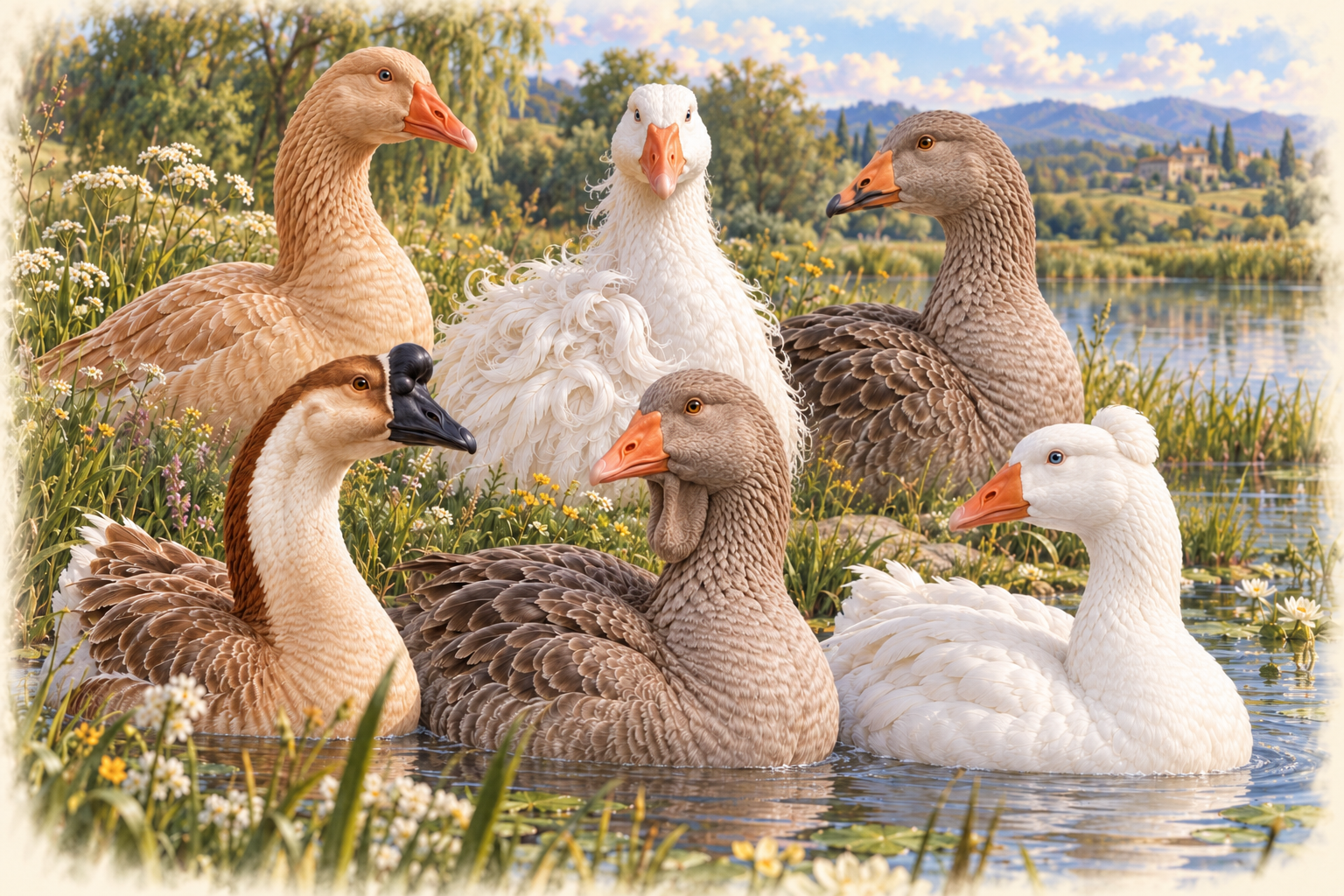
A goose breed can carry a farming history in its name, form and traditional purpose. Conservation connects that history to living breeding birds and the people able to sustain them. Color varieties, breed standards and ancestry should be described precisely: not every goose with a similar appearance belongs to the same population. The breed list offers a starting point for exploring regional traditions and the practical work of keeping them alive.
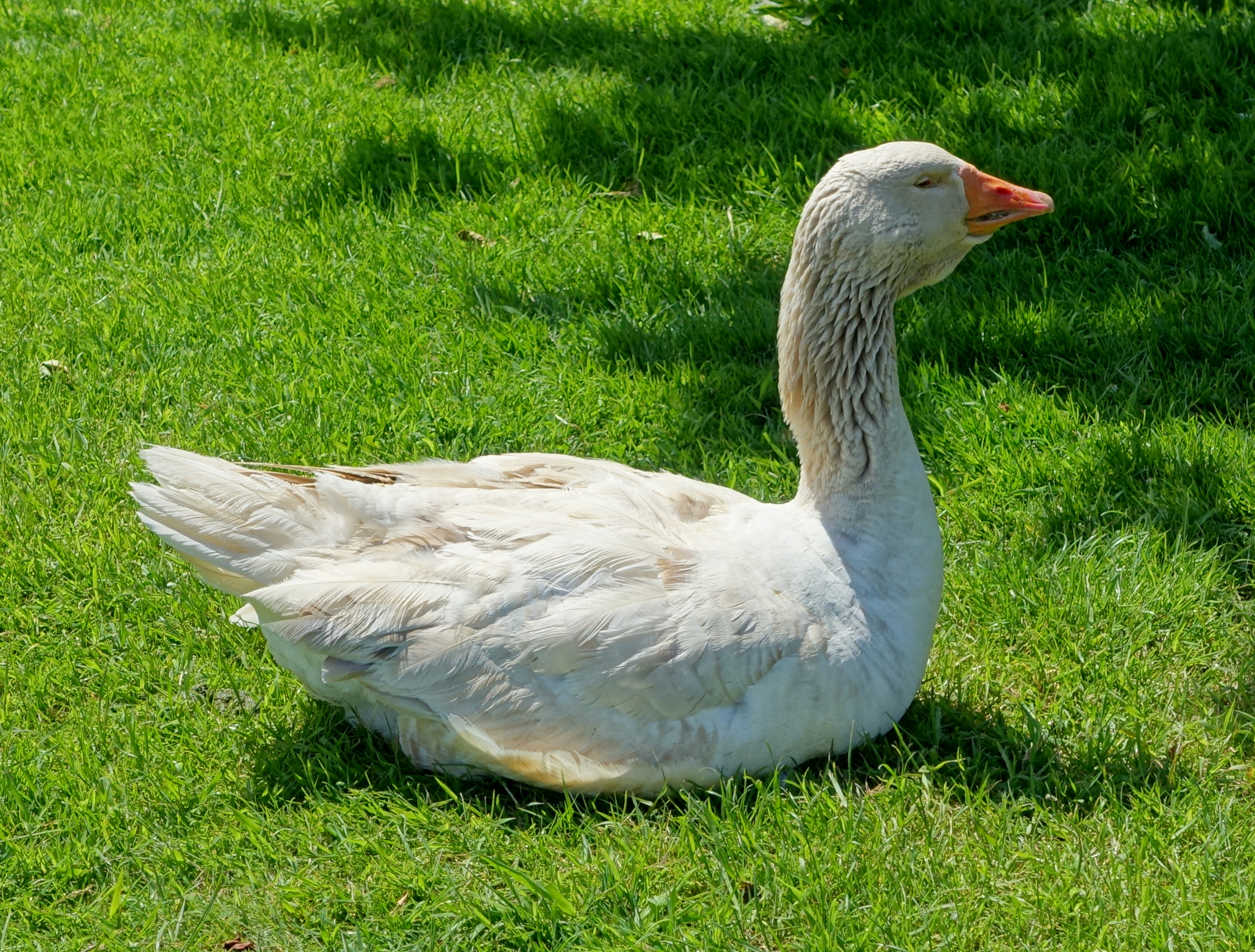
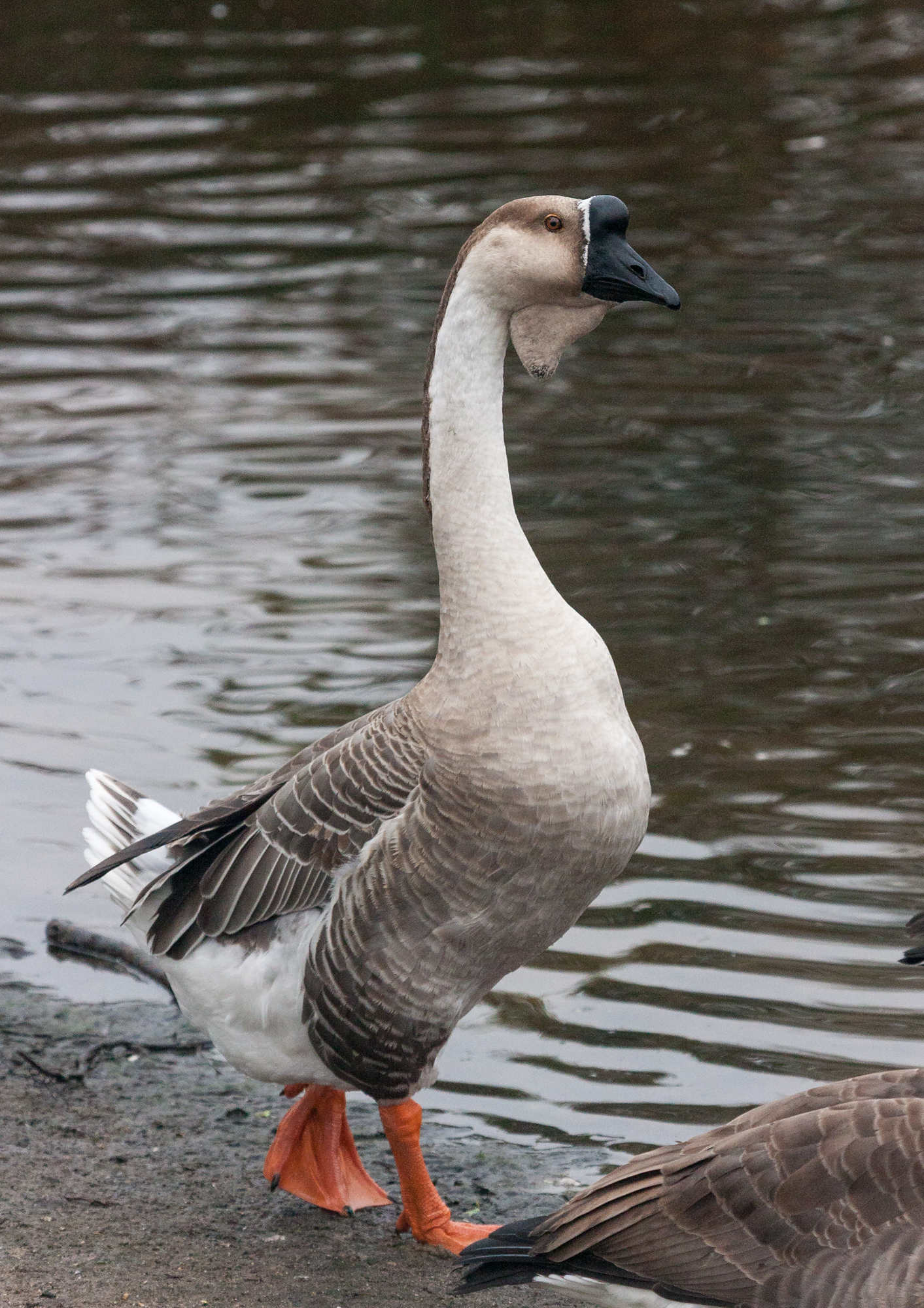
Cotton Patch goose at Lake Balboa, California, photographed in 2011. · Kororaa · CC BY-SA 3.0
Threatenedbreed
Cotton Patch
This is a practical regional farm goose whose history links grazing behavior with agricultural labor. Sex-linked color differences help distinguish males and females. Similarity to certain European auto-sexing geese does not establish that recently imported European breeds founded the American population.
Both young and adult Pilgrims can be sexed by their color. This inherited difference makes the breed useful for teaching how appearance and sex can be linked. The goose also carries a practical meat-producing farm identity rather than serving solely as an ornamental bird.
A very substantial body and a pronounced dewlap distinguish this type. The Conservancy's profile describes it as more challenging to raise than some other farm geese. Mature weights, younger market weights, and measurements from different Toulouse types should not be mixed into one unexplained figure.
The breed demonstrates that domestic goose histories can involve more than one ancestral species lineage. Its German name records a former fighting tradition, which is historical context rather than a modern husbandry recommendation. Body form and recognized breed characteristics are more informative than that name alone.
Soft buff coloring gives the goose its warm visual identity. American Buff bills and legs are orange to orange-red, contrasting with the reddish-pink coloration described for Brecon Buffs. Useful farm size and a generally calm reputation accompany the ornamental appeal.
Saddleback birds have colored areas on the head, back, and flanks against white plumage. German populations include additional colors, so an American standard does not describe every Pomeranian kept internationally. The characteristic paunch and practical body type deserve attention alongside markings.
The tufted form has a small crest, while non-tufted Roman geese also belong to the wider historical tradition. A crest is an identifying domestic trait rather than a separate scientific species. Practical farm use accompanies the breed's ornamental and cultural appeal.
A long neck and elegant outline distinguish Chinese geese from heavier farm breeds. Their farm roles include alert calling and grazing as well as food production. 'Swan Goose' refers to ancestry here; the domestic animal should not be confused with a true swan.
Long, soft, curling feathers drape from the wings, body, and tail. These curls are an inherited domestic trait, not evidence that the goose belongs to a different wild species. Its appearance is a useful illustration of how human selection can profoundly change plumage.
The African is a substantial goose whose heavier outline contrasts with the more slender Chinese. Its knob and other head features should be interpreted alongside body type. This contrast between related domestic breeds makes selective breeding easier to understand.
The Shetland carries an island farm identity rather than an origin as a standardized American exhibition bird. Practical grazing and survival within local husbandry are part of its history. Earlier claims about pasture parasite control should be understood as historical farming practice, not a substitute for modern veterinary parasite management.
Critical, Threatened, Watch and Recovering are this organization’s domestic-breed categories. Their definitions vary between livestock, rabbits and poultry. A category threshold is not a census of this breed, and a registry’s annual registrations are not a count of every living animal.
Compare future population figures by assessment year, geography and the animals counted. Keep a wild relative’s IUCN assessment separate from a domestic breed’s status.
Scientific field notes
Where these animals belong.
Domestic goose ancestry includes Anser anser and Anser cygnoides. This is a multi-taxon domestic group; ancestry should be checked at breed level rather than assigning one species name to every goose.
Ranks follow the linked reference’s treatment. Domestic names and wild relatives may be handled differently by other authorities.
Kingdom
Animalia
Phylum
Chordata
Class
Aves
Order
Anseriformes
Family
Anatidae
Genus
Anser
Species / domestic context
Anser anser and Anser cygnoides lineages
Explore beyond appearance
Four questions for a living legacy.
01
Ancestral species and breed identity
What does the source actually establish, and which claims still need evidence?
02
Grazing and farm traditions
How did people, place and practical use shape the population we see today?
03
Breeding pairs and independent flock families
Which living breeding families can carry the population into another generation?
04
Seasonal behavior and suitable husbandry
What would responsible stewardship require in time, facilities and ongoing support?
Knowledge belongs with its animal world.
Explore general geese knowledge in the species library. Each population has its own collection for breed-specific history, identity and conservation reports.