
Geese
History & heritage
One living story. Knowledge kept together.
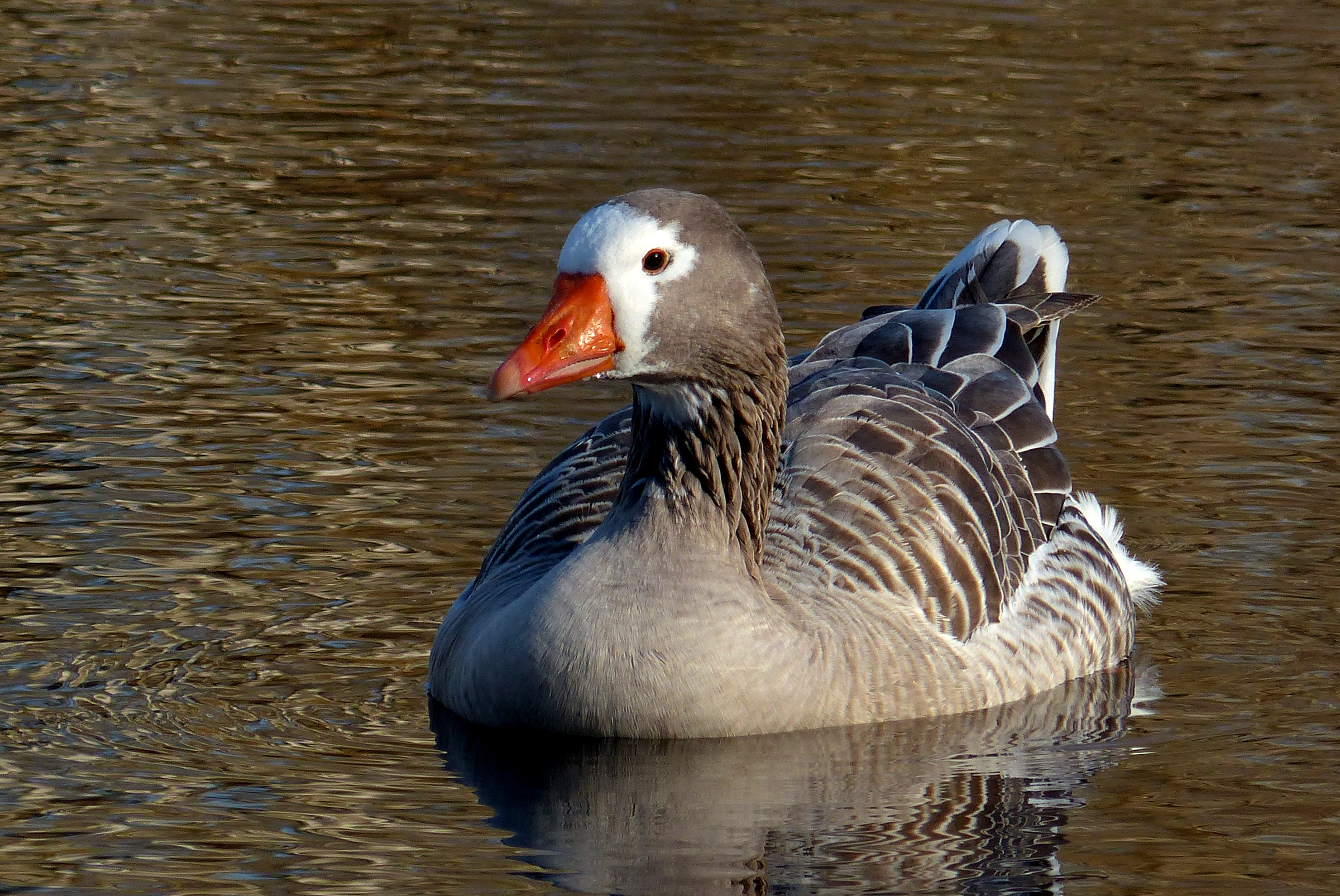
Pilgrim goose photographed by Bernard Spragg. · Bernard Spragg. NZ · CC0 · License terms
Follow the story behind the name.
Domestic geese have two major ancestral lines: greylag goose, Anser anser, and swan goose, Anser cygnoides. FAO's account explains both, including breeding that combines them. This means the species-world label is an educational grouping rather than a claim that every goose breed has exactly one identical species ancestry.
People have used geese for meat, feathers and down, as well as farm functions that vary by population. Different breeding histories produced differences in body form, plumage and purpose. Breed pages should identify the relevant lineage and local development. A Chinese or African goose should not simply receive a greylag-only history because other goose pages use it.
Domestic animal history is made of many local stories. A species tells us about broad biological relationships; a breed or strain connects those relationships with a landscape, a community and generations of selection. The histories in this world follow those individual populations so regional differences can remain visible.
Some populations were deliberately developed from named foundation stock. Others took shape through long use in a region before a formal standard or studbook existed. The date of a breed society’s founding therefore need not be the date the animals first existed. Historical accounts need to identify which event a date describes.
Begin with a breed’s own story
Two wild ancestral species, complex domestic populations
Domestic geese draw on two major wild ancestral lines: the greylag goose, Anser anser, and the swan goose, Anser cygnoides. A 2023 genome study supported the familiar distinction between greylag-derived European breeds and predominantly swan-goose-derived Chinese breeds, while identifying Yili geese with the greylag-derived group.
Geography alone is therefore insufficient for assigning ancestry. A goose called Chinese by location is not automatically derived only from the swan goose, just as a European breed is not necessarily isolated from every other domestic population. The study found gene flow both between domestic groups and between domestic geese and their wild ancestors. These relationships belong to populations sampled for the research. They should not be turned into an untested ancestry percentage for every animal of a named heritage breed. Ancestry, outward form and a breeder’s documented pedigree provide different kinds of information.
Sources for general species learning
Keep learning from official information.
These research portals help locate further material. A search link is a route for exploration; it is separate from the sources used for the article above. Domestic breed information, wild-species assessment, historical books and new research need their own context.
- FAO DAD-IS · Domestic breed information
- IUCN Red List · Species assessments
- Biodiversity Heritage Library · Historical literature search
- USDA National Agricultural Library · Research search
- Google Scholar · Scholarly literature search
- Open Library · Book catalogue search
- HathiTrust · Digitized catalogue search