
African
History & heritage
One living story. Knowledge kept together.
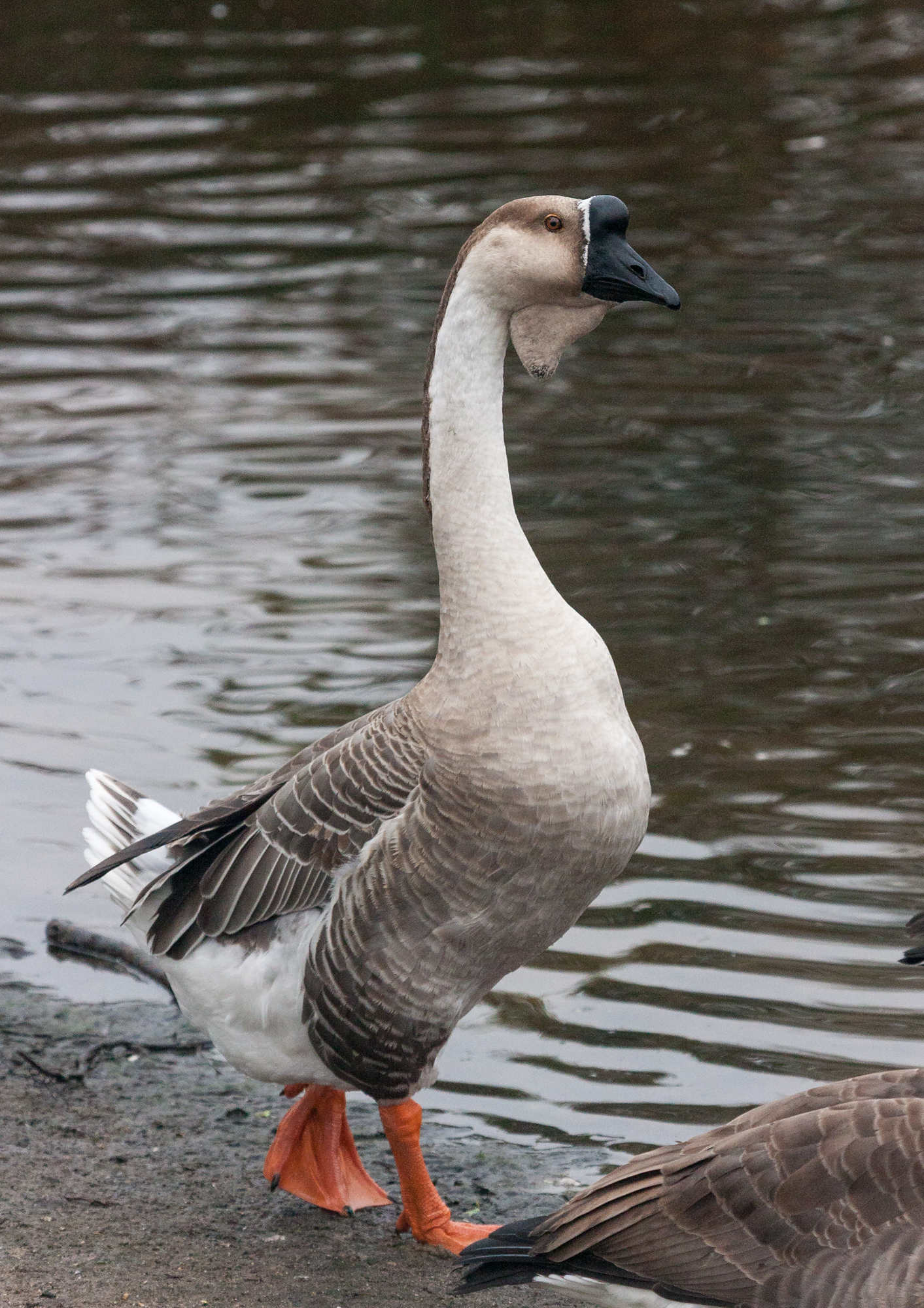
Brown African goose photographed near Elkhorn Slough, California, in 2011. · Elf · CC BY-SA 3.0 · License terms
Follow the story behind the name.
Despite its name, the African goose is associated with Asian Swan Goose ancestry and is closely related to the Chinese domestic goose. Its precise founding history is uncertain. Africans reached Europe in the late eighteenth century and North America in the nineteenth. American recognition of the Brown variety dates to 1874, with White recognized in 1987.
The African is a substantial goose whose heavier outline contrasts with the more slender Chinese. Its knob and other head features should be interpreted alongside body type. This contrast between related domestic breeds makes selective breeding easier to understand.
Understanding the heritage in context
The African name should be separated from biological ancestry at the start of the article. Relatedness to Swan Goose-derived domestic stocks does not make an African goose a wild Swan Goose, nor does the name prove an African origin. This distinction supports accurate scientific and geographical learning.
Sources for general species learning
Sources behind the breed’s story.
The original history, identity and conservation teaching above draws on these cited accounts. Official links open the full material for further study.
Keep learning from official information.
These research portals help locate further material. A search link is a route for exploration; it is separate from the sources used for the article above. Domestic breed information, wild-species assessment, historical books and new research need their own context.
- FAO DAD-IS · Domestic breed information
- IUCN Red List · Species assessments
- Biodiversity Heritage Library · Historical literature search
- USDA National Agricultural Library · Research search
- Google Scholar · Scholarly literature search
- Open Library · Book catalogue search
- HathiTrust · Digitized catalogue search