
African
Care foundations
One living story. Knowledge kept together.
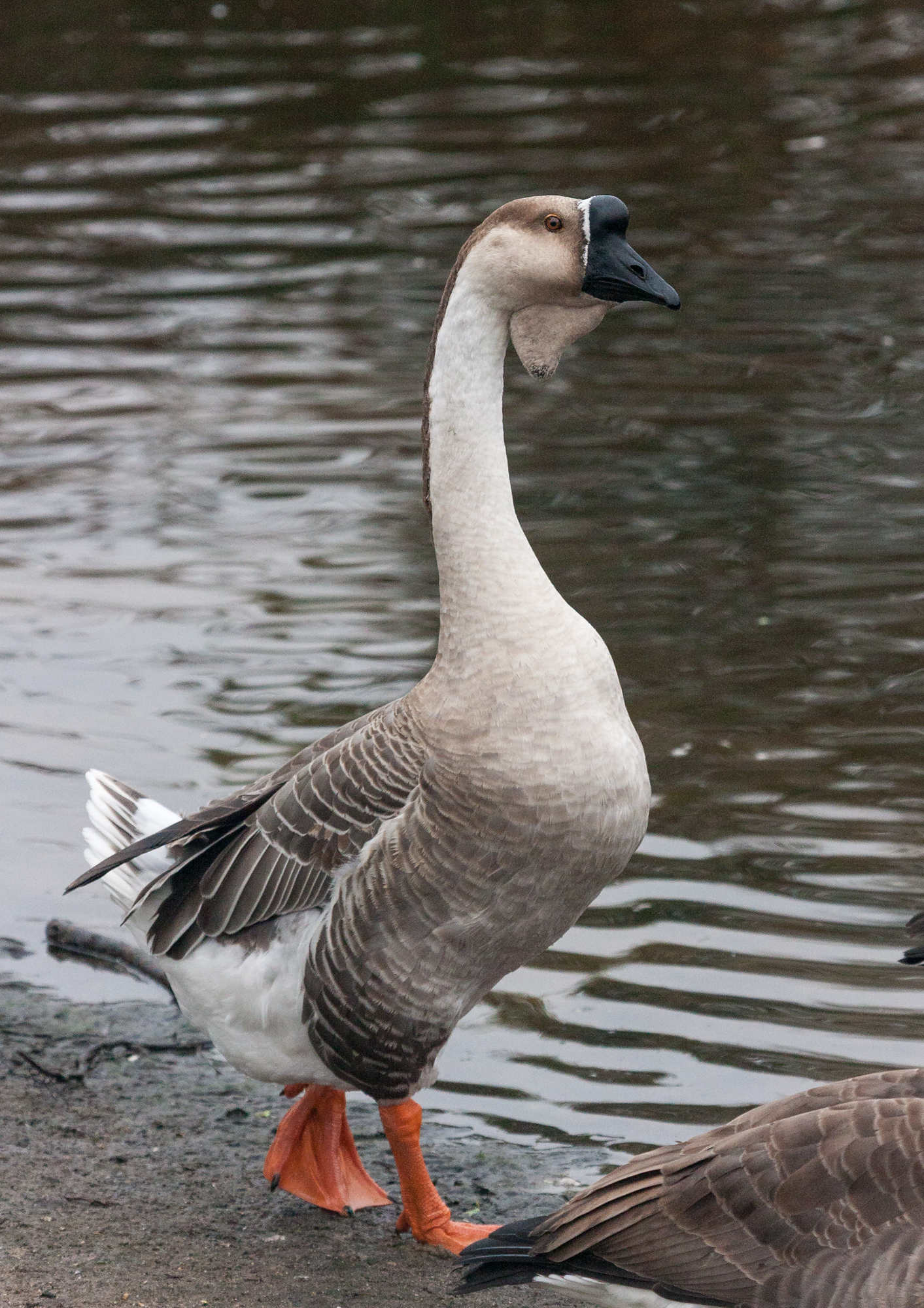
Brown African goose photographed near Elkhorn Slough, California, in 2011. · Elf · CC BY-SA 3.0 · License terms
Understanding geese: care foundations
Geese can consume substantial amounts of pasture vegetation. Their digestive system has adaptations for high-fiber feed, but pasture contribution depends on plant quality, season, bird size and breed. Grazing should therefore be explained as one component of nutrition, with needs assessed throughout growth and reproduction. Goslings require different management from mature birds. As domestic poultry, geese also need reliable drinking water, suitable shelter and protection from disease introduction. Domestic heritage geese should be distinguished from wild protected waterfowl in both identity and care explanations.
These are general species foundations. The breed's own history and traits help explain how it developed, while an individual animal's age, environment and purpose shape its daily needs. Preservation includes keeping animals healthy enough to express normal behavior and maintain future generations. Compare dependable husbandry guidance with breed registry descriptions, and distinguish inherited traits from assumptions about toughness. Teaching the reasons behind care decisions gives readers a stronger foundation than applying one feeding formula to every animal.
Cooperative Extension Poultry · Cooperative Extension Poultry · Cooperative Extension Poultry · USDA APHIS
Bring this population’s identity into the picture.
The African is a substantial goose whose heavier outline contrasts with the more slender Chinese. Its knob and other head features should be interpreted alongside body type. This contrast between related domestic breeds makes selective breeding easier to understand.
The breed description explains historical traits and recorded roles. Daily care also depends on an individual’s condition, age, environment and activity. A statement about historical adaptation does not establish immunity to disease or eliminate the need for suitable nutrition and shelter.
Read the species care foundation guide →Sources for general species learning
Sources behind the breed’s story.
The original history, identity and conservation teaching above draws on these cited accounts. Official links open the full material for further study.
Keep learning from official information.
These research portals help locate further material. A search link is a route for exploration; it is separate from the sources used for the article above. Domestic breed information, wild-species assessment, historical books and new research need their own context.
- FAO DAD-IS · Domestic breed information
- IUCN Red List · Species assessments
- Biodiversity Heritage Library · Historical literature search
- USDA National Agricultural Library · Research search
- Google Scholar · Scholarly literature search
- Open Library · Book catalogue search
- HathiTrust · Digitized catalogue search