
Heritage breeding and the limits of a label
Knowledge for understanding and preserving Turkeys.
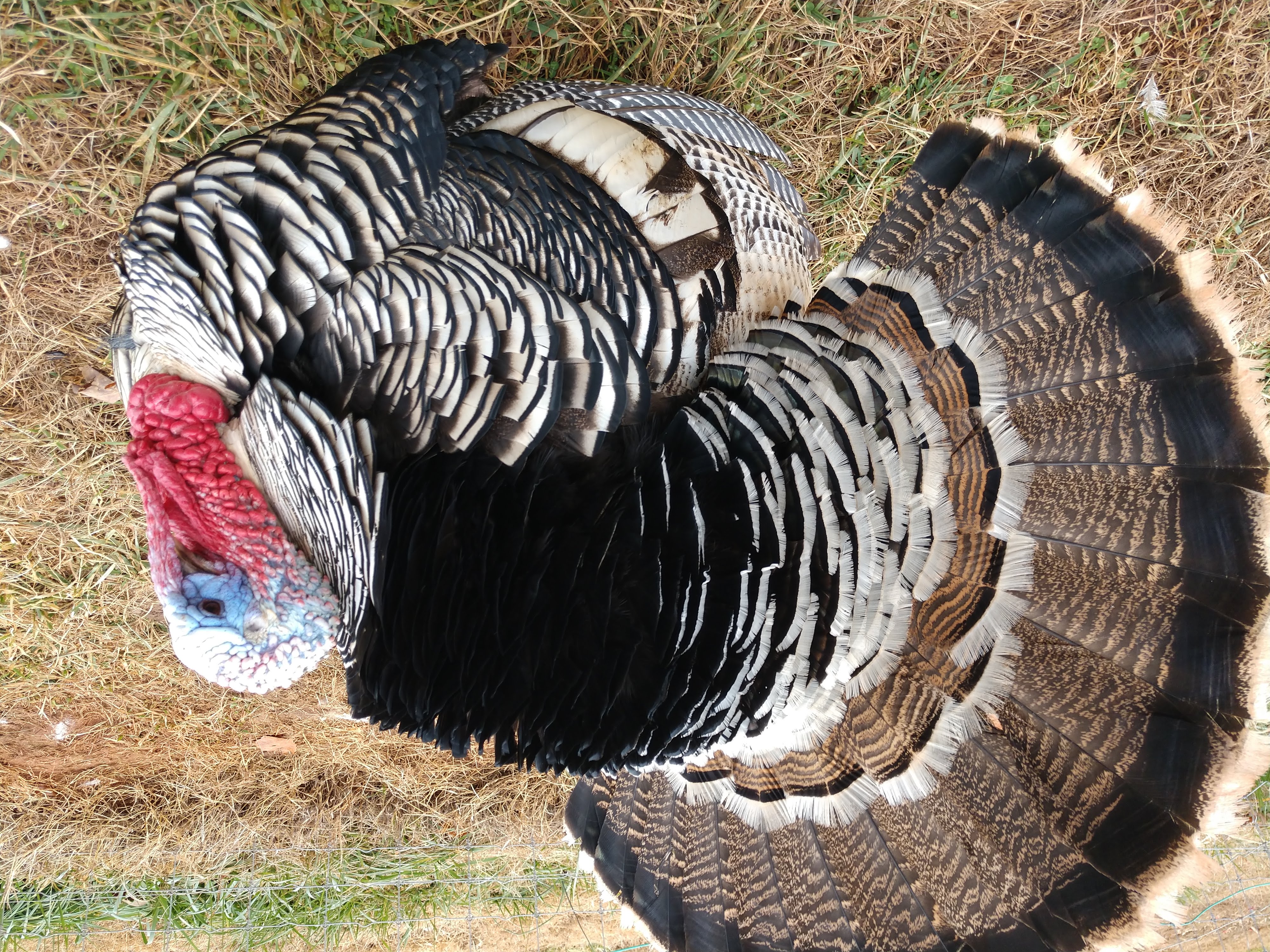
University of Kentucky's poultry-breeding guidance distinguishes heritage turkey varieties from commercial lines when discussing natural mating. It also notes that not every variety will reliably become broody. Preserving breeding capacity and obtaining a hatch are related but separate questions.
A fertile egg needs appropriate handling and incubation to develop. A hen's interest in nesting does not establish fertility, and an incubator cannot make an infertile egg fertile. Parent birds, eggs and equipment each contribute to the outcome.
Breeding records should identify the parents or breeding group and the dates involved. A feather-colour name describes a variety but does not independently prove the parentage of a particular poult in a mixed group.
Responsible breeding also includes the future care of the offspring. A successful hatch adds animals needing suitable nutrition, space and competent handling. Increasing numbers without preparing for those requirements does not serve conservation.
The practical lesson is to assess function and documentation together. A heritage identity gives historical context, while observations and records show what the living birds are doing. Individual fertility concerns, persistent hatch failures and breeding injuries require appropriate poultry expertise rather than a conclusion drawn only from the variety's reputation.
Sources behind this article
This is original Conservation Legacy teaching informed by the sources below. Follow the official material for the full account and its context.