
Conservation Legacy · Horses world
Cleveland BayLiving heritage.
A connected world for understanding, teaching and carrying forward cleveland bay—its history, characteristics, knowledge, people and future.
Living heritageCritical2026 Conservancy list
The place and purpose behind the breed
A past that shaped a living population.
Cleveland Bays developed in Yorkshire from working and pack-horse traditions. Later influences and selection produced a bay-colored horse valued for transport and farm work, with modern riding and driving offering continued roles.Photographic introduction · Cleveland BaySport riding, Driving
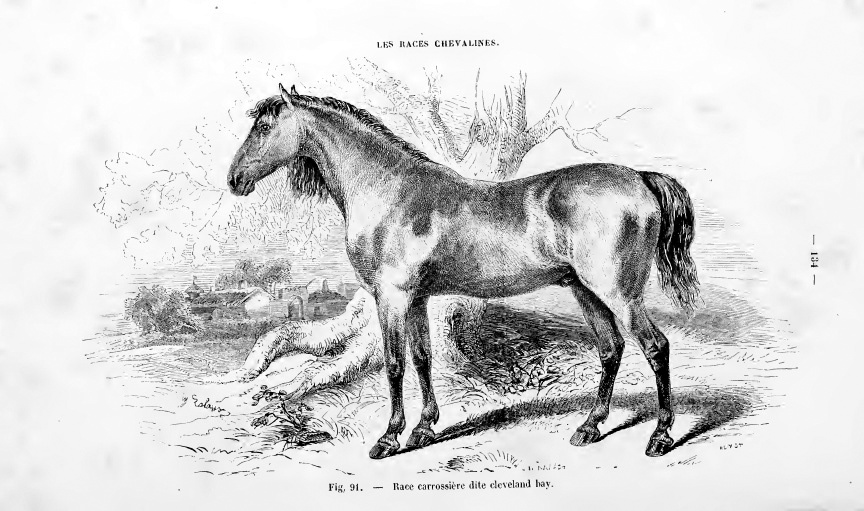
Louis Moll and Eugène Gayot · Public domain ↗
Story · identity · living heritageMeet the breedFollow this population through its origins, people, traits and changing place in the world.Enter →Knowledge · sources · memoryLibrary & archiveOriginal articles and this breed’s own collection, with general species knowledge identified separately.Enter →Pedigrees · families · future recordsBloodlines · coming soonA future workspace for verified animals, families and documented relationships.Enter →People · places · connectionNear You & world mapFind documented connections to this breed, or choose another animal on the map.Enter →
Enter the knowledge
behind cleveland bay.
Each chapter belongs to this population. Its library brings the original teaching and official sources together.
This breed’s chapter
Ecology & landscapes
Explore habitats, domestication and the human landscapes around this animal.
Enter this chapter →This breed’s chapterHistory & heritage
Meet the people, places and choices that shaped this animal.
Enter this chapter →This breed’s chapterMeet the animal
Understand its traits, traditional roles and distinct population.
Enter this chapter →This breed’s chapterScience & biology
Explore family, genus, species and naming authorities.
Enter this chapter →This breed’s chapterCare & daily life
Learn the reasons behind nutrition, observation and husbandry.
Enter this chapter →This breed’s chapterChallenges & future
Read the status, pressures and population evidence in context.
Enter this chapter →This animal’s own collectionLibrary & Archive
Read original articles and reports, with general species knowledge clearly identified.
Enter the library →Read the stories.
Understand the animal.
Original articles connect this population’s history, traits and preservation with the evidence behind them.
Scientific identity
Explore the full 2-article collection →What Cleveland Bay research teaches about genetic recovery
The Cleveland Bay provides an unusually well documented example of using population genetics to guide rare-breed preservation.
Read the original →Care foundationsA genetic plan does not replace functional assessment
Kinship information helps explain a Cleveland Bay's place in the breeding population, but it does not establish the horse's present capacity for work.
Read the original →Get to know Cleveland Bay.
Read this breed’s history, traits and conservation story here. Each article includes the evidence behind it and links for further learning.
Open the Cleveland Bay library →Size, details & appearance
Look closely at the features that make this animal distinctive.
Louis Moll and Eugène Gayot · Public domain
Ruler: sourced breed range, not the photographed individual’s height.
Size reference
Source-reported weight references ↗ · checked October 5, 2026.
Market weight and adult weight describe different stages. Values are reference information, not individual growth guarantees.
Docile
Color & pattern cards
This card highlights a documented appearance feature. Appearance alone does not establish registered breed identity. Screen colors are illustrative; they are not calibrated feather, skin or coat samples.
History & heritageFoundations & evidence
History & heritage
The Cleveland Bay developed in Yorkshire from pack and working horses, with later influences contributing to its recognizable transport and farm type. Its name joins a place, Cleveland, with its bay coloring. The British society formed in 1884 and an American organization followed in 1885. Mechanization sharply reduced demand during the twentieth century.
Appearance & working traitsFoundations & evidence
Animal identity
The breed's bay body, black points and substantial build distinguish it from many other medium-weight riding horses. Cleveland Bays also contributed to sport-horse production through crossing. That commercial success brought a conservation problem: producing valuable crosses did not necessarily create enough purebred replacements. The Conservancy's historical account records only six living purebred stallions in 1960.
Science & inheritance1 expanded article
What Cleveland Bay research teaches about genetic recovery
The Cleveland Bay provides an unusually well documented example of using population genetics to guide rare-breed preservation.
The Cleveland Bay provides an unusually well documented example of using population genetics to guide rare-breed preservation. A 2021 study evaluated sixteen years of management based on pedigree relationships and mean kinship. The work reported improvement in the population's genetic management after breeders adopted recommendations through the SPARKS advisory scheme.
Mean kinship asks how closely an animal is related, on average, to the breeding population. It differs from the inbreeding coefficient of a proposed foal, which concerns the relatedness of that foal's parents. Both perspectives matter. A mating can avoid an immediately close relative yet still repeatedly use ancestry already common throughout the population.
The study updated its calculations as new registrations and losses changed the population. This detail is essential: a recommendation is not timeless. A horse's conservation significance can change as other animals reproduce, cease breeding or die. Responsible preservation therefore needs current information about the breeding population, rather than a permanent list of favourite stallions.
A separate 2020 study combined pedigree and microsatellite evidence and identified restricted diversity, supporting the need for structured management. These findings concern the studied population and methods; they should not be turned into a diagnosis for every Cleveland Bay. A pedigree is a population planning tool, while an individual horse still requires its own assessment of soundness, health and suitability.
The practical lesson concerns how breeding choices affect the whole population. A famous ancestor, a show record and a distinctive appearance tell only part of the story. Family representation can explain why breeders choose a less familiar mating. A preservation programme should make those choices understandable without implying that a rare pedigree outweighs welfare or that a single numerical score answers every breeding question.
Success is best described as a continuing process. A small population needs cooperation among owners, accessible advice and accurate updates to its records. Teaching the Cleveland Bay's management history can help visitors see conservation as organized work with measurable outcomes, rather than simply admiration for a beautiful bay horse.
Landscapes & adaptationFoundations & evidence
Ecology & human landscapes
As grazers, horses affect plant structure and the land they occupy. The result depends on numbers, grazing duration, soil, rainfall and other animals using the same area. A conservation-minded horse page should connect animal preservation with forage recovery and protection of vulnerable ground.
Learning a breed includes understanding the human landscape that kept it useful. Changes in transport and agriculture can erase demand before a breed's biological value disappears. Preserving skills, cultural memory and distinct breeding families helps explain why keeping horses alive and keeping a breed's identity alive are related tasks.
Conservation & the futureFoundations & evidence
Conservation & challenges
This makes the Cleveland Bay a strong teaching example of the difference between being useful to another population and maintaining one's own. A sport-horse pedigree containing Cleveland Bay ancestry can demonstrate influence while saying little about the future supply of purebred mares and stallions.
Its modern riding and driving roles can introduce new people to the horse beyond royal or ceremonial associations. Educational coverage should show purebred animals clearly and distinguish them from crosses. It should also explain why conserving a range of families matters: a breed can gain visible champions yet remain vulnerable if reproductive contributions become concentrated. Population figures on older profile pages require an assessment date before being described as current.
Care & daily life1 expanded article
A genetic plan does not replace functional assessment
Kinship information helps explain a Cleveland Bay's place in the breeding population, but it does not establish the horse's present capacity for work.
Kinship information helps explain a Cleveland Bay's place in the breeding population, but it does not establish the horse's present capacity for work. Begin a practical assessment with the individual: its movement, experience, existing care and the job proposed. Population significance and working suitability answer different questions.
University of Minnesota Extension emphasizes regular hoof care and cooperation between farrier and veterinarian. That general principle belongs alongside a genetic-management story, rather than being overlooked because the pedigree is unusually important.
Ask how the horse is handled for routine care and what is known about its feet and movement in the conditions where it will work. A posed breed-standard image cannot supply those details, and a lower-kinship mating recommendation is not a veterinary certificate.
Preservation becomes more durable when both scales are respected. The population needs accurate records and coordinated choices; the horse needs appropriate care and realistic expectations. An animal's role may change through life, so an owner should understand how to maintain support outside its original job. The breed's genetic recovery is meaningful because it concerns living horses, not only improved numbers in a pedigree analysis.
Science · identity · inheritance
A shared species. A distinct population.
The domestic horse profile here follows Equus caballus. Taxonomic classification identifies the species; a studbook and pedigree document particular breed populations and families.KingdomAnimalia
PhylumChordata
ClassMammalia
OrderPerissodactyla
FamilyEquidae
GenusEquus
Scientific treatmentEquus caballus Linnaeus, 1758
Domestic populationCleveland Bay
Breed identity is separate from species-level assessment. Equus caballus Linnaeus, 1758 · GBIF ↗
Breed identity · documented sources
Evidence that belongs to this animal.
The Livestock Conservancy lists Cleveland Bay as Critical. This domestic-population category is distinct from an IUCN assessment of a wild species.Conservancy breed account ↗ · Assessment framework ↗. These references support the teaching in this world and offer independent perspectives.
Why this is its own conservation world
Identity, usefulness and inherited history belong together.
This world connects cleveland bay with its documented development, characteristics and conservation context.Our evidence standard: source-reported facts, original interpretation and unresolved evidence remain distinguishable.
A breed is more than a familiar appearance.
Ancestry, documented population history and a photograph answer different questions.
Explore in this world →Purpose belongs beside the animal.
Sport riding, Driving
Explore in this world →A category is not a current census.
Dates, scope and the definition of the animals counted belong beside population evidence.
Explore in this world →Knowledge becomes stewardship.
Education, appropriate care and documented contributions carry living heritage forward.
Explore in this world →Care · daily life · practical stewardship
Understand what it takes to raise the animal.
Species foundations belong beside the breed’s documented traits and the individual’s condition.From a foal to a lifelong partner.
Follow the animal from its beginning through the changes in feeding, shelter, behavior and care. Select a stage to look closer.
11 monthsGestation · approximate species reference
Healthy adults can contribute to the next generation; care and documented ancestry connect the cycle.

Newborn foal
Confirm nursing and colostrum intake early. Colostrum provides protective antibodies; ordinary milk replacer does not perform that same job.
What to observe
Watch successful nursing, warmth, contact with the mother and the condition of each youngster.
Raised with the mare
The mare supplies milk and social contact. Observe successful nursing and the condition of both animals; simply standing beside the mare does not establish adequate intake.
Foster or orphan care
An orphan needs an early antibody assessment, a suitable equine milk plan and frequent monitored meals. Clean equipment and horse companionship matter. Milk calories alone do not replace maternal contact or colostrum.
Life-stage teaching sources
- Merck Veterinary Manual · approximate gestation periods ↗
- University of Minnesota Extension · feeding orphaned foals ↗
Conservation Legacy original teaching. Image captions identify the pictured animal; general species examples remain separate from selected-breed images.
See when life changes.
Body growth, reproductive development and managed weaning describe different changes. Explore the reference windows beside the care they help explain.
Gestation
11 monthsApproximate species reference for planning.
Evidence ↗After birth or hatch · reference windows
General growing horses. Bars share a time axis measured from birth or hatch; each label retains its source units.
Usual managed weaning4–6 months
species referenceSource for this window ↗
Female puberty10–24 months
species referenceSource for this window ↗
Birth / hatch · 0731 days
What we risk losing
Keep a living inheritance within reach.
Critical · The Livestock Conservancy, 2026. Preservation includes the living animals, their families and the people able to keep them. The sequence beside this text explains a process; it is not a measured decline for this breed.Explore this breed’s conservation →- Historic family
Recorded families connect today’s animals with the people and places that shaped them.
- Funneling begins
Some branches stop reproducing, or their records become difficult to follow.
- Bottleneck
Representation can concentrate into fewer animals and fewer distinct breeding options.
- Preservation window
Age, health, living animals, reliable records and available homes influence what can continue.
- Action or loss
Education, care, documentation and coordinated stewardship shape what survives.
Population · dates · scope
Numbers need their context.
A status, registration count and breeding-population estimate answer different questions. Their dates and definitions matter.Conservation status and source-reported population evidence
Living purebred stallions
- Assessment year / period
- 1960
- Geography / scope
- Geography not explicit in the sentence
Historical stallions only; not total horses.
Read the source →Source-reported living horses
- Assessment year / period
- Not stated
- Geography / scope
- Global
Undated estimate from profile; not a verified present-day census.
Read the source →Source-reported purebreds
- Assessment year / period
- Not stated
- Geography / scope
- North America
Undated profile count; assessment year unavailable.
Read the source →These measures describe different dates, places and populations. They should not be added together or treated as a new census conducted by Conservation Legacy.
The community carries it forward
The future needs people who keep its knowledge alive.
A dated photograph, a keeper’s experience, a historical source or a documented correction can help the next generation understand cleveland bay.What you know today can become part of what this breed still has tomorrow.
Breed knowledgeKeep traits connected to the documented population.Teach what sources establish and identify what still needs evidence.Stories & historyPreserve the people and places behind the animal.Dates, locations and source context make a memory more useful.Documents & photographsKeep the creator and meaning with the record.Share material with permission, accurate captions and provenance.Practical stewardshipConnect learning with responsible care.Use the species foundations and individual needs to guide further questions.Keep exploring
One world. Many ways to enter.
Cleveland Bay Library & ArchiveOriginal articles, general foundations and source evidence→Near You & world mapDocumented breed connections and nearby places→This breed’s common areaLearning, contributions and community connections→Bloodlines & records · coming soonVerified animals and relationships will come later→Our founding Puerto Rican Paso Fino worldThe design and preservation foundation for every breed world→