
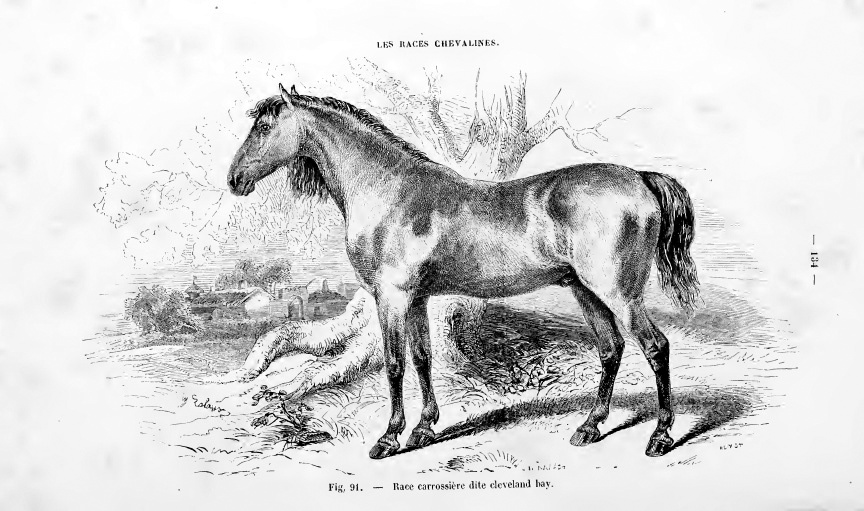
Cleveland Bay
Care foundations
One living story. Knowledge kept together.
Understanding horses: care foundations
Horses obtain important energy from microbial fermentation of fibrous forage in the cecum and large colon. Their relatively small stomach and digestive anatomy explain why forage access and thoughtfully sized meals matter. Nutrition changes with work, growth, pregnancy, lactation and health; breed reputation as an easy keeper cannot replace individual body-condition assessment. Group-fed horses need enough feeding space for subordinate individuals. Older horses need diet changes based on condition, dental function, disease and activity rather than age alone.
These are general species foundations. The breed's own history and traits help explain how it developed, while an individual animal's age, environment and purpose shape its daily needs. Preservation includes keeping animals healthy enough to express normal behavior and maintain future generations. Compare dependable husbandry guidance with breed registry descriptions, and distinguish inherited traits from assumptions about toughness. Teaching the reasons behind care decisions gives readers a stronger foundation than applying one feeding formula to every animal.
University Extension · Merck Veterinary Manual · Merck Veterinary Manual
Bring this population’s identity into the picture.
The breed's bay body, black points and substantial build distinguish it from many other medium-weight riding horses. Cleveland Bays also contributed to sport-horse production through crossing. That commercial success brought a conservation problem: producing valuable crosses did not necessarily create enough purebred replacements. The Conservancy's historical account records only six living purebred stallions in 1960.
The breed description explains historical traits and recorded roles. Daily care also depends on an individual’s condition, age, environment and activity. A statement about historical adaptation does not establish immunity to disease or eliminate the need for suitable nutrition and shelter.
Read the species care foundation guide →A genetic plan does not replace functional assessment
Kinship information helps explain a Cleveland Bay's place in the breeding population, but it does not establish the horse's present capacity for work.
Kinship information helps explain a Cleveland Bay's place in the breeding population, but it does not establish the horse's present capacity for work. Begin a practical assessment with the individual: its movement, experience, existing care and the job proposed. Population significance and working suitability answer different questions.
University of Minnesota Extension emphasizes regular hoof care and cooperation between farrier and veterinarian. That general principle belongs alongside a genetic-management story, rather than being overlooked because the pedigree is unusually important.
Ask how the horse is handled for routine care and what is known about its feet and movement in the conditions where it will work. A posed breed-standard image cannot supply those details, and a lower-kinship mating recommendation is not a veterinary certificate.
Preservation becomes more durable when both scales are respected. The population needs accurate records and coordinated choices; the horse needs appropriate care and realistic expectations. An animal's role may change through life, so an owner should understand how to maintain support outside its original job. The breed's genetic recovery is meaningful because it concerns living horses, not only improved numbers in a pedigree analysis.
Sources for general species learning
Sources behind the breed’s story.
The original history, identity and conservation teaching above draws on these cited accounts. Official links open the full material for further study.
Keep learning from official information.
These research portals help locate further material. A search link is a route for exploration; it is separate from the sources used for the article above. Domestic breed information, wild-species assessment, historical books and new research need their own context.
- FAO DAD-IS · Domestic breed information
- IUCN Red List · Species assessments
- Biodiversity Heritage Library · Historical literature search
- USDA National Agricultural Library · Research search
- Google Scholar · Scholarly literature search
- Open Library · Book catalogue search
- HathiTrust · Digitized catalogue search