
Turkeys
Conservation & challenges
One living story. Knowledge kept together.
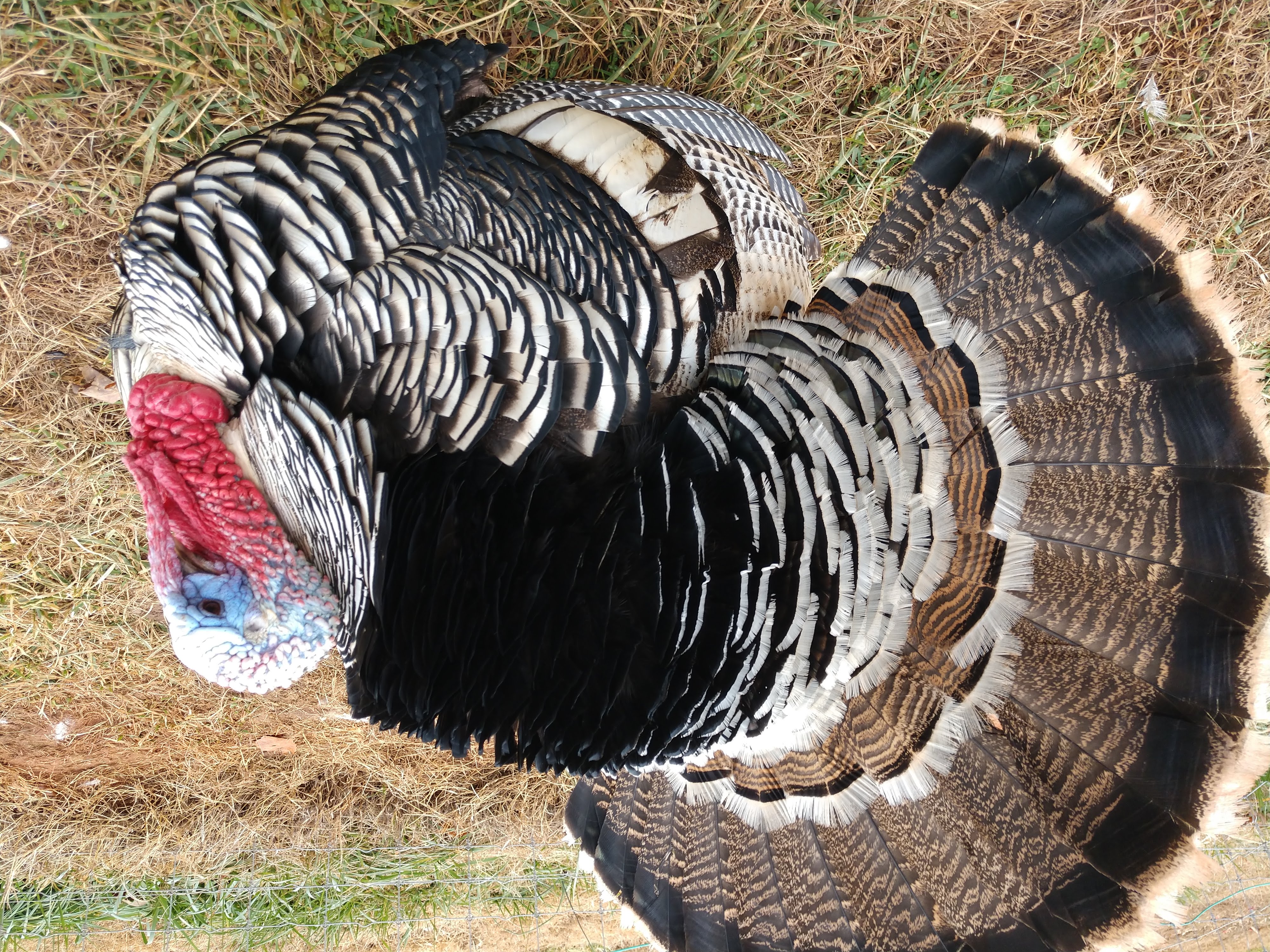
An adult male Narragansett turkey displaying its tail. · TemulsLightningPoncho · CC BY-SA 4.0 · License terms
What does this animal face?
Conservation depends on keeping a population able to continue, including its reproductive animals, families and the people who maintain it. Visible popularity can hide a narrow breeding base. A small herd in one location faces different pressures from a similarly sized population distributed across several herds.
This world currently contains 9 listed breed, strain or variety entries. That catalogue size is not a count of living animals. Open each population’s conservation chapter to see its category and the source-reported figures that have been verified.
FAO’s DAD-IS keeps domestic breed information by country and maintains population-history tools. A useful statistic retains its date, geography and definition: breeding females, registrations, sampled animals and all living animals are different measures. A historical low point is meaningful history, but should not be presented as a current census.
The Livestock Conservancy: 2026 list · FAO: population-data framework · IUCN: species assessment questions
One hundred animals.
Different breeding foundations.
Compare the same total with different numbers of breeding males and females. This simplified model illustrates why a head count alone cannot describe a population’s genetic future.
These are teaching examples, not estimates for the breed on this page. The formula assumes an idealized breeding population. Relatedness, unequal offspring contributions, changing numbers and overlapping generations require more detailed analysis. It does not predict a specific mating’s inbreeding or recommend a breeding plan.
Model basis: FAO, monitoring animal genetic resources (1992), section 4.2. Further guidance: FAO, In vivo conservation of animal genetic resources (2013).
Natural reproduction and heritage turkey conservation
Domestic turkey color populations are commonly called breeds, but poultry standards treat them as varieties. The Livestock Conservancy's heritage definition requires natural mating, a long productive outdoor life and moderate-to-slow growth. The definition also includes naturally mating varieties outside the eight APA-recognized names. Lack of American show recognition is therefore not, by itself, proof that a population lacks heritage value.
Modern Broad Breasted White and Broad Breasted Bronze production birds differ from naturally mating heritage populations even when names or colors appear similar. Their development prioritized rapid meat production and produced reproductive limitations that require intervention. For conservation, a recognizable color must be paired with functional adult structure and reproduction. The definition's published expectations are population goals, not a guarantee of fertility or lifespan for an individual flock. Preserve precise variety and strain names when explaining ancestry, selecting stock or sharing learning material; a mixed color group is not a newly established breed.
Sources for general species learning
Keep learning from official information.
These research portals help locate further material. A search link is a route for exploration; it is separate from the sources used for the article above. Domestic breed information, wild-species assessment, historical books and new research need their own context.
- FAO DAD-IS · Domestic breed information
- IUCN Red List · Species assessments
- Biodiversity Heritage Library · Historical literature search
- USDA National Agricultural Library · Research search
- Google Scholar · Scholarly literature search
- Open Library · Book catalogue search
- HathiTrust · Digitized catalogue search