
Narragansett
Animal identity
One living story. Knowledge kept together.
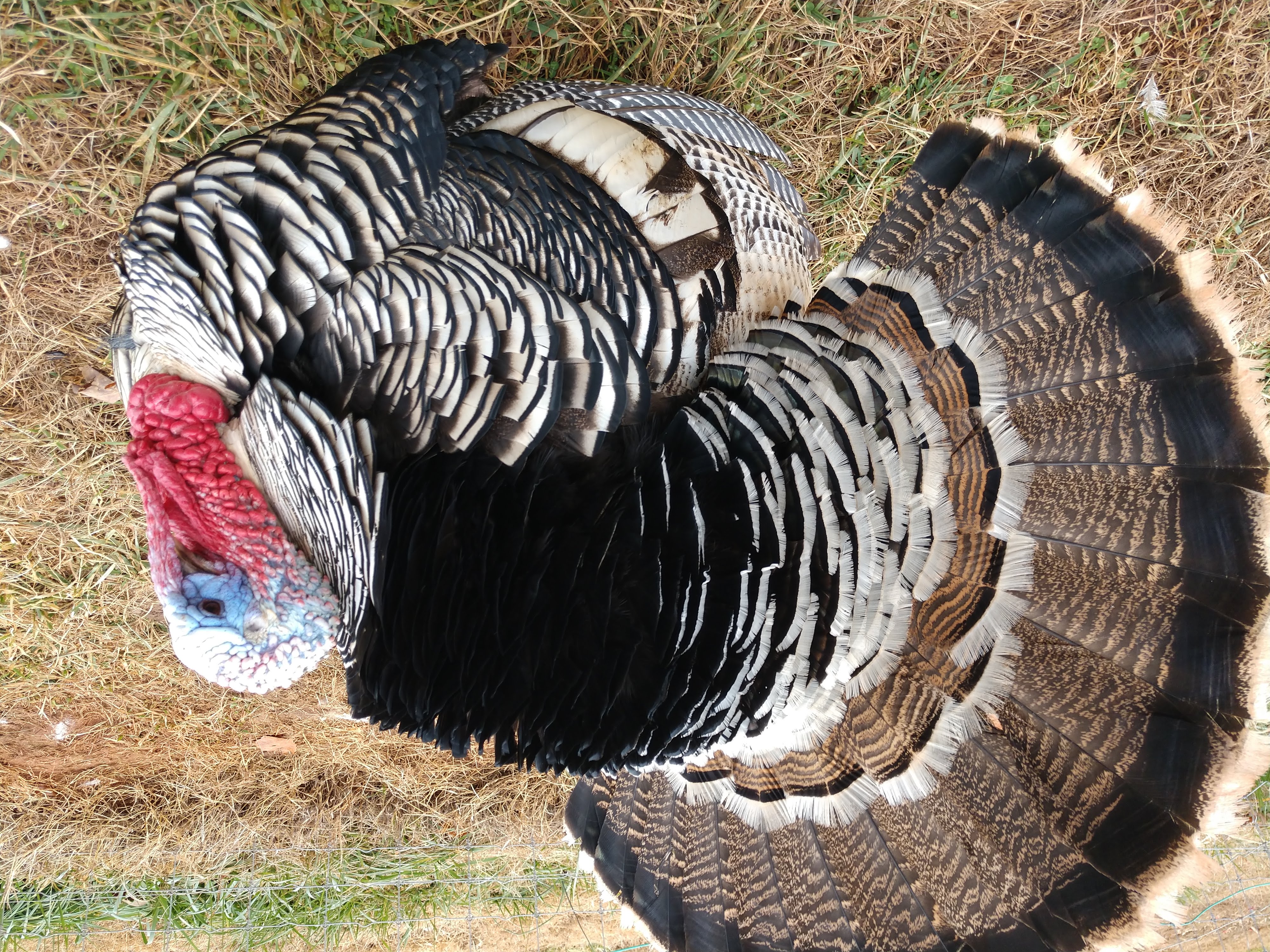
An adult male Narragansett turkey displaying its tail; an existing source-identified photograph. · TemulsLightningPoncho · CC BY-SA 4.0 · License terms
Recognize what makes this population itself.
Black, gray, tan and white feathers create a pattern resembling Bronze with gray replacing much of its metallic copper. White wing bars are another useful identification feature. Its farm history combined foraging, reproduction and selection for productive table birds.
The Conservancy's reference profile describes large eggs with pale cream to medium brown with spotting shells. These descriptions help compare the population's traditional farm role; actual performance also depends on age, breeding line and management.
Appearance introduces the animal; a registry standard explains a documented breeding population. A photograph, color or familiar informal name alone cannot establish every individual’s membership.
- Recorded roles
- Meat
- Egg Color
- Pale cream to medium brown with spotting
- Egg Size
- Large
- Market Weight
- Male Young – 23 lbs. Mature – 28 lbs. Female Young – 14 lbs. Mature 18 lbs.
- Temperament
- Highly dependent on selection by breeder, Some select for aggressive, others docile
Reference values from the breed’s conservation profile. Weight describes a reference animal, not a universal feeding or fitness target. Temperament varies with breeding, individual experience and handling.
Interpreting this population in practice
How its documented identity shapes learning and conservation.
Narragansett identity connects New England poultry history with a distinctive muted feather pattern. Its role in regional farm production should accompany photographs and color descriptions. Historical importance does not provide a current population total. Preserve its named breeding population and natural reproduction rather than treating a similarly colored turkey as an interchangeable replacement.
Sources for general species learning
Sources behind the breed’s story.
The original history, identity and conservation teaching above draws on these cited accounts. Official links open the full material for further study.
Keep learning from official information.
These research portals help locate further material. A search link is a route for exploration; it is separate from the sources used for the article above. Domestic breed information, wild-species assessment, historical books and new research need their own context.
- FAO DAD-IS · Domestic breed information
- IUCN Red List · Species assessments
- Biodiversity Heritage Library · Historical literature search
- USDA National Agricultural Library · Research search
- Google Scholar · Scholarly literature search
- Open Library · Book catalogue search
- HathiTrust · Digitized catalogue search