
Narragansett
Ecology & human landscapes
One living story. Knowledge kept together.
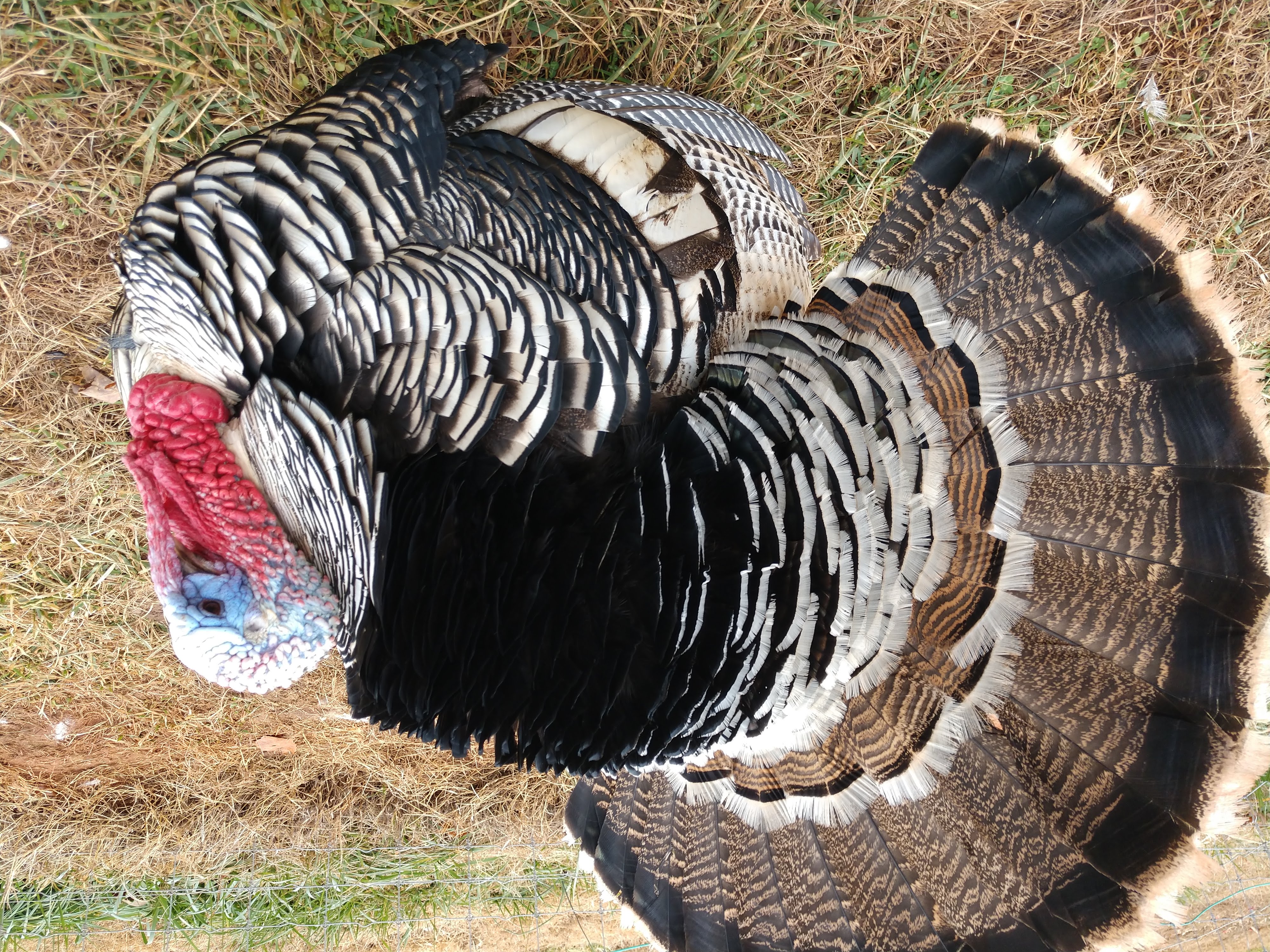
An adult male Narragansett turkey displaying its tail; an existing source-identified photograph. · TemulsLightningPoncho · CC BY-SA 4.0 · License terms
Animal, landscape
and the people between them.
Wild turkeys participate in woodland and field food webs, both consuming food and becoming prey. A domestic flock occupies a different, human-managed ecosystem with fencing, supplied feed and decisions about where birds range. Articles should make that distinction visible when combining natural history with husbandry.
The conservation foundation is strongest when it connects animal traits to people who continue maintaining them. Food traditions and local markets may support living breeding populations, while teaching preserves the context behind those choices. Each variety's library can explain its plumage, historical development and present challenges alongside this shared biology.
This population’s place in that story.
Narragansett turkeys developed around Rhode Island’s Narragansett Bay from domestic and wild-turkey influences. Their history connects regional breeding with the wider transatlantic movement of domestic turkeys.
Developed near Rhode Island's Narragansett Bay, these turkeys became foundations of New England's early industry. An 1872 account described farm flocks supported by a small breeding group and extensive insect foraging. American recognition came in 1874.
A breed’s historical setting helps explain its development. Present-day housing, feeding and land management still need to suit the individual animals and the actual site.
Sources for general species learning
Sources behind the breed’s story.
The original history, identity and conservation teaching above draws on these cited accounts. Official links open the full material for further study.
Keep learning from official information.
These research portals help locate further material. A search link is a route for exploration; it is separate from the sources used for the article above. Domestic breed information, wild-species assessment, historical books and new research need their own context.
- FAO DAD-IS · Domestic breed information
- IUCN Red List · Species assessments
- Biodiversity Heritage Library · Historical literature search
- USDA National Agricultural Library · Research search
- Google Scholar · Scholarly literature search
- Open Library · Book catalogue search
- HathiTrust · Digitized catalogue search