
Teeswater
Animal identity
One living story. Knowledge kept together.
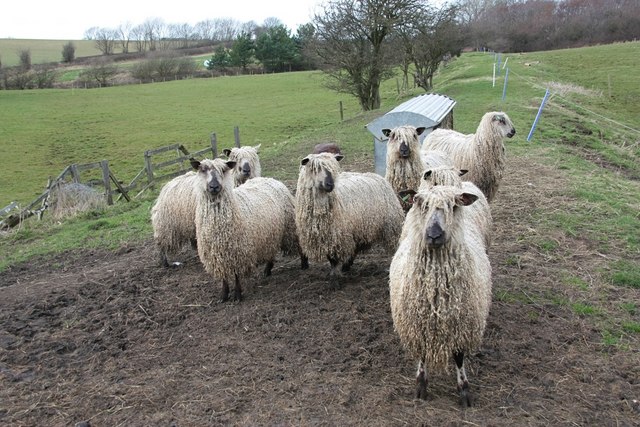
Teeswater sheep at a feeding point on a former railway line, North Yorkshire, England. · Paul Buckingham · CC BY-SA 2.0 · License terms
Recognize what makes this population itself.
Large bodies and long, lustrous fleece distinguish this northern English sheep. Its crossing role and fiber qualities both deserve explanation. The American establishment story includes progressive breeding with imported genetic material, rather than a simple single shipment of a complete flock.
Appearance introduces the animal; a registry standard explains a documented breeding population. A photograph, color or familiar informal name alone cannot establish every individual’s membership.
- Recorded roles
- Meat, Fiber
- Adult Weight
- Rams: 250-300 lbs. Ewes: 150-250 lbs.
- Temperament
- Alert, Spirited
- Experience Level
- Novice – Intermediate
Reference values from the breed’s conservation profile. Weight describes a reference animal, not a universal feeding or fitness target. Temperament varies with breeding, individual experience and handling.
Lustrous wool and a functional frame
The Teeswater standard describes a substantial sheep with a broad jaw, teeth meeting the dental pad, deep ribs and developed hindquarters. Straight legs, strong pasterns and sound feet are part of the same assessment as the fleece. An attractive head or long locks alone do not describe a complete breeding animal.
Fleece character is especially distinctive: the association calls for open, lustrous staples, consistency across the body and an absence of black fibres. Its published reference ranges are 20–30 centimetres of staple and 4–8 kilograms of fleece. These describe the breed’s wool potential; they are not guaranteed measurements for every animal or shearing interval.
The association identifies specialist wool production and use as a crossing sire as principal roles. Long, lustrous fibre can enter worsted fabrics, knitting yarns, blends and hand spinning. Those uses help explain why fibre uniformity matters alongside body structure. Evaluating both preserves a working longwool sheep whose value extends beyond its appearance.
Sources for general species learning
Sources behind the breed’s story.
The original history, identity and conservation teaching above draws on these cited accounts. Official links open the full material for further study.
Keep learning from official information.
These research portals help locate further material. A search link is a route for exploration; it is separate from the sources used for the article above. Domestic breed information, wild-species assessment, historical books and new research need their own context.
- FAO DAD-IS · Domestic breed information
- IUCN Red List · Species assessments
- Biodiversity Heritage Library · Historical literature search
- USDA National Agricultural Library · Research search
- Google Scholar · Scholarly literature search
- Open Library · Book catalogue search
- HathiTrust · Digitized catalogue search