
Lustrous wool and a functional frame
Knowledge for understanding and preserving Teeswater.
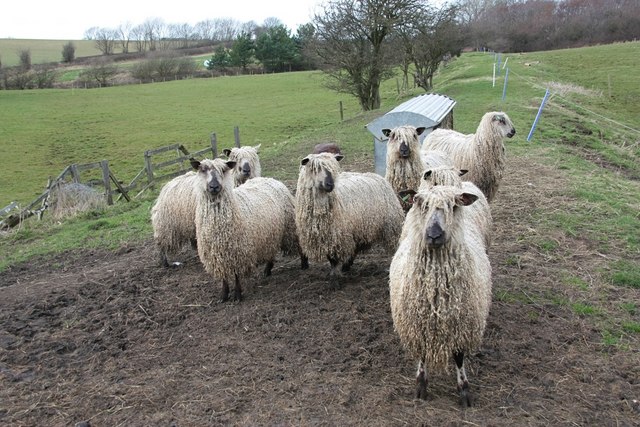
The Teeswater standard describes a substantial sheep with a broad jaw, teeth meeting the dental pad, deep ribs and developed hindquarters. Straight legs, strong pasterns and sound feet are part of the same assessment as the fleece. An attractive head or long locks alone do not describe a complete breeding animal.
Fleece character is especially distinctive: the association calls for open, lustrous staples, consistency across the body and an absence of black fibres. Its published reference ranges are 20–30 centimetres of staple and 4–8 kilograms of fleece. These describe the breed’s wool potential; they are not guaranteed measurements for every animal or shearing interval.
The association identifies specialist wool production and use as a crossing sire as principal roles. Long, lustrous fibre can enter worsted fabrics, knitting yarns, blends and hand spinning. Those uses help explain why fibre uniformity matters alongside body structure. Evaluating both preserves a working longwool sheep whose value extends beyond its appearance.
Sources behind this article
This is original Conservation Legacy teaching informed by the sources below. Follow the official material for the full account and its context.