
The Teeswater’s role in hill-sheep crossing
Knowledge for understanding and preserving Teeswater.
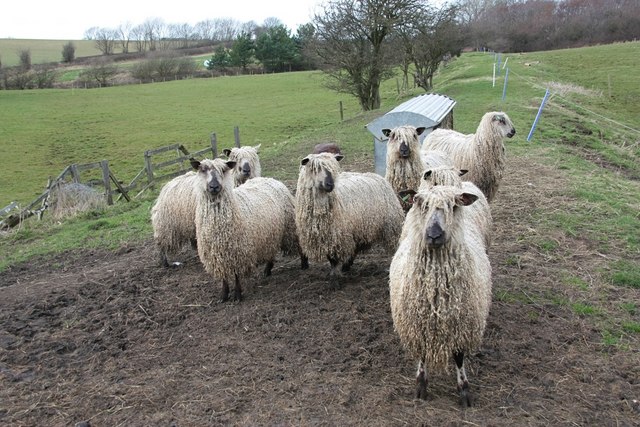
The Teeswater Sheep Breeders’ Association recounts how farmers in the Tees Valley retained rams for crossing with smaller hill ewes when the pure breed became scarce. That working role helped preserve the source breed while producing crossbred females suitable for more fertile lowland farms.
The association was formed in 1949 with breed purity and the use of Teeswater sires among its purposes. Teeswater-derived half-bred sheep became known as Mashams. These crossbred sheep are connected to Teeswater history, but they are not equivalent to the purebred population.
The association’s history also links changing wool economics in the 1970s with greater interest in crosses carrying less fleece. That is a concrete example of how markets can affect a breeding system and its source breeds. The long fleece and crossing role are therefore connected parts of Teeswater identity, rather than separate curiosities.
Sources behind this article
This is original Conservation Legacy teaching informed by the sources below. Follow the official material for the full account and its context.