
Lilac
Animal identity
One living story. Knowledge kept together.
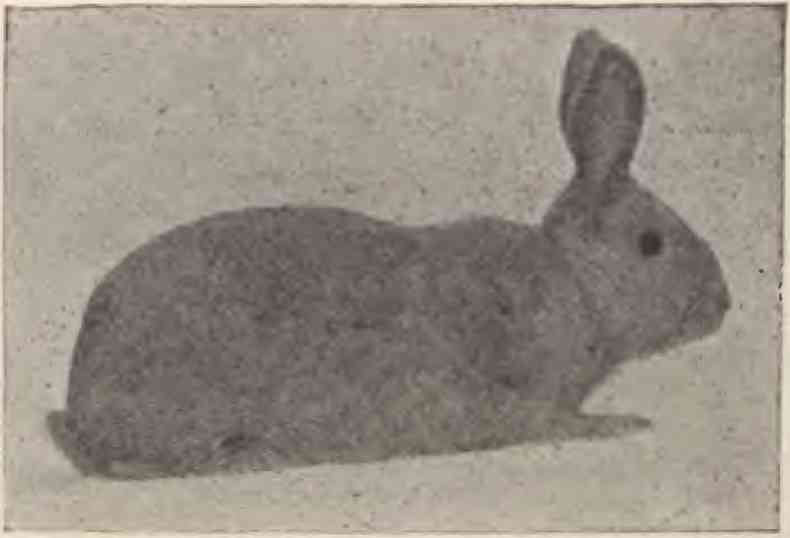
Archival Lilac buck, labeled in the 1928–1929 ARBA predecessor guidebook, printed page 61. Historical monochrome photograph; coat color cannot be judged from this image. · American Rabbit and Cavy Breeders Association · ARBA Digital Library · Public domain in the United States · published 1928 · License terms
Recognize what makes this population itself.
The characteristic pinkish dove-gray coat gives the breed its name. Historical strains varied in color and size, so a Lilac-colored rabbit is not necessarily the established Lilac breed. Overall type and documented breeding continuity distinguish a breed from a color mutation.
Appearance introduces the animal; a registry standard explains a documented breeding population. A photograph, color or familiar informal name alone cannot establish every individual’s membership.
- Recorded roles
- Meat, Fur
- Adult Weight
- Male: 5.5–7.5 lbs. Female: 6-8 lbs.
- Temperament
- Docile
- Experience Level
- Novice
Reference values from the breed’s conservation profile. Weight describes a reference animal, not a universal feeding or fitness target. Temperament varies with breeding, individual experience and handling.
Recognizing Lilac beyond a single feature
ARBA describes a single-color breed with pinkish dove-gray coloring and an eight-pound maximum. The specialty club also emphasizes rollback fur. Here Lilac is the breed's name, although the same word can describe a coat variety in other populations. A lilac-colored Rex is consequently not evidence for this breed's image library. The distinction is similar to separating a person's surname from a shared descriptive word: matching terminology does not establish shared identity. Confirm the animal's breed with its keeper and document the context before presenting a photograph as a reference.
Sources for general species learning
Sources behind the breed’s story.
The original history, identity and conservation teaching above draws on these cited accounts. Official links open the full material for further study.
Keep learning from official information.
These research portals help locate further material. A search link is a route for exploration; it is separate from the sources used for the article above. Domestic breed information, wild-species assessment, historical books and new research need their own context.
- FAO DAD-IS · Domestic breed information
- IUCN Red List · Species assessments
- Biodiversity Heritage Library · Historical literature search
- USDA National Agricultural Library · Research search
- Google Scholar · Scholarly literature search
- Open Library · Book catalogue search
- HathiTrust · Digitized catalogue search