
Poitou
Animal identity
One living story. Knowledge kept together.
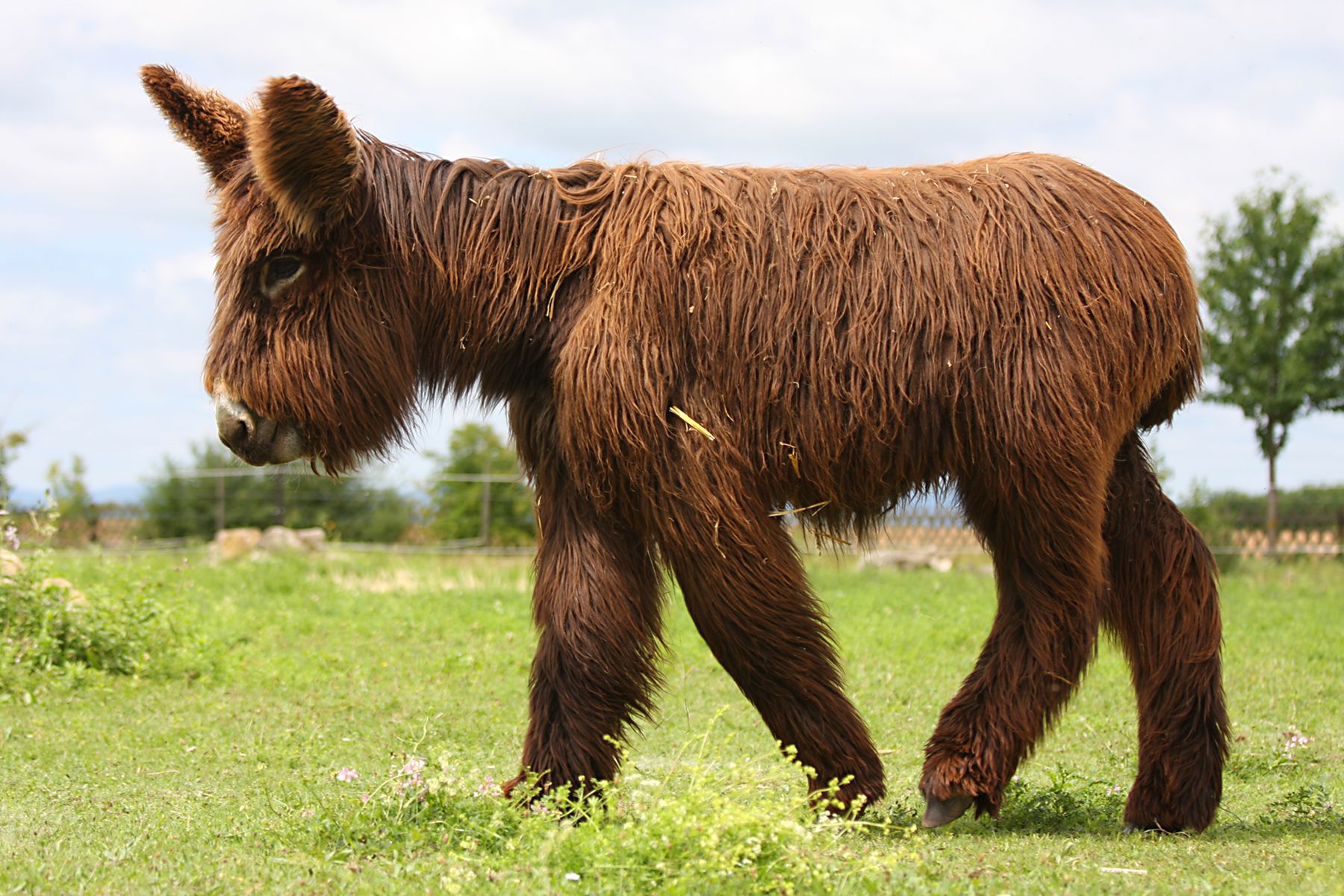
One-year-old Poitou donkey Amelie at Nature Life Ranch, Germany, in 2012. · Sudorculus · CC BY-SA 3.0 · License terms
Recognize what makes this population itself.
Heavy bone, a large head, extraordinarily long ears, and a dark coat distinguish the breed. Its famous long hair can form hanging cords, although coat length varies. The Conservancy describes mature animals at approximately 14–15 hands; their appearance should be understood together with their historical work.
Appearance introduces the animal; a registry standard explains a documented breeding population. A photograph, color or familiar informal name alone cannot establish every individual’s membership.
- Recorded roles
- Historically, producing large mules when bred with draft horses
- Adult Weight
- 750 - 950 lbs.
- Temperament
- Docile
- Experience Level
- Advanced
Reference values from the breed’s conservation profile. Weight describes a reference animal, not a universal feeding or fitness target. Temperament varies with breeding, individual experience and handling.
Reading identity and evidence carefully
Historical survivor and registration figures should keep their dates and definitions. Registered animals over a period are not automatically the number alive today. Identification and DNA work address another question again. Distinguishing these measures makes the conservation story more informative while avoiding a fabricated current census.
Sources for general species learning
Sources behind the breed’s story.
The original history, identity and conservation teaching above draws on these cited accounts. Official links open the full material for further study.
Keep learning from official information.
These research portals help locate further material. A search link is a route for exploration; it is separate from the sources used for the article above. Domestic breed information, wild-species assessment, historical books and new research need their own context.
- FAO DAD-IS · Domestic breed information
- IUCN Red List · Species assessments
- Biodiversity Heritage Library · Historical literature search
- USDA National Agricultural Library · Research search
- Google Scholar · Scholarly literature search
- Open Library · Book catalogue search
- HathiTrust · Digitized catalogue search