
Poitou
Ecology & human landscapes
One living story. Knowledge kept together.
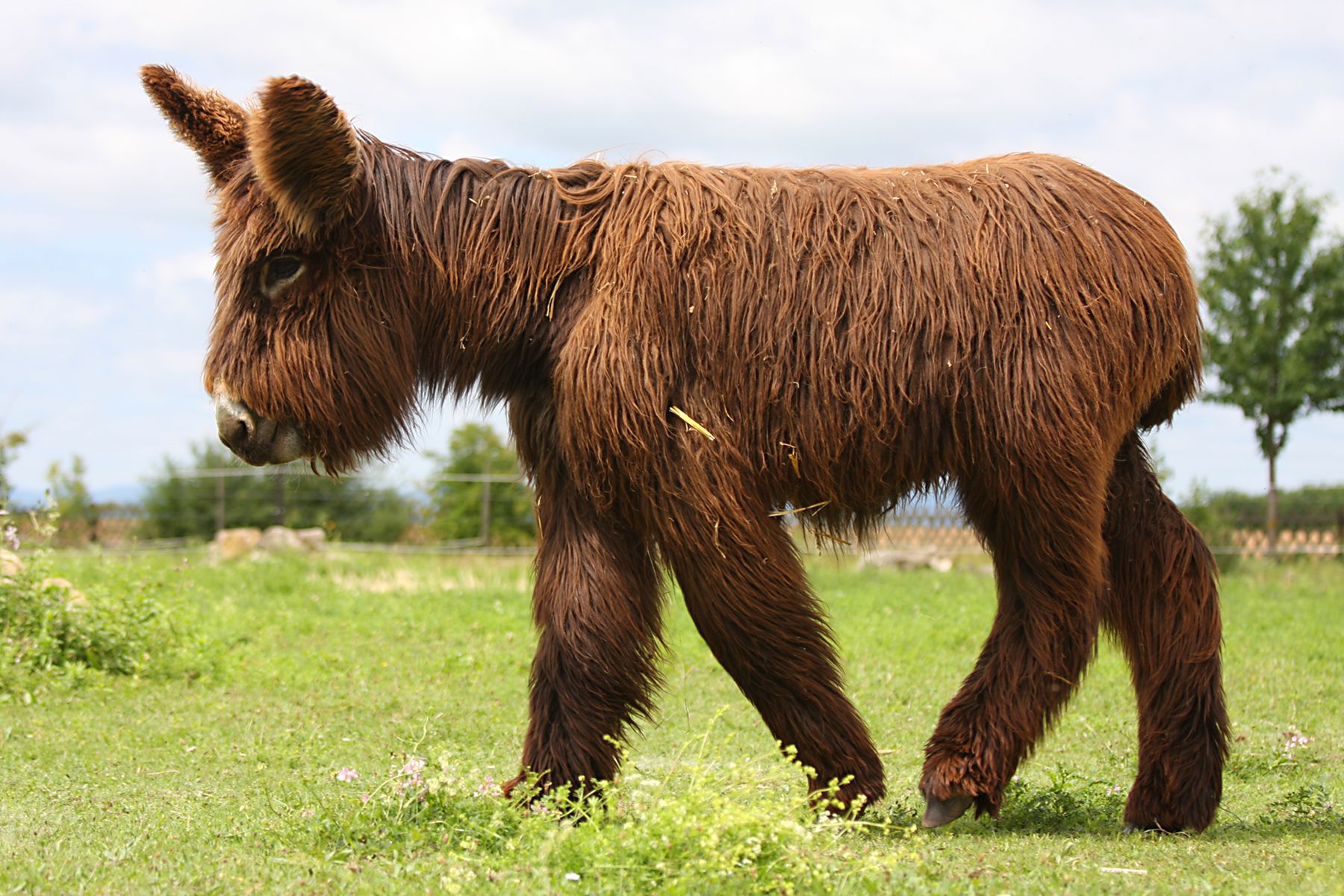
One-year-old Poitou donkey Amelie at Nature Life Ranch, Germany, in 2012. · Sudorculus · CC BY-SA 3.0 · License terms
Animal, landscape
and the people between them.
Grazing and browsing put donkeys in direct contact with plant communities and soil. Their land impact depends on stocking, seasonal forage and access to sensitive areas. An animal can be culturally valuable and still require careful management to avoid damaging the landscape.
The conservation story should therefore join animal welfare with breed identity. Historical usefulness explains why people maintained a population, while changed farm economics can explain why it declined. Breed preservation and conservation of African wild asses are distinct subjects, even though their evolutionary history connects them.
This population’s place in that story.
The Baudet du Poitou belongs to the mule-producing tradition of western France. Standardization developed around 1700, followed by a studbook in 1884. Poitou jacks were paired with Poitevin or Mulassier mares to produce large working mules. Falling demand after World War II brought this regional breeding system close to collapse.
A breed’s historical setting helps explain its development. Present-day housing, feeding and land management still need to suit the individual animals and the actual site.
Sources for general species learning
Sources behind the breed’s story.
The original history, identity and conservation teaching above draws on these cited accounts. Official links open the full material for further study.
Keep learning from official information.
These research portals help locate further material. A search link is a route for exploration; it is separate from the sources used for the article above. Domestic breed information, wild-species assessment, historical books and new research need their own context.
- FAO DAD-IS · Domestic breed information
- IUCN Red List · Species assessments
- Biodiversity Heritage Library · Historical literature search
- USDA National Agricultural Library · Research search
- Google Scholar · Scholarly literature search
- Open Library · Book catalogue search
- HathiTrust · Digitized catalogue search