

Conservation Legacy · Chickens world
DominiqueLiving heritage.
A connected world for understanding, teaching and carrying forward dominique—its history, characteristics, knowledge, people and future.
Living heritageWatch2026 Conservancy list
The place and purpose behind the breed
A past that shaped a living population.
The Dominique is widely recognized as an early American chicken breed. Several competing origin accounts survive; distinguishing documented breed history from stories about its name is part of understanding its legacy.Photographic introduction · DominiqueEggs, Meat
Story · identity · living heritageMeet the breedFollow this population through its origins, people, traits and changing place in the world.Enter →Knowledge · sources · memoryLibrary & archiveOriginal articles and this breed’s own collection, with general species knowledge identified separately.Enter →Pedigrees · families · future recordsBloodlines · coming soonA future workspace for verified animals, families and documented relationships.Enter →People · places · connectionNear You & world mapFind documented connections to this breed, or choose another animal on the map.Enter →
Enter the knowledge
behind dominique.
Each chapter belongs to this population. Its library brings the original teaching and official sources together.
This breed’s chapter
Ecology & landscapes
Explore habitats, domestication and the human landscapes around this animal.
Enter this chapter →This breed’s chapterHistory & heritage
Meet the people, places and choices that shaped this animal.
Enter this chapter →This breed’s chapterMeet the animal
Understand its traits, traditional roles and distinct population.
Enter this chapter →This breed’s chapterScience & biology
Explore family, genus, species and naming authorities.
Enter this chapter →This breed’s chapterCare & daily life
Learn the reasons behind nutrition, observation and husbandry.
Enter this chapter →This breed’s chapterChallenges & future
Read the status, pressures and population evidence in context.
Enter this chapter →This animal’s own collectionLibrary & Archive
Read original articles and reports, with general species knowledge clearly identified.
Enter the library →Read the stories.
Understand the animal.
Original articles connect this population’s history, traits and preservation with the evidence behind them.
Animal identity
Explore the full 3-article collection →Breeder interpretation: body type before feather pattern
In his club-preserved breeding guidance, Dominique specialist Mark Fields asks beginners to understand body conformation and carriage before refining color. His description emphasi…
Read the original →Animal identityCuckoo pattern is different from perfectly aligned bars
The American Dominique archive explains cuckoo as the coarse, irregular barred pattern described for Dominiques. It contrasts this with the more regular, aligned appearance breeder…
Read the original →Animal identityInterpreting this population in practice
How its documented identity shapes learning and conservation.
Read the original →Get to know Dominique.
Read this breed’s history, traits and conservation story here. Each article includes the evidence behind it and links for further learning.
Open the Dominique library →Size, details & appearance
Look closely at the features that make this animal distinctive.
gunthercox · CC0 · License
Size reference
Source-reported weight references ↗ · checked October 5, 2026.
Market weight and adult weight describe different stages. Values are reference information, not individual growth guarantees.
Light to Dark Brown
Shell color can vary between individuals and through a laying season.
Medium
Source-reported size category; not a measured weight for every egg.
Calm and Genial
History & heritageFoundations & evidence
History & heritage
The Dominique is widely recognized as an early American chicken breed. Several competing origin accounts survive; distinguishing documented breed history from stories about its name is part of understanding its legacy.
Rose-combed barred birds were separated from single-combed Plymouth Rocks by show rules in 1870, later reinforced through breed standards. Dominiques entered the first American standard in 1874. Industrial poultry expansion contributed to a later severe decline.
Appearance & working traits3 expanded articles
Breeder interpretation: body type before feather pattern
In his club-preserved breeding guidance, Dominique specialist Mark Fields asks beginners to understand body conformation and carriage before refining color. His description emphasizes a downward-sloping back, well-developed tail and high-carried breast. Those features help distinguish a Dominique's outline from the flatter or rising topline associated with other barred poultry.
Fields also draws attention to the female's rose comb instead of treating the rooster's comb as the only identification lesson. His selection advice concerns the rounded comb outline, a suitably formed rear spike and medium feather texture. It is a breeder's interpretation of type, not a universal genetic test: an observed fault does not, by itself, prove a particular cross. The practical lesson is that barred color and a rose comb alone provide an incomplete description. Teach whole-bird proportions, mature carriage and breeding history together.
Cuckoo pattern is different from perfectly aligned bars
The American Dominique archive explains cuckoo as the coarse, irregular barred pattern described for Dominiques. It contrasts this with the more regular, aligned appearance breeders seek in Barred Plymouth Rocks. Looking at a single feather is only part of the comparison: overlapping feathers change how the finished pattern reads across a bird's body.
The account distinguishes a clear boundary between light and dark bars from a requirement for stark pure black and white. It also describes how unequal or angled bars can produce an attractive whole-bird pattern while overly aligned bars form a different visual effect. Some of its suggestions are breeder interpretations, and the writer acknowledges uncertainty about reproducing every desired feature genetically. This is useful evidence of fanciers' observation and selection practice. It should not be presented as a fully resolved molecular formula for Dominique color.
Interpreting this population in practice
How its documented identity shapes learning and conservation.
A Dominique's rose comb helps separate it from a barred Plymouth Rock, but identity also depends on the breeding population behind those features. Use the documented 1970 bottleneck as historical evidence of decline, with its date attached. Visible recovery or hatchery availability should not be converted into an unsupported current population count or proof that every line has equal breeding depth.
Science & inheritanceFoundations & evidence
Scientific identity
Red junglefowl natural history supplies background on ground feeding and social relationships. Its species account discusses the wild bird, so wild habitat and life-history figures must not be applied to every domestic breed. Domestic flock behavior is also affected by space, individual birds and the way groups are managed.
Chickens forage for plant foods and small animals, but access to insects does not establish a complete diet. Growing birds and laying birds have different nutritional roles. Litter, ventilation and drinking water are biological conditions: wet bedding and accumulated ammonia can damage welfare. A breed's reputation for hardiness should sit alongside this basic husbandry explanation.
Landscapes & adaptationFoundations & evidence
Ecology & human landscapes
A chicken flock occupies a human-managed habitat that connects soil, insects, vegetation, manure and feed brought onto the farm. Teaching should describe those connections without promising that birds eliminate every pest or enrich every site automatically. The scale and management of the flock shape the outcome.
Conservation adds a second layer: keeping productive, identifiable breeding populations through changing markets. Images can teach comb, plumage and body differences, while original articles explain the functions and selection behind them. The species library provides shared biology; the breed library preserves the distinct historical and genetic story.
Conservation & the futureFoundations & evidence
Conservation & challenges
The Conservancy records only four known American flocks by 1970, a historical bottleneck rather than a current census. Recovery therefore involves breeding depth as well as visible popularity. Keeping their identity distinct from barred Rocks prevents familiar coloring from obscuring an older American population.
Care & daily lifeFoundations & evidence
Care foundations
Outdoor foraging offers insects and other foods but does not remove the need for balanced nutrition. Feed should suit the bird's stage and role, including growing birds and laying hens. Housing is also a health system: wet litter and accumulated ammonia can damage feet, skin and eyes. Ventilation, dry bedding, clean drinking water and protection from predators and disease introduction belong beside breed history. A heritage chicken's hardiness does not make it immune to management-related illness.
These are general species foundations. The breed's own history and traits help explain how it developed, while an individual animal's age, environment and purpose shape its daily needs. Preservation includes keeping animals healthy enough to express normal behavior and maintain future generations. Compare dependable husbandry guidance with breed registry descriptions, and distinguish inherited traits from assumptions about toughness. Teaching the reasons behind care decisions gives readers a stronger foundation than applying one feeding formula to every animal.
Science · identity · inheritance
A shared species. A distinct population.
Domestic chickens are associated with Gallus gallus. The scientific species name and the many domestic breed names operate at different levels; a chicken breed is not a separate species.KingdomAnimalia
PhylumChordata
ClassAves
OrderGalliformes
FamilyPhasianidae
GenusGallus
Scientific treatmentGallus gallus (Linnaeus, 1758)
Domestic populationDominique
Breed identity is separate from species-level assessment. Gallus gallus (Linnaeus, 1758) · GBIF ↗
Breed identity · documented sources
Evidence that belongs to this animal.
The Livestock Conservancy lists Dominique as Watch. This domestic-population category is distinct from an IUCN assessment of a wild species.Conservancy breed account ↗ · Assessment framework ↗. These references support the teaching in this world and offer independent perspectives.
Why this is its own conservation world
Identity, usefulness and inherited history belong together.
This world connects dominique with its documented development, characteristics and conservation context.Our evidence standard: source-reported facts, original interpretation and unresolved evidence remain distinguishable.
A breed is more than a familiar appearance.
Ancestry, documented population history and a photograph answer different questions.
Explore in this world →Purpose belongs beside the animal.
Eggs, Meat
Explore in this world →A category is not a current census.
Dates, scope and the definition of the animals counted belong beside population evidence.
Explore in this world →Knowledge becomes stewardship.
Education, appropriate care and documented contributions carry living heritage forward.
Explore in this world →Care · daily life · practical stewardship
Understand what it takes to raise the animal.
Species foundations belong beside the breed’s documented traits and the individual’s condition.From an egg to a living flock.
Follow the animal from its beginning through the changes in feeding, shelter, behavior and care. Select a stage to look closer.
21 daysIncubation · approximate species reference
Healthy adults can contribute to the next generation; care and documented ancestry connect the cycle.
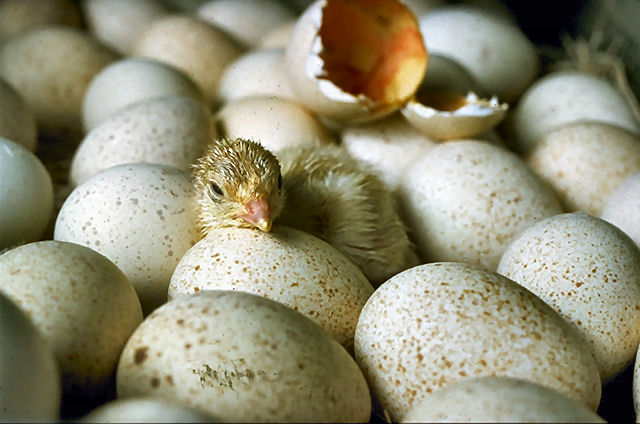
Hatching & first days
A chick needs warmth, water and suitable starter feed. Prepare its setting before arrival and observe its behavior.
What to observe
Watch access to warmth, water and starter feed, the way young birds gather or spread out, and whether each bird can reach the essentials.
Raised with a broody hen
A maternal hen supplies warmth and guides chicks. The keeper still provides a protected setting, feed, water and checks that each chick thrives.
Managed brooder rearing
Provide a warm area, cooler retreat, dry bedding and suitable feeders and drinkers. Watch chick behavior as well as the thermometer. Brooding normally supports birds eating for themselves; it is not routine syringe feeding.
Life-stage teaching sources
- Mississippi State University Extension · incubation factors ↗
- Cooperative Extension · brooding poultry hatchlings ↗
Conservation Legacy original teaching. Image captions identify the pictured animal; general species examples remain separate from selected-breed images.
See when life changes.
Body growth, reproductive development and managed weaning describe different changes. Explore the reference windows beside the care they help explain.
Dominique · pasture growth trial
Cockerels from Cackle Hatchery, raised at Providence Farm, Missouri, in 2013.
Receipt0.070 lb
Mean live body weight for this study flock at the selected weighing.
Study method, evidence and data table
Group weighings through week 9; samples of 15 birds at weeks 11, 14 and 17; remaining birds at day 130. Birds moved to pasture pens after day 33 and received prepared grower feed.
Study flock averages. Day 0 is receipt of the chicks, with exact hatch age unspecified. The sample changes across weighings; interval gains compare flock means. Unmeasured weeks are omitted.
| Days after receipt | Mean live weight (lb) |
|---|---|
| Receipt | 0.070 |
| 7 | 0.100 |
| 14 | 0.135 |
| 21 | 0.261 |
| 28 | 0.438 |
| 35 | 0.613 |
| 42 | 0.840 |
| 49 | 1.103 |
| 56 | 1.397 |
| 63 | 1.643 |
| 77 | 2.509 |
| 98 | 3.309 |
| 119 | 4.253 |
| 130 | 4.388 |
Incubation
21 daysApproximate species reference for planning.
Evidence ↗After birth or hatch · reference windows
General chickens; seven named breeds in Missouri pasture trial separate below. Bars share a time axis measured from birth or hatch; each label retains its source units.
First laying under adequate management/light18–22 weeks
species reference
Timing depends on breed; not a Buckeye/Jersey Giant measured mean.
Source for this window ↗Birth / hatch · 0154 days
What we risk losing
Keep a living inheritance within reach.
Watch · The Livestock Conservancy, 2026. Preservation includes the living animals, their families and the people able to keep them. The sequence beside this text explains a process; it is not a measured decline for this breed.Explore this breed’s conservation →- Historic family
Recorded families connect today’s animals with the people and places that shaped them.
- Funneling begins
Some branches stop reproducing, or their records become difficult to follow.
- Bottleneck
Representation can concentrate into fewer animals and fewer distinct breeding options.
- Preservation window
Age, health, living animals, reliable records and available homes influence what can continue.
- Action or loss
Education, care, documentation and coordinated stewardship shape what survives.
Population · dates · scope
Numbers need their context.
A status, registration count and breeding-population estimate answer different questions. Their dates and definitions matter.Conservation status and source-reported population evidence
Known flocks
- Assessment year / period
- 1970
- Geography / scope
- United States
Known flock count, not individual chickens.
Read the source →These measures describe different dates, places and populations. They should not be added together or treated as a new census conducted by Conservation Legacy.
The community carries it forward
The future needs people who keep its knowledge alive.
A dated photograph, a keeper’s experience, a historical source or a documented correction can help the next generation understand dominique.What you know today can become part of what this breed still has tomorrow.
Breed knowledgeKeep traits connected to the documented population.Teach what sources establish and identify what still needs evidence.Stories & historyPreserve the people and places behind the animal.Dates, locations and source context make a memory more useful.Documents & photographsKeep the creator and meaning with the record.Share material with permission, accurate captions and provenance.Practical stewardshipConnect learning with responsible care.Use the species foundations and individual needs to guide further questions.Keep exploring
One world. Many ways to enter.
Dominique Library & ArchiveOriginal articles, general foundations and source evidence→Near You & world mapDocumented breed connections and nearby places→This breed’s common areaLearning, contributions and community connections→Bloodlines & records · coming soonVerified animals and relationships will come later→Our founding Puerto Rican Paso Fino worldThe design and preservation foundation for every breed world→