
Ancona
Animal identity
One living story. Knowledge kept together.
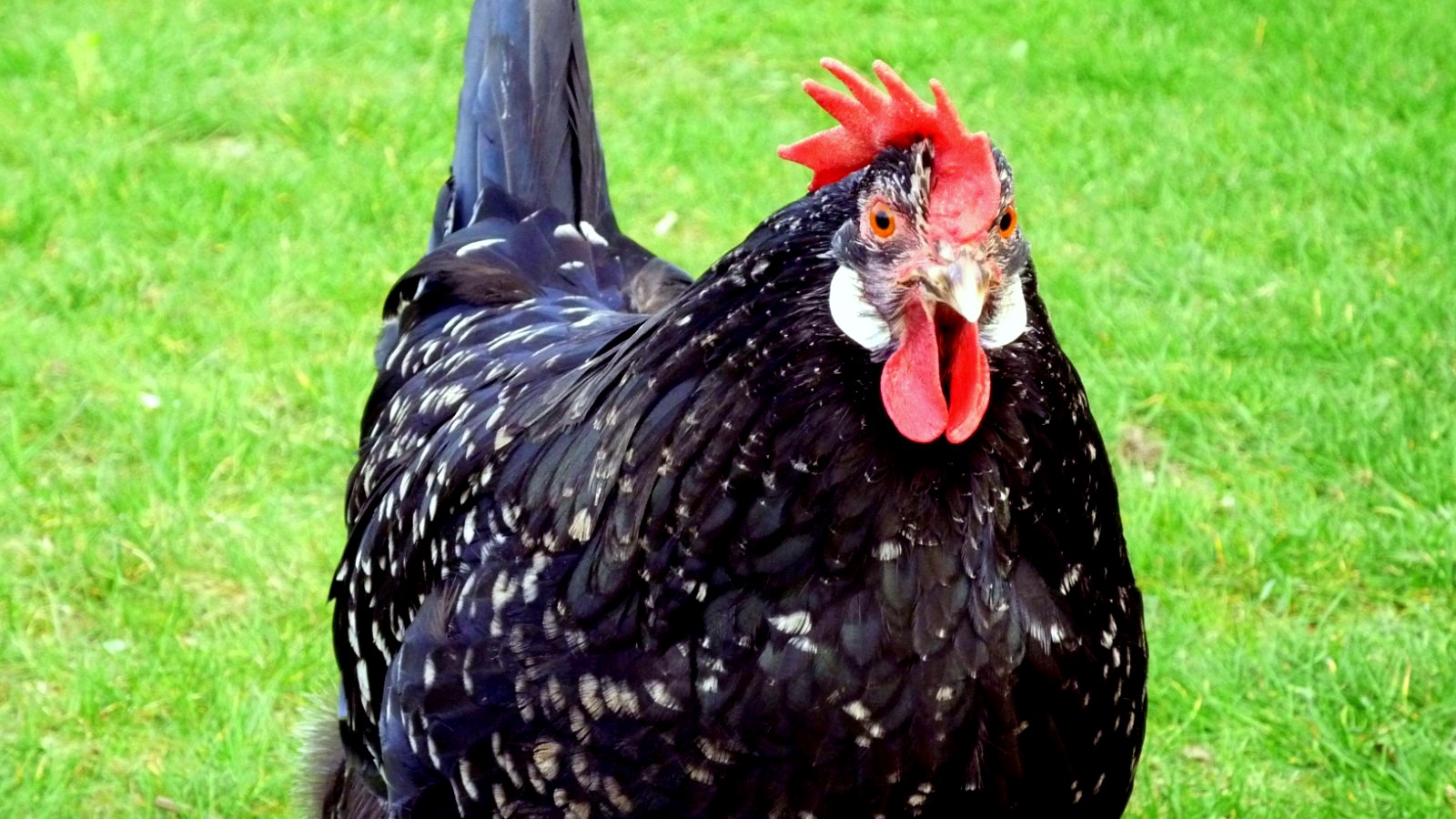
An Ancona chicken showing its black feathers with white mottling. · Festina lente · CC BY-SA 3.0 · License terms
Recognize what makes this population itself.
Black feathers tipped with white mottling, a relatively small body and lively movement identify Anconas. They belong to the Mediterranean white-egg tradition. Their active ranging behavior and laying emphasis explain their suitability for farms seeking a bird that explores rather than stays quietly in place.
The Conservancy's reference profile describes medium to large eggs with white shells. These descriptions help compare the population's traditional farm role; actual performance also depends on age, breeding line and management.
Appearance introduces the animal; a registry standard explains a documented breeding population. A photograph, color or familiar informal name alone cannot establish every individual’s membership.
- Recorded roles
- Eggs
- Egg Color
- White
- Egg Size
- Medium to Large
- Temperament
- Highly Active
- Breed Weight
- Male 6 lbs. / Female 4.5 lbs.
Reference values from the breed’s conservation profile. Weight describes a reference animal, not a universal feeding or fitness target. Temperament varies with breeding, individual experience and handling.
Two comb forms within an established laying population
The reference describes the arrival of Single Comb followed by Rose Comb stock and connects continued interest with both type and utility. A teaching image should identify the comb form, and performance information should be tied to the actual population or line. A broad laying reputation cannot establish the same output for every flock.
Interpreting this population in practice
How its documented identity shapes learning and conservation.
Anconas combine Mediterranean laying identity with lively movement and mottled feathers. The Single and Rose Comb forms should be named correctly when photographs or birds are compared. Activity can be valuable on range, but it also means secure enclosure and thoughtful handling matter. A black-and-white pattern alone is insufficient evidence that a chicken belongs to an Ancona breeding population.
Mottled feathers that change with age
Anconas developed in Italy’s Marche region and take their name from its Adriatic port. Like other Mediterranean laying populations, their story combines relatively small bodies, white eggs and an active farm presence.
Black ground color with white-tipped feathers produces the familiar mottled appearance. The Conservancy notes that white markings can increase as birds age. A young and an older Ancona can therefore look different without that difference alone identifying a new variety or a cross.
Both single- and rose-combed forms have recognized histories. The source’s weight references are about six pounds for males and 4.5 pounds for females. Our interpretation is that a useful breed portrait should show pattern, structure and life stage together. This also helps explain why a nearly black youngster should not automatically be judged against the photograph of a much older bird. Mottling introduces the Ancona visually; its regional origin and laying role explain the animal behind the pattern.
Sources for general species learning
Sources behind the breed’s story.
The original history, identity and conservation teaching above draws on these cited accounts. Official links open the full material for further study.
Keep learning from official information.
These research portals help locate further material. A search link is a route for exploration; it is separate from the sources used for the article above. Domestic breed information, wild-species assessment, historical books and new research need their own context.
- FAO DAD-IS · Domestic breed information
- IUCN Red List · Species assessments
- Biodiversity Heritage Library · Historical literature search
- USDA National Agricultural Library · Research search
- Google Scholar · Scholarly literature search
- Open Library · Book catalogue search
- HathiTrust · Digitized catalogue search