
Mottled feathers that change with age
Knowledge for understanding and preserving Ancona.
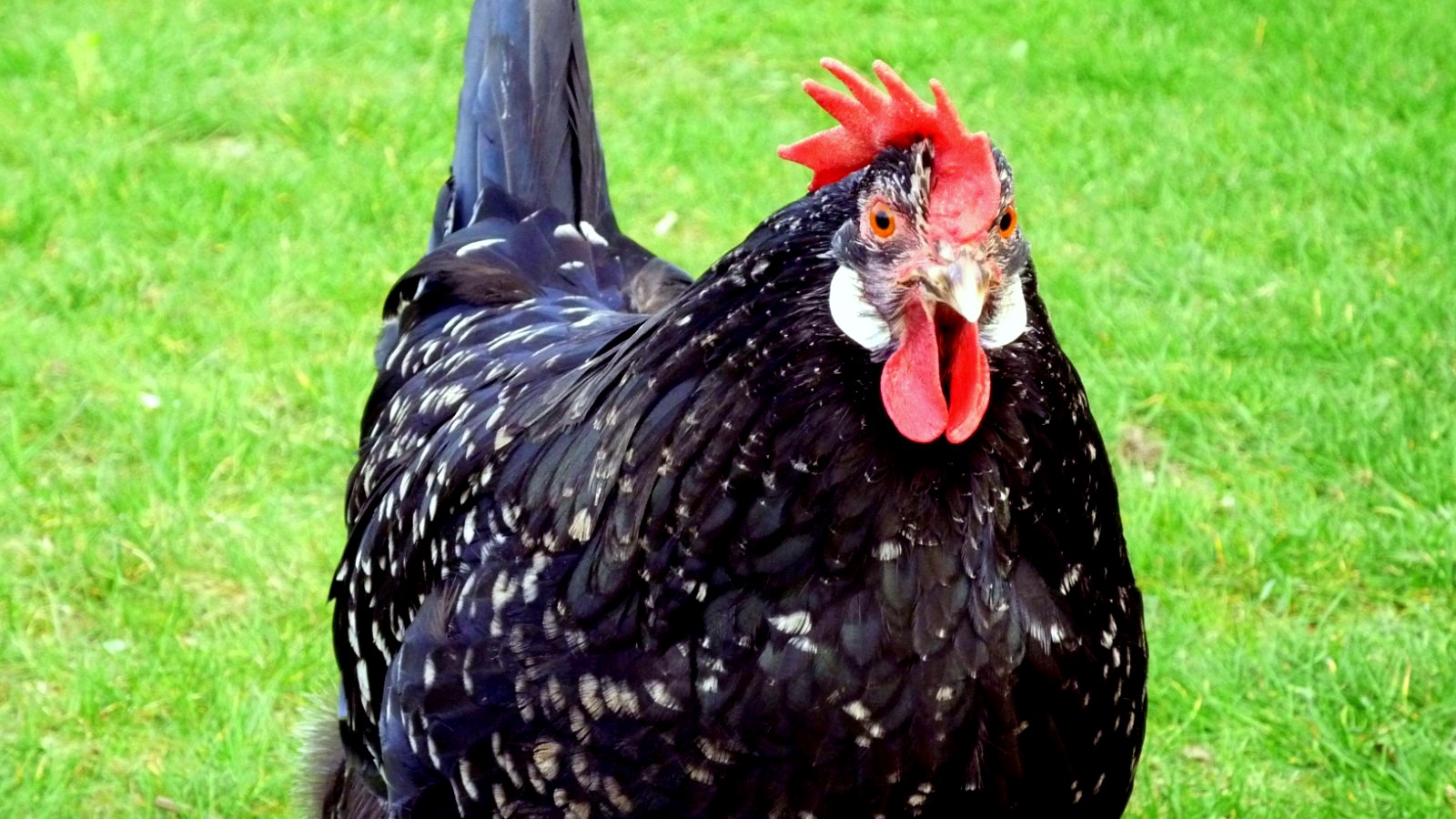
Anconas developed in Italy’s Marche region and take their name from its Adriatic port. Like other Mediterranean laying populations, their story combines relatively small bodies, white eggs and an active farm presence.
Black ground color with white-tipped feathers produces the familiar mottled appearance. The Conservancy notes that white markings can increase as birds age. A young and an older Ancona can therefore look different without that difference alone identifying a new variety or a cross.
Both single- and rose-combed forms have recognized histories. The source’s weight references are about six pounds for males and 4.5 pounds for females. Our interpretation is that a useful breed portrait should show pattern, structure and life stage together. This also helps explain why a nearly black youngster should not automatically be judged against the photograph of a much older bird. Mottling introduces the Ancona visually; its regional origin and laying role explain the animal behind the pattern.
Sources behind this article
This is original Conservation Legacy teaching informed by the sources below. Follow the official material for the full account and its context.