
Ancona
History & heritage
One living story. Knowledge kept together.
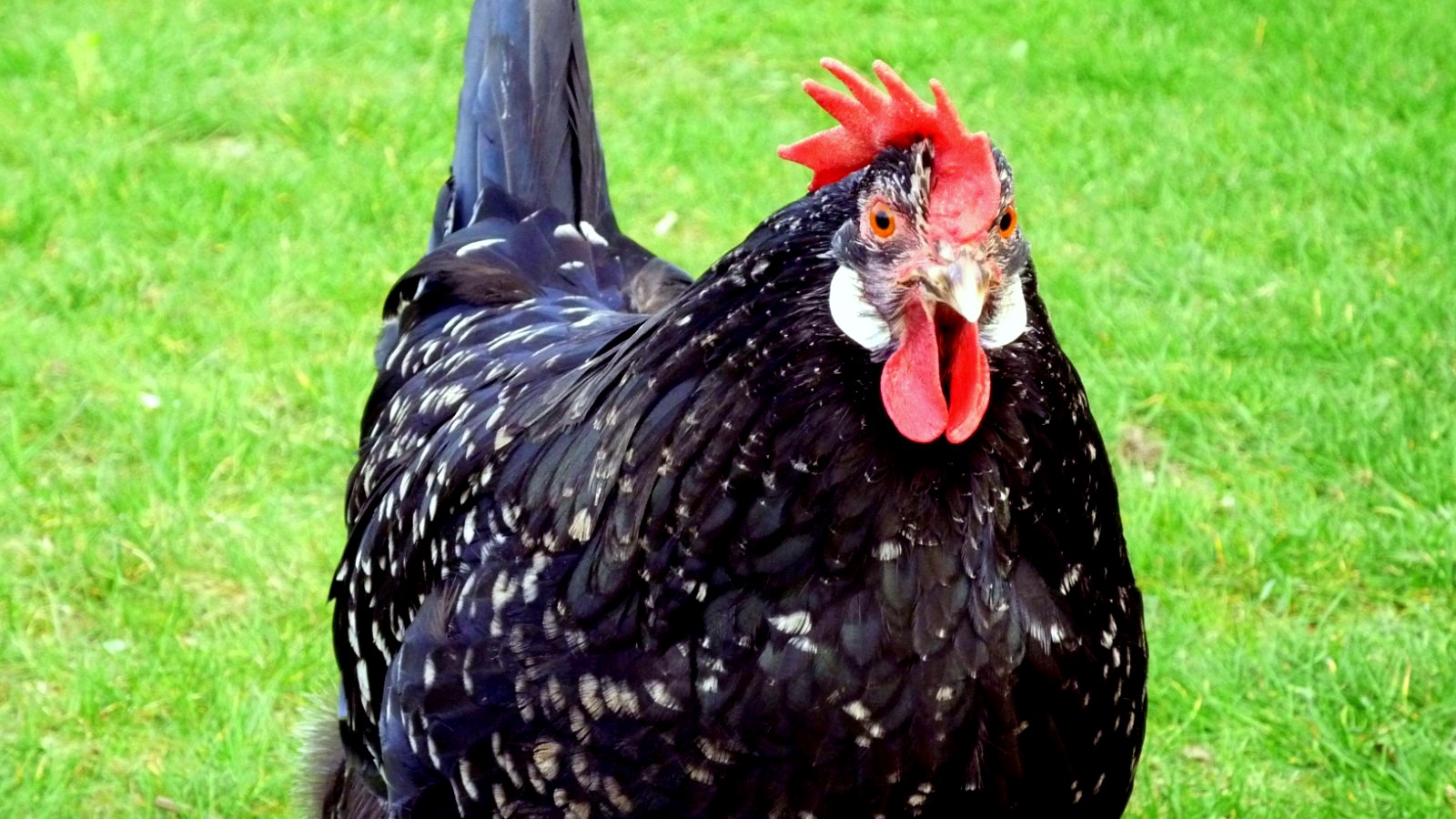
An Ancona chicken showing its black feathers with white mottling. · Festina lente · CC BY-SA 3.0 · License terms
Follow the story behind the name.
The Ancona belongs to the small-bodied, white-egg poultry tradition of the Mediterranean. Its name comes from an Italian Adriatic port, while regional selection shaped a vigorous ranging bird.
Imports to England in the nineteenth century preceded American breeding, including H. C. Sheppard's 1906 import. The single-combed variety entered the American standard in 1898 and the rose-combed variety in 1914.
Black feathers tipped with white mottling, a relatively small body and lively movement identify Anconas. They belong to the Mediterranean white-egg tradition. Their active ranging behavior and laying emphasis explain their suitability for farms seeking a bird that explores rather than stays quietly in place.
The Conservancy's reference profile describes medium to large eggs with white shells. These descriptions help compare the population's traditional farm role; actual performance also depends on age, breeding line and management.
Ancona and Leghorn resemblance does not erase identity
The Poultry Club records English imports from the Italian Ancona region in 1851 and notes historical debate about relationship to mottled Leghorns. Breeders nonetheless retained Ancona as the population's name. Similar Mediterranean type and color are therefore context for comparison, not sufficient evidence that the names are interchangeable.
Sources for general species learning
Sources behind the breed’s story.
The original history, identity and conservation teaching above draws on these cited accounts. Official links open the full material for further study.
Keep learning from official information.
These research portals help locate further material. A search link is a route for exploration; it is separate from the sources used for the article above. Domestic breed information, wild-species assessment, historical books and new research need their own context.
- FAO DAD-IS · Domestic breed information
- IUCN Red List · Species assessments
- Biodiversity Heritage Library · Historical literature search
- USDA National Agricultural Library · Research search
- Google Scholar · Scholarly literature search
- Open Library · Book catalogue search
- HathiTrust · Digitized catalogue search