A practical horse owner guide to noticing trouble, calling for help and finding the right source. Keep your veterinarian’s number in your phone and barn.Find the situation
YOUR FIRST CALL
What to tell the veterinarian
Keep this short list near the barn phone. Take notes as you speak.
Where you are and the best route or gate for a truck.
Which horse: age, sex, known conditions, pregnancy status and current medications.
What changed and when: appetite, manure, movement, breathing, behavior, fever or exposure.
What you have observed: temperature, pulse and breathing if you can measure them safely, plus a brief video if useful.
What has already been given: medication, feed or other treatment, including timing and amount.
RECOGNIZE THE PATTERN
What are you seeing?
These are owner recognition notes, not diagnoses. Each card links directly to a veterinary association or university source; discuss treatment with your own veterinarian.
Colic or abdominal pain
Watch for Pawing, flank-watching, repeated lying down or rolling, sweating, refusing food or less manure.
First priority Call your veterinarian promptly. Note the onset, pain pattern, feed, manure and vital signs if safe. Follow their instructions about feed, movement and medication.
Watch for Squinting, tearing, cloudiness, swelling, eyelid injury or a newly abnormal eye.
First priority Arrange an urgent veterinary eye examination. Prevent rubbing and further trauma. Do not use leftover eye medication before veterinary advice.
Watch for Sudden foot soreness, shifting weight, reluctance to turn, strong digital pulses or a rocked-back posture.
First priority Call a veterinarian promptly. Minimize movement and provide a comfortable surface while you follow their guidance; the cause and hoof support need assessment.
Watch for Labored breathing, fever, cough, nasal discharge or more than one affected horse.
First priority Breathing distress needs urgent veterinary attention. For possible infectious disease, limit contact and shared equipment, pause movement and ask your veterinarian about isolation.
Watch for Stumbling or incoordination, weakness, facial changes, seizures or difficulty rising.
First priority Keep people clear of a horse that may fall. Avoid unnecessary movement, separate from other horses when safe and call your veterinarian urgently. Causes differ; signs alone do not identify one disease.
Watch for Sudden salivation, tremors, weakness, colic or unexplained illness after a change in pasture or feed.
First priority Stop access to a suspected source, save a photo or sample without putting yourself at risk and call your veterinarian. Tell them what, when and how much might have been eaten.
Watch for An advancing hazard, lost routes or an order to move horses.
First priority Use your written evacuation plan early. Confirm a safe destination, trailer and route; take identification, medications and essential records. Follow local emergency directions.
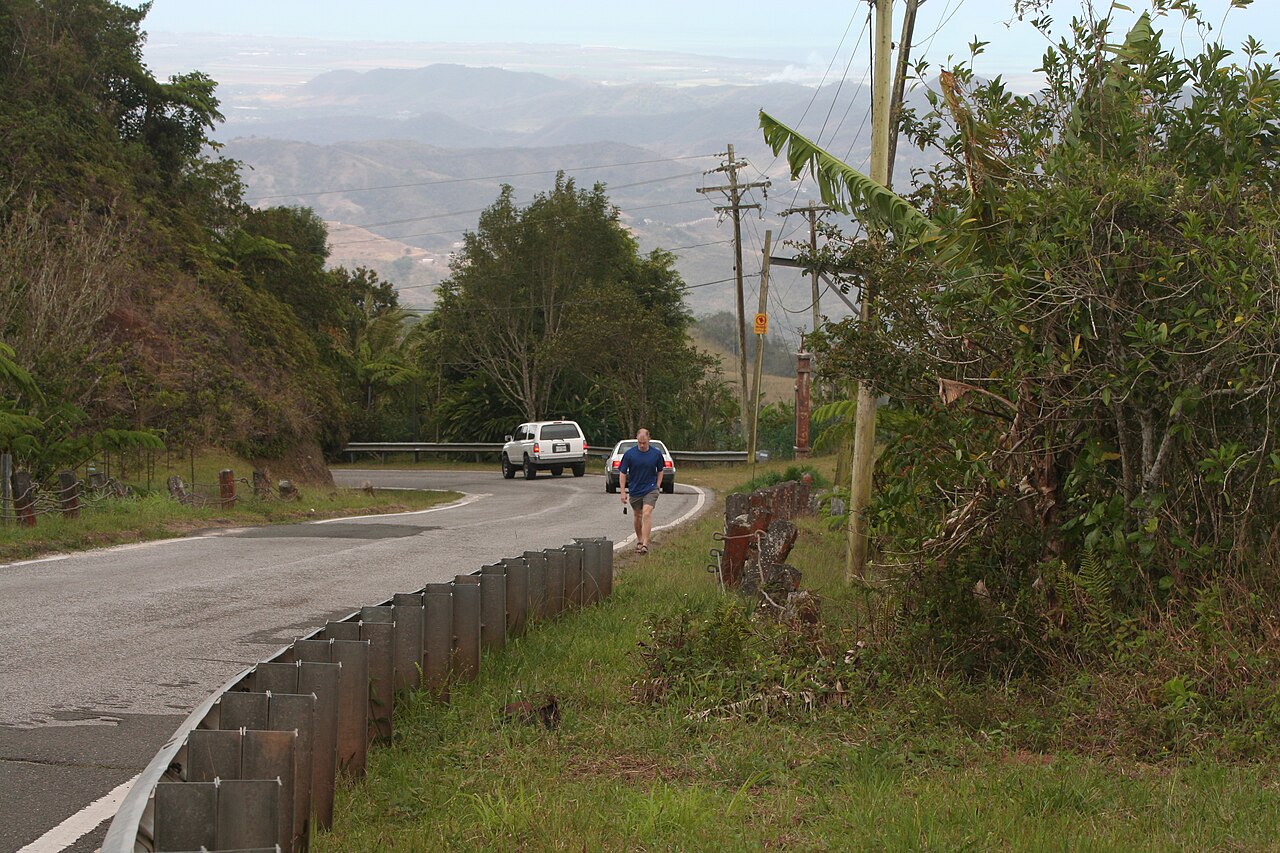
Routes matter in an emergency. Save directions a veterinarian or hauler can follow even if service fails. Landscape: La Ruta Panorámica, Collores, Juana Díaz; Steven Isaacson / Wikimedia Commons, CC BY-SA 2.0.
BEFORE THERE IS AN EMERGENCY
Make the next hour easier now.
Write the plan, keep a copy in the barn and review it with whoever may care for your horses.
Regular and after-hours veterinarian numbers
Trailer, driver, destination and backup route
Normal vital signs and identification for each horse
Medication, allergies and treatment history
Farm address, gate code and clear driving directions
Halters, records, feed, water and evacuation supplies
Keep learning before the urgent moment.
The AAEP emergency preparation guide and University of Minnesota first aid guide explain equipment, observation and planning in more depth.