
Silver Marten contrasts: a breed pattern and its genetic context
Knowledge for understanding and preserving Silver Marten.
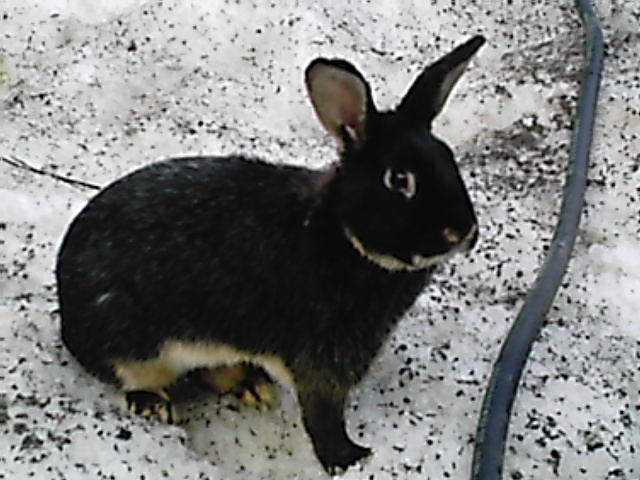
The Silver Marten's identity combines a dark upper coat with sharply contrasting pale markings. ARBA distinguishes the breed from the color name used in other rabbit populations and recognizes Black, Chocolate, Blue and Sable varieties. Black and Chocolate had working standards in 1927; Blue and Sable followed in 1933. The Conservancy describes pale eye circles and areas under the chin, body and tail, with lighter ticking along the lower sides. This is a localized pattern rather than the general age-related silvering of the Silver breed. The two names should not lead readers to assume they represent the same inheritance process.
The agouti signaling system supplies relevant biological background for tan-patterned rabbits. A 2020 primary study compared the ASIP region in a black-and-tan rabbit with three ordinary agouti rabbits using whole-genome sequence data. It identified an approximately eleven-kilobase deletion affecting the promoter and first exon of a hair-cycle-specific transcript. The deletion's genotypes matched the black-and-tan phenotype in a 49-rabbit comparison, making it the authors' strongest candidate for the rabbit at allele. The affected region concerns regulation of a transcript rather than merely substituting one pigment for another everywhere on the body. This helps explain how dark dorsal and contrasting ventral regions can be part of one inherited pattern. The published experiment was not a breed-wide test of Silver Martens.
TYR, encoding tyrosinase, supplies another piece of rabbit pigment biology. Primary work on the C-series links particular amino-acid changes with chinchilla-associated phenotypes and distinguishes them from Himalayan and full-albino effects. That research is important context for the Silver Marten's historical connection with Chinchilla breeding, but a complete genotype should not be assigned to every Silver Marten from that history alone. Pattern, pigment chemistry and color density are separate components that can combine in one animal. Black, chocolate, blue and sable examples consequently need their own descriptions within the breed. A breed-specific DNA survey could refine this account; the currently cited studies support the underlying mechanisms and clearly identified phenotypes, not an assertion that every member has the same entire genetic constitution.
Sources behind this article
This is original Conservation Legacy teaching informed by the sources below. Follow the official material for the full account and its context.