
Rocky Mountain
Care foundations
One living story. Knowledge kept together.
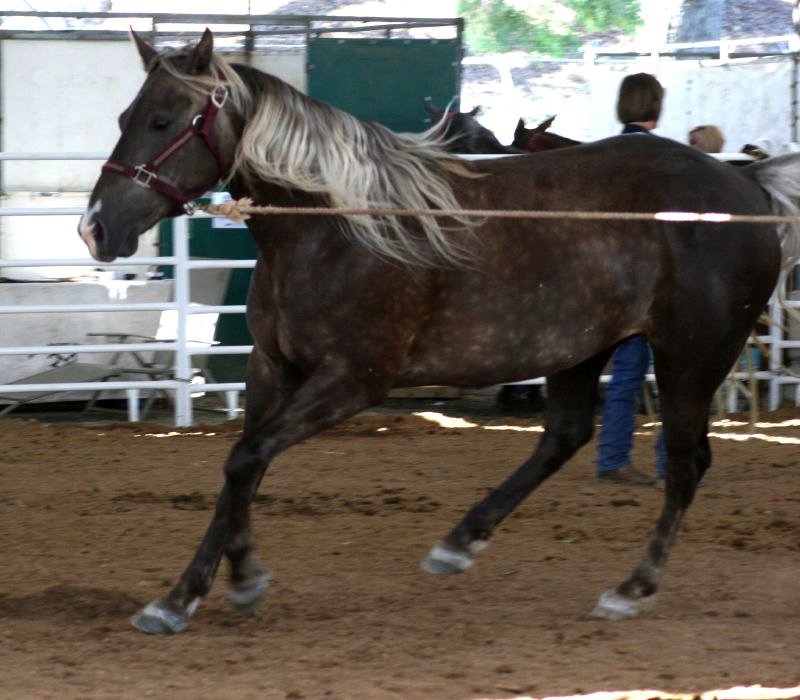
Rocky Mountain Horse, photographed in 2008. · Just chaos; Commons contrast edit by Kersti Nebelsiek · CC BY 2.0 · License terms
Understanding horses: care foundations
Horses obtain important energy from microbial fermentation of fibrous forage in the cecum and large colon. Their relatively small stomach and digestive anatomy explain why forage access and thoughtfully sized meals matter. Nutrition changes with work, growth, pregnancy, lactation and health; breed reputation as an easy keeper cannot replace individual body-condition assessment. Group-fed horses need enough feeding space for subordinate individuals. Older horses need diet changes based on condition, dental function, disease and activity rather than age alone.
These are general species foundations. The breed's own history and traits help explain how it developed, while an individual animal's age, environment and purpose shape its daily needs. Preservation includes keeping animals healthy enough to express normal behavior and maintain future generations. Compare dependable husbandry guidance with breed registry descriptions, and distinguish inherited traits from assumptions about toughness. Teaching the reasons behind care decisions gives readers a stronger foundation than applying one feeding formula to every animal.
University Extension · Merck Veterinary Manual · Merck Veterinary Manual
Bring this population’s identity into the picture.
These horses belong to the Appalachian gaited riding tradition, with selection for comfortable travel, useful temperament and sure-footed work over uneven ground. Chocolate coloring is strongly associated with the breed's public image, but it does not represent its entire accepted color range. Rocky Mountain and Mountain Pleasure horses are related populations with separate registry histories.
The breed description explains historical traits and recorded roles. Daily care also depends on an individual’s condition, age, environment and activity. A statement about historical adaptation does not establish immunity to disease or eliminate the need for suitable nutrition and shelter.
Read the species care foundation guide →Comfortable gait and the horse's whole preparation
A smooth intermediate gait can make the Rocky Mountain Horse appealing, but riding comfort depends on more than the name of the gait.
A smooth intermediate gait can make the Rocky Mountain Horse appealing, but riding comfort depends on more than the name of the gait. The actual horse, its training, equipment and rider form the partnership. Observing how it moves and responds under appropriate conditions offers useful evidence.
University of Minnesota Extension describes routine hoof care as essential and emphasizes coordination with farrier and veterinarian. That species-level foundation should support a gaited horse without turning breed preference into an unsupported trimming or shoeing prescription.
Ask what work and surfaces the horse knows, whether its gait is consistent in the intended circumstances and what care its current professionals recommend. A video of selected strides should be understood as an observation, rather than proof of every aspect of its working soundness.
The eye-health science belongs alongside these practical questions. MCOA testing, veterinary examination, certification and learned riding behaviour have different purposes. A horse can have complete paperwork and still need preparation for a new rider or role. Appreciating the whole animal makes a more realistic introduction than expecting chocolate colour, a gold certification seal or a smooth-gaited reputation to settle every suitability question.
Sources for general species learning
Sources behind the breed’s story.
The original history, identity and conservation teaching above draws on these cited accounts. Official links open the full material for further study.
Keep learning from official information.
These research portals help locate further material. A search link is a route for exploration; it is separate from the sources used for the article above. Domestic breed information, wild-species assessment, historical books and new research need their own context.
- FAO DAD-IS · Domestic breed information
- IUCN Red List · Species assessments
- Biodiversity Heritage Library · Historical literature search
- USDA National Agricultural Library · Research search
- Google Scholar · Scholarly literature search
- Open Library · Book catalogue search
- HathiTrust · Digitized catalogue search