
Pilgrim
Animal identity
One living story. Knowledge kept together.
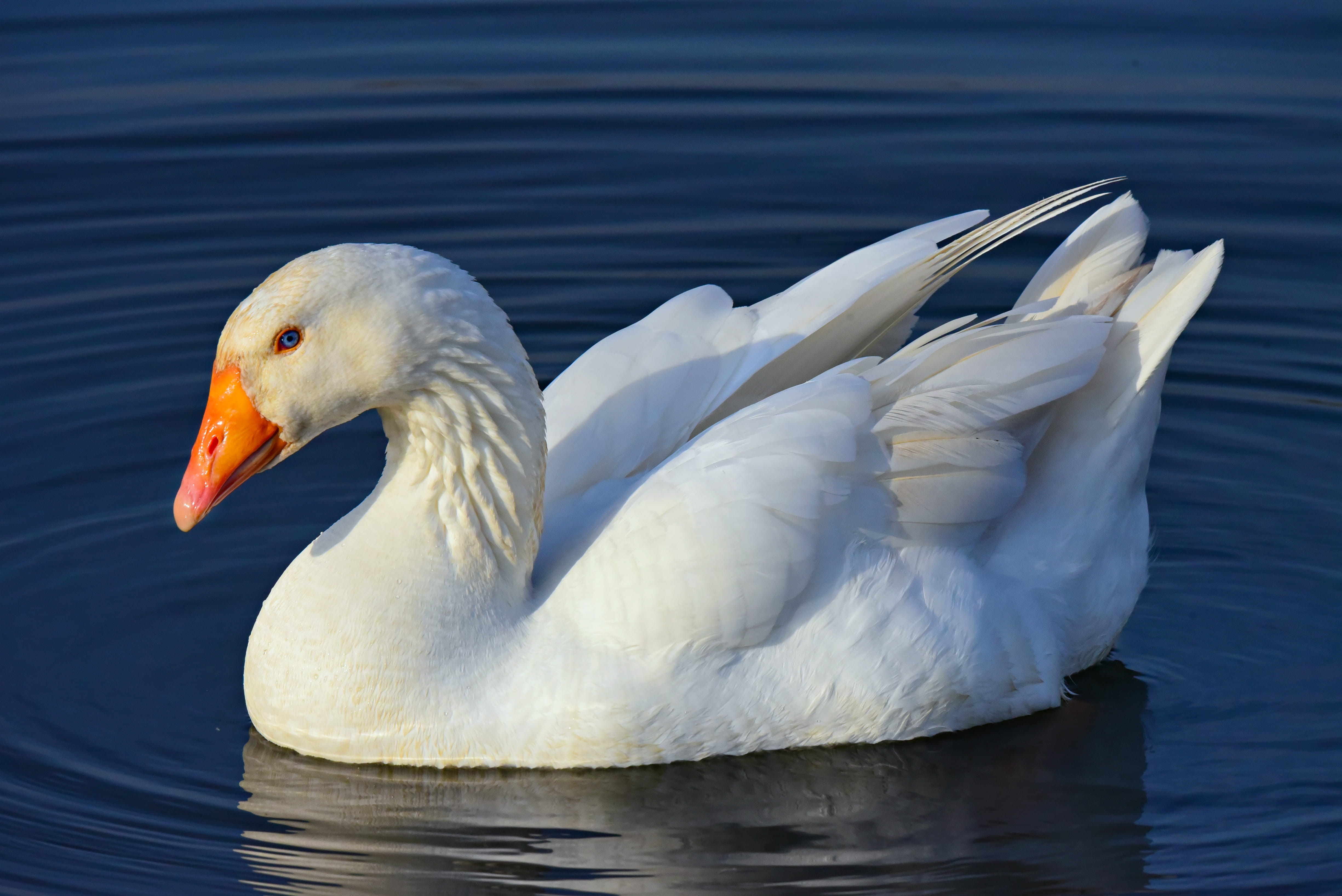
Male Pilgrim goose photographed on water in 2019. · Pxfuel · CC BY-SA 4.0 · License terms
Recognize what makes this population itself.
Both young and adult Pilgrims can be sexed by their color. This inherited difference makes the breed useful for teaching how appearance and sex can be linked. The goose also carries a practical meat-producing farm identity rather than serving solely as an ornamental bird.
Appearance introduces the animal; a registry standard explains a documented breeding population. A photograph, color or familiar informal name alone cannot establish every individual’s membership.
- Recorded roles
- Meat
- Egg Color
- White
- Egg Size
- Large
- Temperament
- Docile
- Adult Weight
- Male: 14 lbs.; female: 13 lbs. (2026 chart)
- Rate of Lay (2026 chart)
- 25–40; period not stated
- Brooding & Mothering (2026 chart)
- Good
- Breed Weight
- 10 - 14 lbs.
Reference values from the breed’s conservation profile; corrected field sourced to the linked breed authority. Weight describes a reference animal, not a universal feeding or fitness target. Temperament varies with breeding, individual experience and handling.
Reading identity and evidence carefully
Color differences between sexes make paired photographs particularly valuable. They can explain why a white male and a darker female belong to one population. This inherited pattern is a practical feature, but a photograph alone cannot demonstrate the breeding continuity of an unrecorded bird. Function and population history remain part of identity.
Sources for general species learning
Sources behind the breed’s story.
The original history, identity and conservation teaching above draws on these cited accounts. Official links open the full material for further study.
Keep learning from official information.
These research portals help locate further material. A search link is a route for exploration; it is separate from the sources used for the article above. Domestic breed information, wild-species assessment, historical books and new research need their own context.
- FAO DAD-IS · Domestic breed information
- IUCN Red List · Species assessments
- Biodiversity Heritage Library · Historical literature search
- USDA National Agricultural Library · Research search
- Google Scholar · Scholarly literature search
- Open Library · Book catalogue search
- HathiTrust · Digitized catalogue search