
American Buff
Animal identity
One living story. Knowledge kept together.
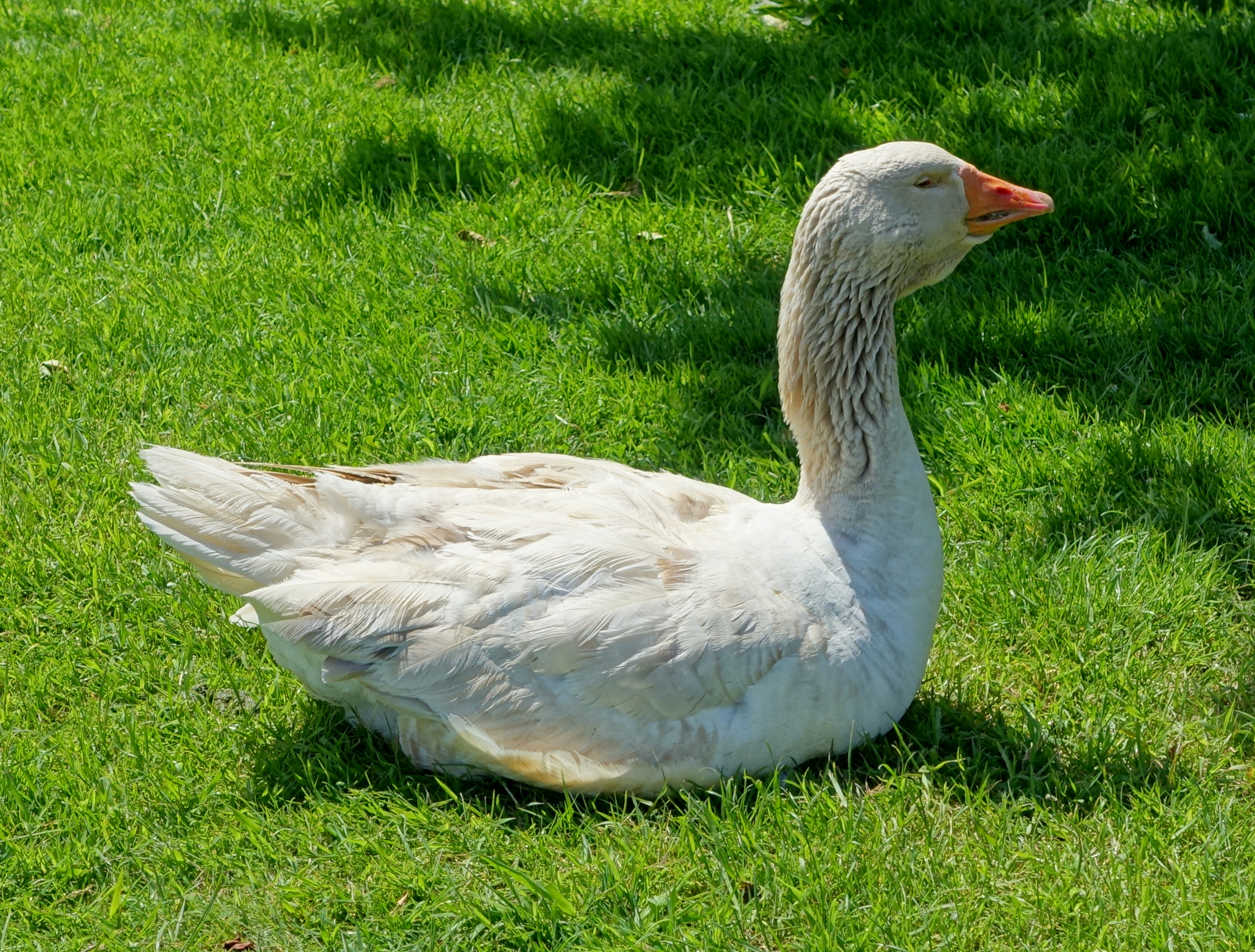
American Buff goose at the Lost Gardens of Heligan, Cornwall, in 2016. · Daderot · CC0 1.0 · License terms
Recognize what makes this population itself.
Soft buff coloring gives the goose its warm visual identity. American Buff bills and legs are orange to orange-red, contrasting with the reddish-pink coloration described for Brecon Buffs. Useful farm size and a generally calm reputation accompany the ornamental appeal.
Appearance introduces the animal; a registry standard explains a documented breeding population. A photograph, color or familiar informal name alone cannot establish every individual’s membership.
- Recorded roles
- Meat
- Egg Color
- White
- Egg Size
- Large
- Temperament
- Docile, Curious
- Adult Weight
- Male: 18 lbs.; female: 16 lbs. (2026 chart)
- Rate of Lay (2026 chart)
- 25–35; period not stated
- Brooding & Mothering (2026 chart)
- Good
- Breed Weight
- Males - 18 lbs. / Females - 16 lbs.
Reference values from the breed’s conservation profile; corrected field sourced to the linked breed authority. Weight describes a reference animal, not a universal feeding or fitness target. Temperament varies with breeding, individual experience and handling.
Reading identity and evidence carefully
Comparison with the Brecon Buff should explain differences as well as resemblance. Bill and leg coloration can help readers understand why similar names and feather colors do not collapse two populations into one. A calm reputation is also a population description, not assurance about every individual's behavior or every social grouping.
Similar buff feathers can belong to different breeding histories
The British Waterfowl Association's Brecon Buff account identifies the smaller Welsh population by pink feet and bill, distinguishing it from the American Buff. The comparison supports accurate visual education: a warm buff coat alone does not establish which population a goose belongs to.
The Brecon account describes Rhys Llewellyn's documented development work and later British recognition. That history belongs to the Welsh breed and should not be transplanted into an American Buff article merely because both names include Buff. The American population's unresolved foundation remains a separate question.
Placed side by side, the sources teach how to compare without merging. Photographs should state the identified breed, and weight or production descriptions should retain their scope. A similar color can be a useful starting point for learning while conformation, historical continuity, and reliable source identification complete the explanation.
Sources for general species learning
Sources behind the breed’s story.
The original history, identity and conservation teaching above draws on these cited accounts. Official links open the full material for further study.
Keep learning from official information.
These research portals help locate further material. A search link is a route for exploration; it is separate from the sources used for the article above. Domestic breed information, wild-species assessment, historical books and new research need their own context.
- FAO DAD-IS · Domestic breed information
- IUCN Red List · Species assessments
- Biodiversity Heritage Library · Historical literature search
- USDA National Agricultural Library · Research search
- Google Scholar · Scholarly literature search
- Open Library · Book catalogue search
- HathiTrust · Digitized catalogue search