
American Buff
Ecology & human landscapes
One living story. Knowledge kept together.
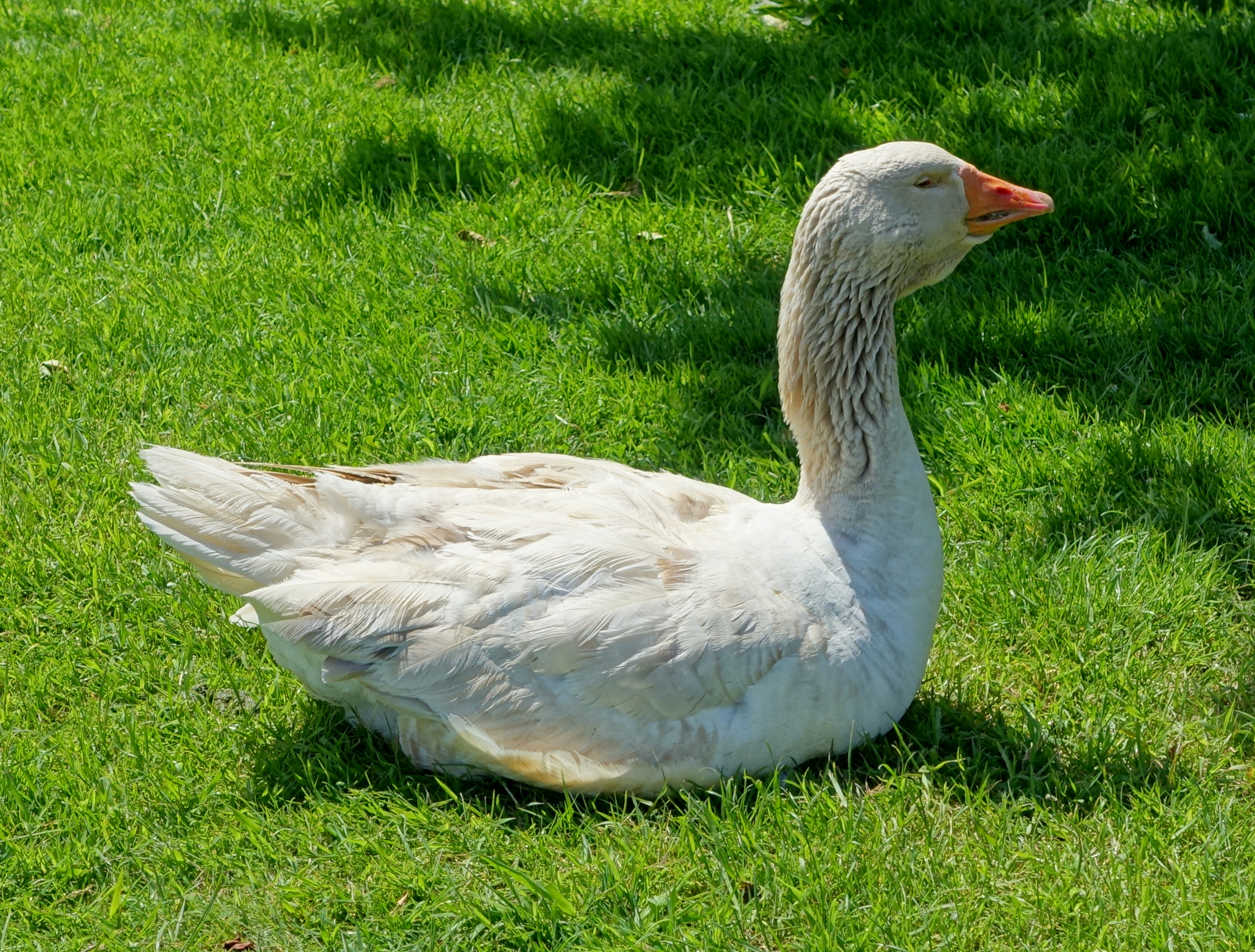
American Buff goose at the Lost Gardens of Heligan, Cornwall, in 2016. · Daderot · CC0 1.0 · License terms
Animal, landscape
and the people between them.
Geese link grazing land, water and human settlement. Their feeding changes vegetation, while their care affects manure distribution and the condition of frequently used ground. Teaching should connect those effects to the particular managed site rather than claim a flock always benefits any pasture.
Heritage conservation should also respect the boundary between domestic geese and wild waterfowl. Preserving identified domestic breeding lines does not justify collecting wild birds or releasing domestic ones. The strongest species overview gives readers the ancestral framework and ecology, then sends them into breed chapters that explain the traits, uses and conservation challenges of each population.
This population’s place in that story.
The American Buff's complete founding history remains unresolved. One explanation involves buff mutations in gray flocks; another suggests refinement of imported European buff geese. Its resemblance to the Welsh Brecon Buff does not make them the same breed. The Conservancy treats these proposals as alternatives rather than a settled genealogy.
A breed’s historical setting helps explain its development. Present-day housing, feeding and land management still need to suit the individual animals and the actual site.
Sources for general species learning
Sources behind the breed’s story.
The original history, identity and conservation teaching above draws on these cited accounts. Official links open the full material for further study.
Keep learning from official information.
These research portals help locate further material. A search link is a route for exploration; it is separate from the sources used for the article above. Domestic breed information, wild-species assessment, historical books and new research need their own context.
- FAO DAD-IS · Domestic breed information
- IUCN Red List · Species assessments
- Biodiversity Heritage Library · Historical literature search
- USDA National Agricultural Library · Research search
- Google Scholar · Scholarly literature search
- Open Library · Book catalogue search
- HathiTrust · Digitized catalogue search