
A sex-linked change to the bronze pattern
Knowledge for understanding and preserving Narragansett.
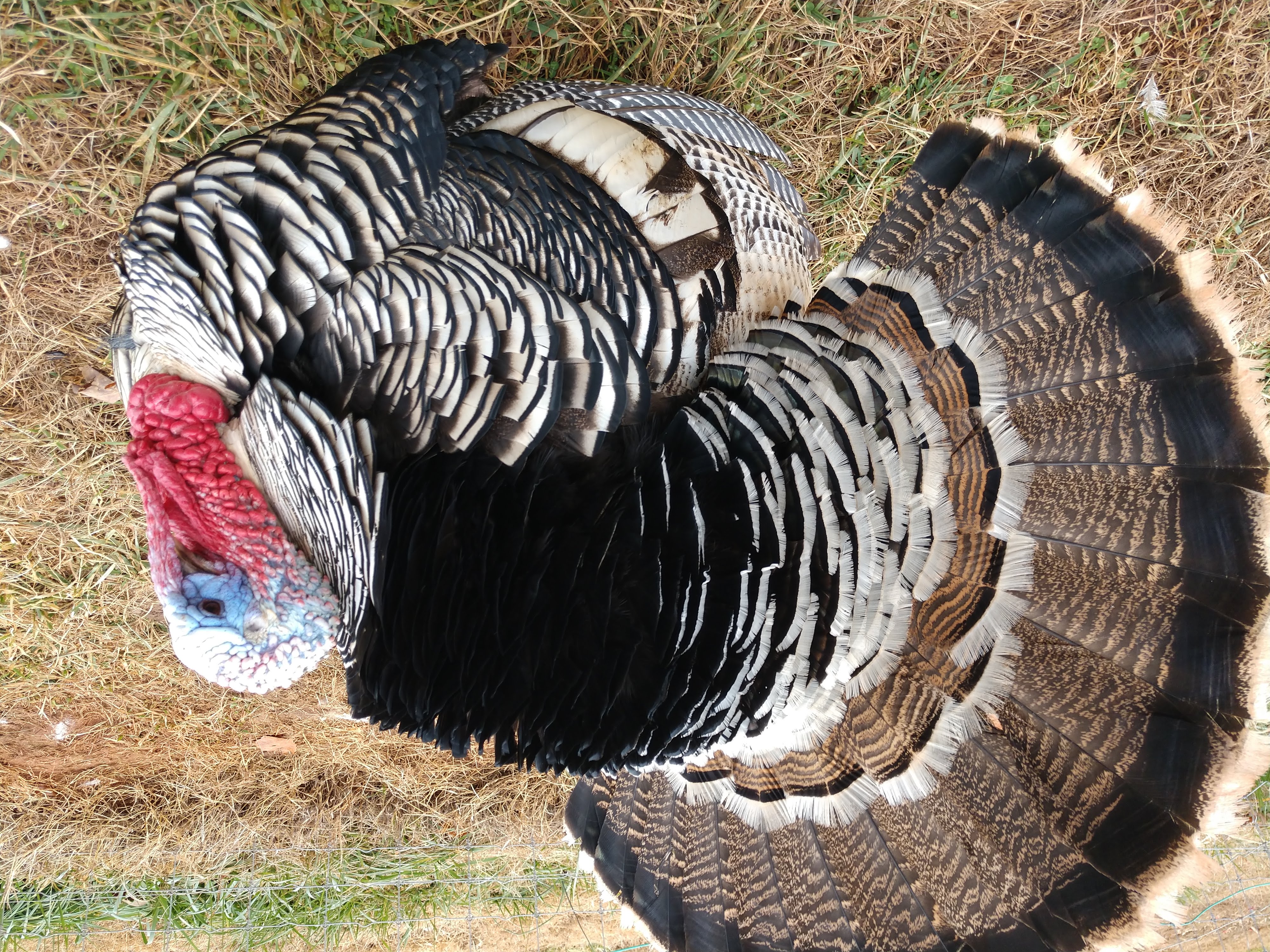
Porter's reference explains Narragansett coloration as a modification of a bronze-base pattern in which gray or dull dark areas replace the coppery bronzing. The factor is sex-linked, so the notation differs between males and females. In poultry, this does not mean that only one sex can show the trait; it means that inheritance depends on sex-chromosome composition.
The breeder also notes that newly hatched Narragansett poults can resemble Bronze poults closely. An early photograph is therefore not always sufficient identification. Mature pattern, parent stock and breeding information belong together. The page distinguishes adult standard weights from actual populations that may have lost production selection. Conserving the variety includes functional natural reproduction and sound adults, rather than using one attractive feather pattern as the entire objective.
Sources behind this article
This is original Conservation Legacy teaching informed by the sources below. Follow the official material for the full account and its context.