
Beveren
History & heritage
One living story. Knowledge kept together.
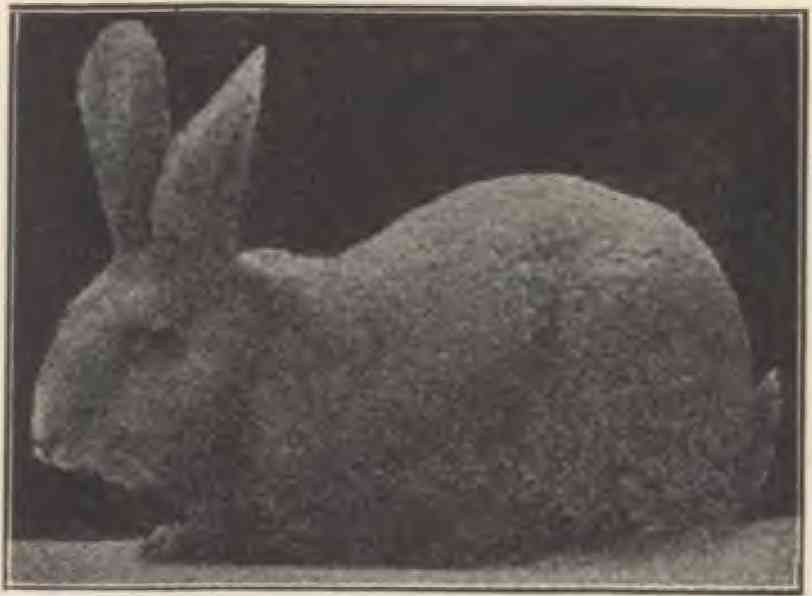
Archival Blue Beveren buck, reproduced from the 1928–1929 ARBA predecessor guidebook, printed page 53. Historical monochrome photograph; not a current registered animal or a color reference. · American Rabbit and Cavy Breeders Association · ARBA Digital Library · Public domain in the United States · published 1928 · License terms
Follow the story behind the name.
The Beveren was recognized in Belgium in 1898 and named for its place of origin in the Waas region. Blue animals appeared in Britain in 1905. A British breed club formed in 1918 and later helped develop broader rabbit organizations. Both standard and giant forms entered early international discussions of the breed.
The Beveren's fur-production history includes selection for a clear, attractive coat color. Its established body type and breeding identity matter as much as that color. Historical references to giant forms should not be silently merged with measurements from the modern standard breed.
Beveren: a breed shaped by people
ARBA locates the Beveren's development in nineteenth-century Belgium and names Brabanconne, St. Nicolas Blue and Blue Vienna among its contributing populations. The breed's later movement between countries makes its history a lesson in regional standards. Recognition in one organization should not be treated as a worldwide definition of every variety. The name connects a modern population to a place, but it does not require every present-day Beveren to have been born there. Explain origins, imports and current recognition as separate stages rather than merging them into a single origin label.
Sources for general species learning
Sources behind the breed’s story.
The original history, identity and conservation teaching above draws on these cited accounts. Official links open the full material for further study.
Keep learning from official information.
These research portals help locate further material. A search link is a route for exploration; it is separate from the sources used for the article above. Domestic breed information, wild-species assessment, historical books and new research need their own context.
- FAO DAD-IS · Domestic breed information
- IUCN Red List · Species assessments
- Biodiversity Heritage Library · Historical literature search
- USDA National Agricultural Library · Research search
- Google Scholar · Scholarly literature search
- Open Library · Book catalogue search
- HathiTrust · Digitized catalogue search