
American Chinchilla
History & heritage
One living story. Knowledge kept together.
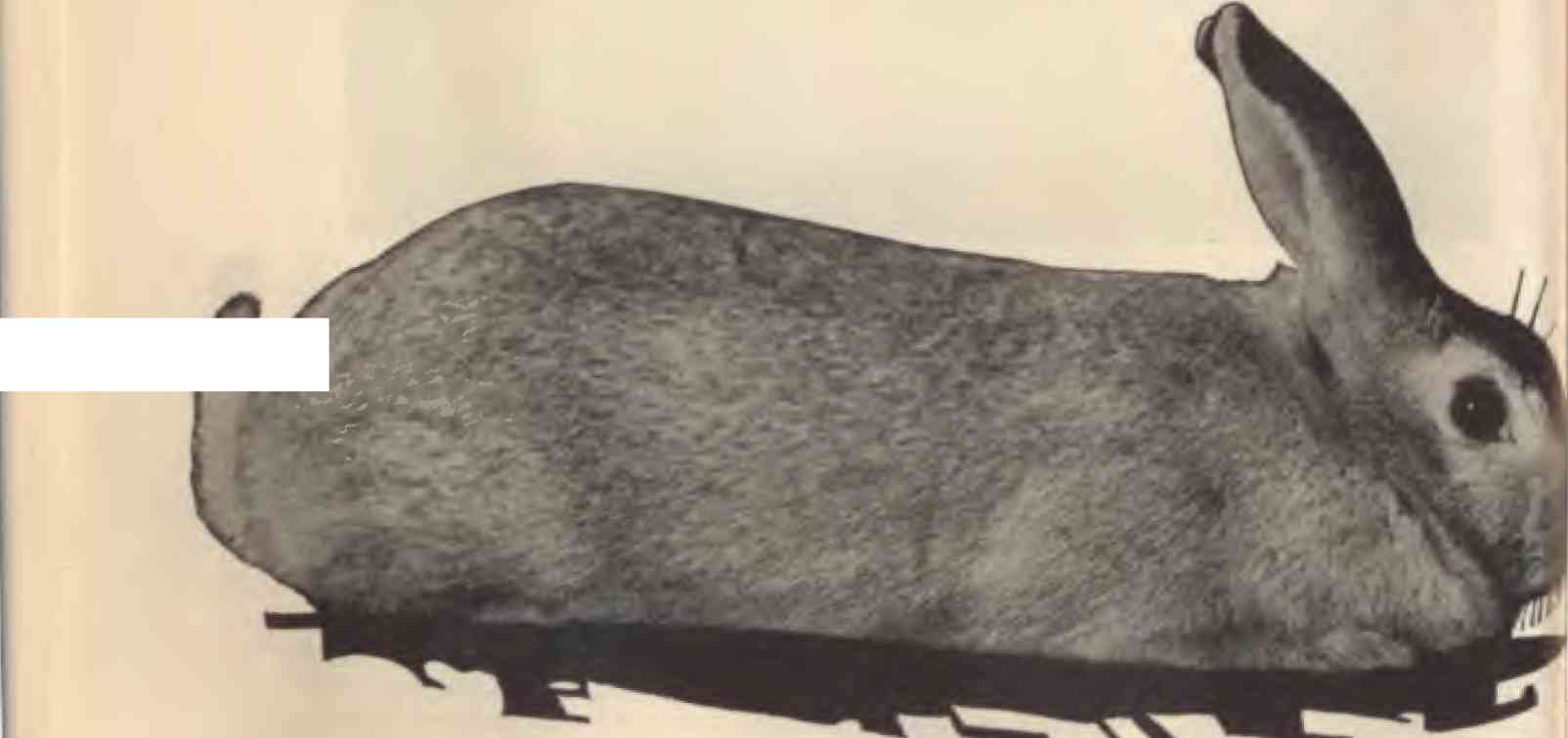
Archival Heavyweight Chinchilla doe, the historical American Chinchilla type, printed page 54 of the 1928–1929 guidebook. Original scan includes a white obstruction near the tail. Historical monochrome photograph; not a current pedigree record. · Edwin H. Stahl courtesy credit · American Rabbit and Cavy Breeders Association · ARBA Digital Library · Public domain in the United States · published 1928 · License terms
Follow the story behind the name.
French Chinchilla rabbits were first exhibited in 1913 and reached the United States in 1919. American breeders selected a larger form for meat and pelts. A heavyweight standard followed, and in 1924 both the larger and original forms entered the standards book. The larger form became the American Chinchilla.
Its coat resembles the gray fur that made South American chinchillas famous, but the animals are scientifically distinct. The American Chinchilla is also separate from the Standard and Giant Chinchilla rabbit breeds. Size, type, and breeding continuity clarify the differences that color alone cannot.
American Chinchilla: a breed shaped by people
The American Chinchilla Rabbit Breeders Association traces its breed to the smaller Standard Chinchilla and early American selection for greater size and commercial usefulness. Its history page places recognition in 1924, while another club account discusses a 1925 presentation of the Heavyweight standard. These accounts should retain their contexts rather than being flattened into one unsupported exact date. The central story is a breeding population developed for both meat and fur. Later changes in demand altered its economic setting. The club's own history is testimony from a community preserving the breed, not a current genomic census.
Sources for general species learning
Sources behind the breed’s story.
The original history, identity and conservation teaching above draws on these cited accounts. Official links open the full material for further study.
Keep learning from official information.
These research portals help locate further material. A search link is a route for exploration; it is separate from the sources used for the article above. Domestic breed information, wild-species assessment, historical books and new research need their own context.
- FAO DAD-IS · Domestic breed information
- IUCN Red List · Species assessments
- Biodiversity Heritage Library · Historical literature search
- USDA National Agricultural Library · Research search
- Google Scholar · Scholarly literature search
- Open Library · Book catalogue search
- HathiTrust · Digitized catalogue search