
Steinbacher
Animal identity
One living story. Knowledge kept together.
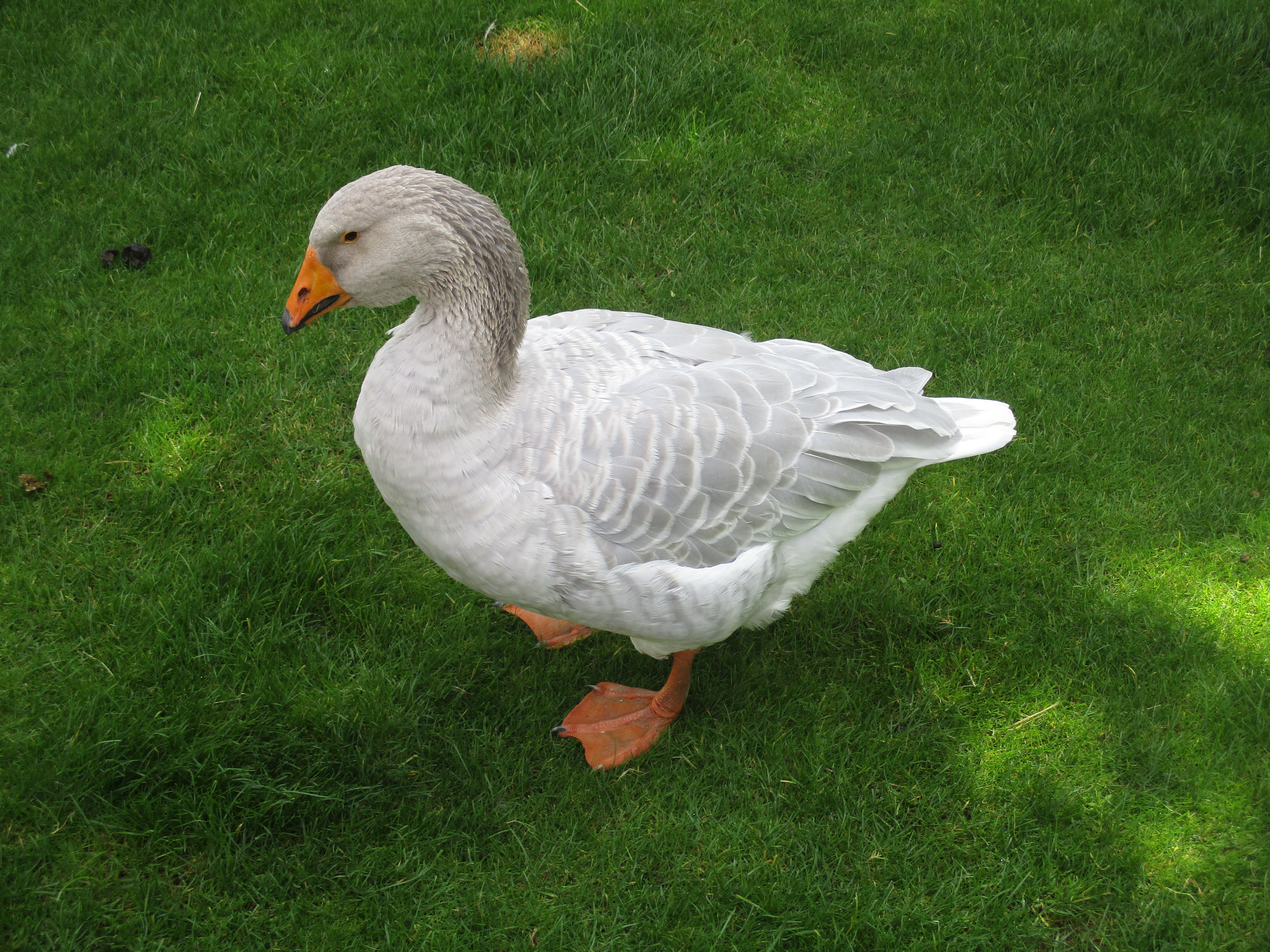
Steinbacher goose photographed in 2017. · Astrid Musmann · CC BY-SA 4.0 · License terms
Recognize what makes this population itself.
The breed demonstrates that domestic goose histories can involve more than one ancestral species lineage. Its German name records a former fighting tradition, which is historical context rather than a modern husbandry recommendation. Body form and recognized breed characteristics are more informative than that name alone.
Appearance introduces the animal; a registry standard explains a documented breeding population. A photograph, color or familiar informal name alone cannot establish every individual’s membership.
- Recorded roles
- Meat
- Egg Color
- White
- Egg Size
- Large
- Temperament
- Confident
- Adult Weight
- Male: 14 lbs.; female: 12 lbs. (2026 chart)
- Rate of Lay (2026 chart)
- 12–15; period not stated
- Brooding & Mothering (2026 chart)
- Variable to good
- Breed Weight
- Males - 13-15 lbs. / Females - 11-13 lbs.
Reference values from the breed’s conservation profile; corrected field sourced to the linked breed authority. Weight describes a reference animal, not a universal feeding or fitness target. Temperament varies with breeding, individual experience and handling.
Reading identity and evidence carefully
Its historical fighting name is context rather than a recommendation for contemporary husbandry. An educational profile should center the living breed's structure and preservation. Where related domestic goose lineages are discussed, sources should identify the evidence and avoid turning uncertainty into an overly simple two-parent origin story.
Reading the Steinbacher through a named breeder account
Lou Horton's article, republished by the American Poultry Association, describes the distinctive dark markings along an otherwise orange bill, an upright outline, and an absence of the large keel or dewlap associated with some heavier geese. Those details make the full bird more informative than its historical fighting name.
Horton also describes differences between German and British approaches to the paunch in older birds. The article demonstrates why a standard must be identified by organization, country, and period. A disagreement between standards is not automatically evidence that one source has photographed the wrong breed.
His temperament and feeding observations draw partly on the Krebs family's flock. They remain a named breeder account rather than a controlled study of every Steinbacher. The article's autumn 2011 update records a qualifying meet, providing a dated American recognition milestone without turning an older prediction of future popularity into a current census.
Sources for general species learning
Sources behind the breed’s story.
The original history, identity and conservation teaching above draws on these cited accounts. Official links open the full material for further study.
Keep learning from official information.
These research portals help locate further material. A search link is a route for exploration; it is separate from the sources used for the article above. Domestic breed information, wild-species assessment, historical books and new research need their own context.
- FAO DAD-IS · Domestic breed information
- IUCN Red List · Species assessments
- Biodiversity Heritage Library · Historical literature search
- USDA National Agricultural Library · Research search
- Google Scholar · Scholarly literature search
- Open Library · Book catalogue search
- HathiTrust · Digitized catalogue search