
Conservation as a regional, reproductive effort
Knowledge for understanding and preserving Poitou.
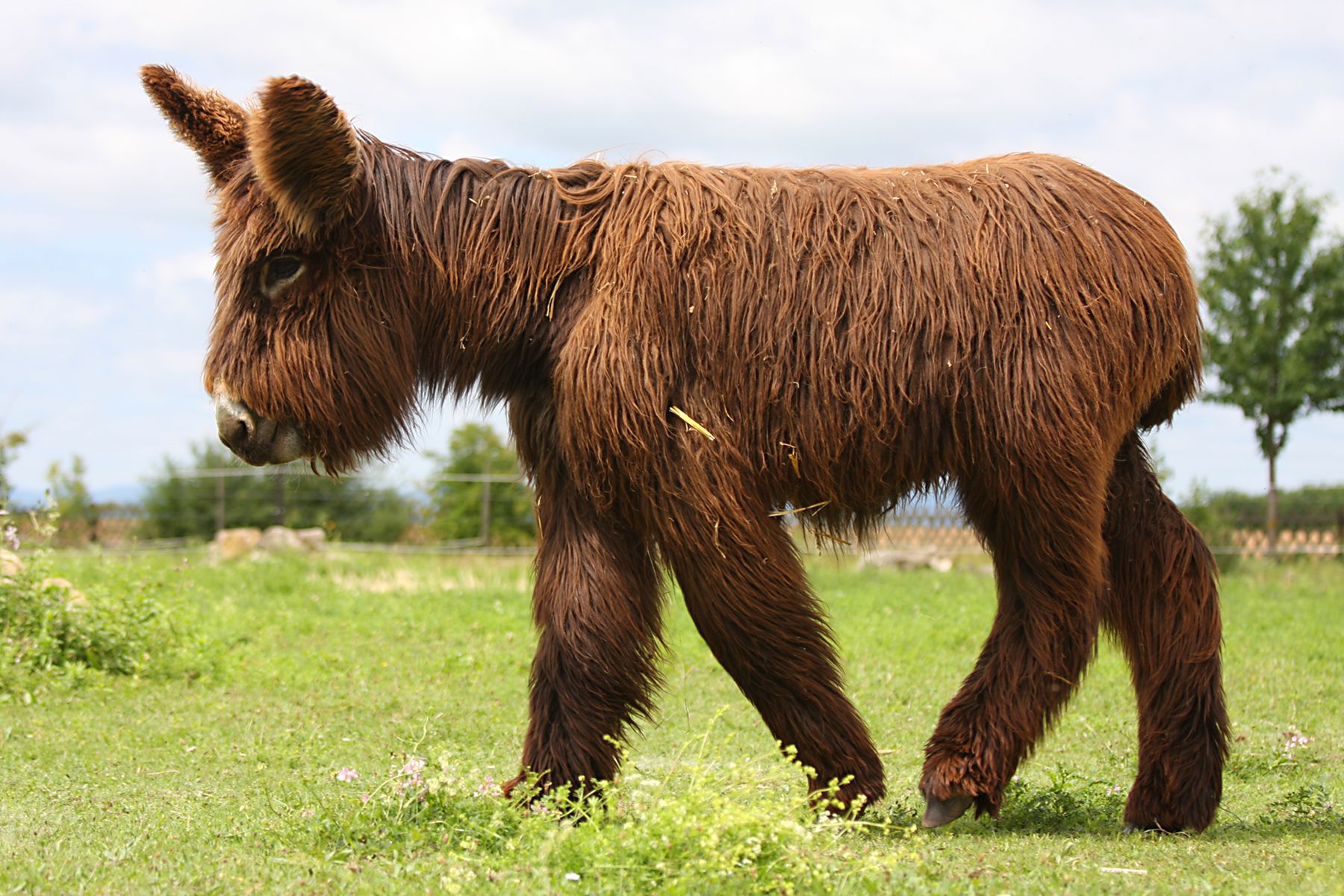
CREGENE, a regional conservation organization, anchors the Poitou's documented history in a 1717 royal-council memoir describing an established mule-producing industry. This is firmer evidence than presenting an uncertain ancient origin as a proven founding date. It records a 1977 population of 44 animals—20 males and 24 females—distributed among fourteen owners. That is a historical warning about a severe bottleneck, not a contemporary census.
The organization's account describes a coordinated rescue decision in November 1979 involving the Marais Poitevin regional park, national studs, and mule-breeding organizations. The experimental breeding center at Dampierre-sur-Boutonne combined genetics, husbandry improvement, preservation of local knowledge, and public education. CREGENE also reports that its work following the park's herd continued until 2024, when an absorption-breeding conservation program reached its seventh generation.
This history explains why the Poitou's shaggy coat is only the starting point of its identity. Recovery required coordinated reproduction across a geographically dispersed population and attention to ancestry. An educational collection should distinguish purebred conservation from mule production: the latter explains the breed's historic purpose, while sustaining the donkey population requires donkey offspring. The account's undated total of 400 purebred animals in France is not used here as a current statistic.
Sources behind this article
This is original Conservation Legacy teaching informed by the sources below. Follow the official material for the full account and its context.