
Sultan
History & heritage
One living story. Knowledge kept together.
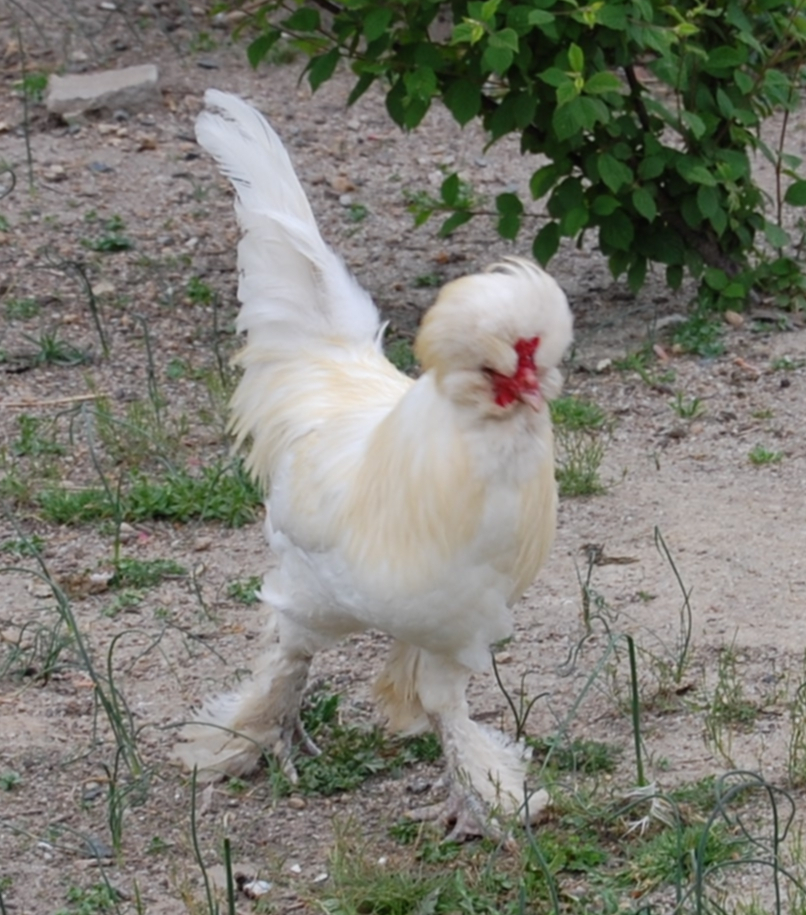
Sultan — identified breed photograph. · Eunice · CC BY-SA 2.0 · License terms
Follow the story behind the name.
The Sultan’s name connects it to Turkey and Ottoman poultry traditions. Accounts of palace gardens are part of its cultural story; its later rarity in Britain also forms an important conservation chapter.
Elizabeth Watts received Sultan chickens from Constantinople in 1854. The birds initially arrived with badly soiled feathers; their white plumage became clear after recovery and molting. American imports followed in 1867.
Sultans combine a conspicuous crest, beard, feathered legs and a richly ornamental white appearance. Historical observers described unusually tame birds and relatively limited damage to grassy runs. Small white eggs are secondary to their established ornamental role.
The Conservancy's reference profile describes small eggs with white shells. These descriptions help compare the population's traditional farm role; actual performance also depends on age, breeding line and management.
Male and female in the British standard
The male description includes a large globular crest, full beard and abundant flowing tail feathering; the female retains the general form with a smaller, less visible comb. These descriptions show how sex affects presentation without changing breed identity. The society preserves the 1854 Elizabeth Watts import story. Claims that every modern bird has one fully documented foundation pedigree require more evidence than resemblance to those historical imports.
Sources for general species learning
Sources behind the breed’s story.
The original history, identity and conservation teaching above draws on these cited accounts. Official links open the full material for further study.
Keep learning from official information.
These research portals help locate further material. A search link is a route for exploration; it is separate from the sources used for the article above. Domestic breed information, wild-species assessment, historical books and new research need their own context.
- FAO DAD-IS · Domestic breed information
- IUCN Red List · Species assessments
- Biodiversity Heritage Library · Historical literature search
- USDA National Agricultural Library · Research search
- Google Scholar · Scholarly literature search
- Open Library · Book catalogue search
- HathiTrust · Digitized catalogue search