
An exhibition silhouette shaped by selection
Knowledge for understanding and preserving Modern Game.
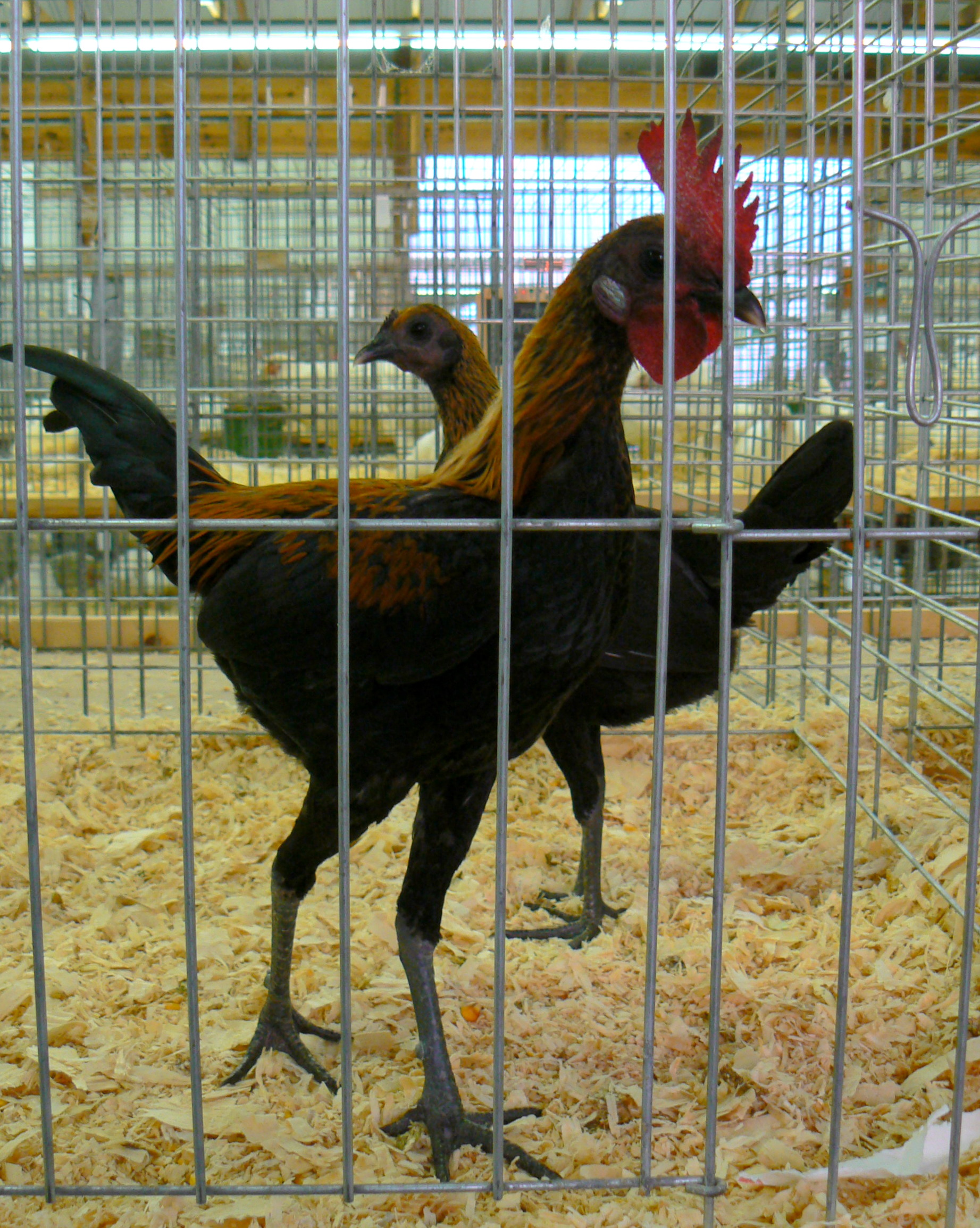
Modern Game chickens illustrate how exhibition priorities can reshape a domestic animal. Long legs, a slim body and close feathering became central to their distinctive appearance as breeders selected increasingly tall birds.
The Conservancy traces their development to Malay and Old English Game crosses in nineteenth-century England. The result is maintained chiefly for exhibition and ornamental interest, rather than high egg output or a heavy meat carcass.
The source describes slow maturation, activity and a preference for warmer conditions. Its reported egg output is modest, around 50–80 a year. Our interpretation is that a conservation collection should recognize such a breed’s cultural and breeding history even when commercial production measures do not favor it. The striking silhouette should remain anatomically convincing in artwork. It is a full adult form, not a generic chicken stretched vertically, and its physical identity belongs beside an explanation of how people’s selection created it.
Sources behind this article
This is original Conservation Legacy teaching informed by the sources below. Follow the official material for the full account and its context.