
Crèvecœur
History & heritage
One living story. Knowledge kept together.
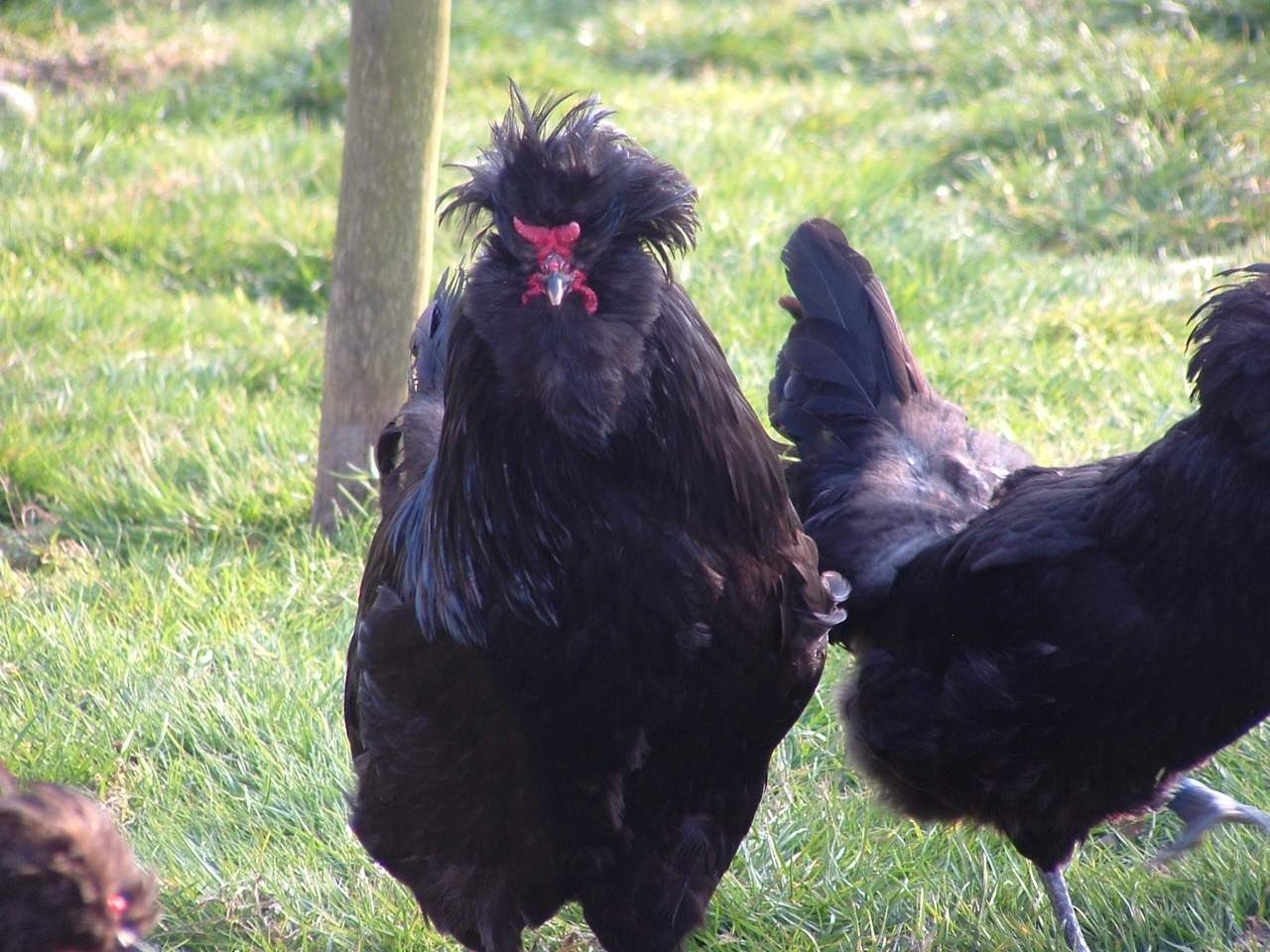
Crèvecœur chickens photographed in France. · Blaise.desaintjouin · CC BY-SA 2.5 · License terms
Follow the story behind the name.
Crèvecœur chickens are associated with Normandy and the town reflected in their name. The breed has a long French history, although its earliest development is not fully documented.
Nineteenth-century French markets prized Crèvecœur table birds. American imports occurred in 1852, 1867 and later years, but they attracted less support abroad. Wartime losses in Normandy further damaged the population.
A dark body, crest and distinctive head furnishing link its appearance to other historic French crested poultry while retaining its own type. Its dual-purpose history includes white eggs and premium table production. The original geographic name belongs to Normandy, rather than describing a modern performance trait.
The Conservancy's reference profile describes medium to large eggs with white shells. These descriptions help compare the population's traditional farm role; actual performance also depends on age, breeding line and management.
Crest shape and usable sight
The society's male description calls for a compact crest inclined backward so the comb remains exposed and vision is not obstructed from the front. The female's crest is globular. These sex differences matter when comparing pictures with an exhibition description. An ornamental feature is being assessed within a functional whole bird; a fuller crest should not be assumed automatically better. British descriptions must be labeled by jurisdiction rather than treated as a substitute for every national standard.
Sources for general species learning
Sources behind the breed’s story.
The original history, identity and conservation teaching above draws on these cited accounts. Official links open the full material for further study.
Keep learning from official information.
These research portals help locate further material. A search link is a route for exploration; it is separate from the sources used for the article above. Domestic breed information, wild-species assessment, historical books and new research need their own context.
- FAO DAD-IS · Domestic breed information
- IUCN Red List · Species assessments
- Biodiversity Heritage Library · Historical literature search
- USDA National Agricultural Library · Research search
- Google Scholar · Scholarly literature search
- Open Library · Book catalogue search
- HathiTrust · Digitized catalogue search