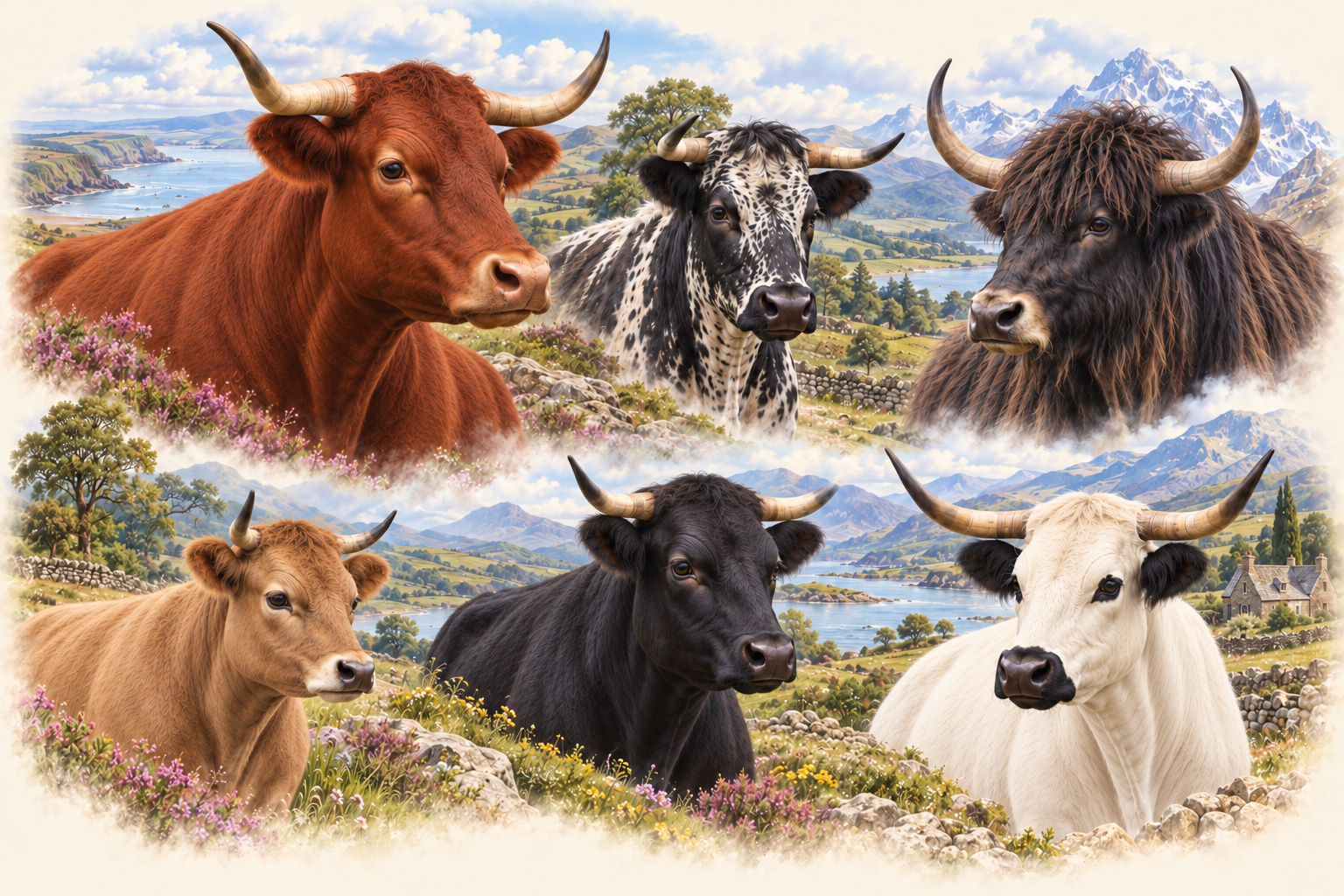
Cattle heritage includes the animals that supplied milk, pulled loads and supported regional food systems. A breed may have been selected for several jobs at once, or for a particular landscape and farming tradition. Those choices leave a history in its body, behavior and breeding records. Conservation begins by learning which population a name refers to: a registry’s purebred population, a regional landrace and a commercial cross can tell different stories.
A domestic yak at Rosamond Gifford Zoo, Syracuse, New York. Species context photograph; membership in registered American Yak conservation lines is not verified. · Dave Pape · Public domain
Criticalbreed
American Yak
Yak production can combine meat, rich milk, packing, and fiber from the long hair and dense insulating undercoat. Cold and altitude adaptation are central to their identity, rather than appearance alone.
The white belt around a dark body is memorable, but this is a dairy breed with a pasture-based production tradition. Its name and coloring should not lead readers to confuse it with Belted Galloway, a separate beef breed.
Red coats and black-tipped pale horns accompany a genuinely triple-purpose tradition: milk, beef, and ox work. Compact bodies, forage use, and draft ability explain why living-history farms continue to value them.
A white back line runs through a variable dark, roan, or speckled coat. These horned New England cattle retain dairy, beef, and working-ox uses. Protective maternal behavior and an assertive disposition make regular, competent handling important.
Native Heritage Shorthorn concerns the older dual-purpose resource within the much wider Shorthorn story. Milk and meat usefulness belong together in this population; the success of modern specialized Shorthorns does not describe the heritage subset.
White bodies, dark extremities, and pale horns tipped with black create a distinctive appearance. These are substantial, athletic cattle. Their identity should be distinguished from similarly named polled white cattle and from any white animal with dark ears.
Guernsey identity is strongly associated with dairy production and rich, golden-colored milk. Its history is related to, but separate from, neighboring Jersey cattle. Island origin does not mean that all Guernseys now live on the island.
Deep red coats, substantial body size, and a beef-production role characterize the breed. Historical horned cattle and later selection should be considered within the relevant registry population rather than inferred from a single animal's appearance.
Red Polls are naturally hornless, consistently red cattle with a dual-purpose foundation. Their history demonstrates deliberate combination of milk and beef qualities rather than a simple miniature version of a specialized dairy or beef animal.
Fine-boned black cattle with pale, black-tipped upswept horns are characteristic. Cows are relatively small and lean. Dairy usefulness and adaptation to limited resources help explain their place in traditional Irish farming.
Small stature makes Dexter cattle recognizable, yet they are multipurpose animals rather than decorative miniatures. Their background includes adaptation to difficult Irish countryside and use by smallholders seeking manageable dairy and beef cattle.
The horns are its most obvious feature, but small newborn calves and rich milk also appear in breed accounts. Sanga ancestry means scientific and historical explanations should account for African cattle relationships instead of forcing a simple European breed narrative.
Enter the breed world →A Texas Longhorn at Wichita Mountains Wildlife Refuge, Oklahoma. Conservation-herd context photograph; individual CTLR registration is not asserted. · Larry Smith · CC BY 2.0
The CTLR conservation population represents traditional Texas Longhorn ancestry. Its value includes fertility, longevity, forage use, and adaptation to variable climates; horn length is only one visible characteristic. Coats and horn shapes can differ substantially.
The red coat, forage-finishing tradition, and beef use are important identifiers. North Devon and South Devon names can be confusing: South Devon is a different breed, not simply the southern color variety of the same population.
A broad white mid-body belt contrasts with the darker coat. The breed's beef and grazing role distinguishes it from Dutch Belted dairy cattle despite their shared visual motif. Scottish adaptation and production history are more informative than a nickname based on appearance.
Naturally polled cattle adapted to poor forage and cold, wet conditions became a distinct beef population. The familiar black type is part of a wider color history. Their adaptive identity differs from selection for rapid growth on richer feed.
Heat, humidity, parasite pressure, and rough forage shaped cattle valued for regional resilience. Coat and horn variation are part of the population; a single uniform photograph cannot represent all Florida Cracker families.
Compared with many modern beef breeds, Corrientes are small, agile, and relatively heat tolerant. Their strong horns and athleticism helped establish a role in roping and other stock-handling sports, alongside meat and breeding uses.
This Criollo population reflects adaptation to hot, challenging environments and modest forage. Historically maintained family lines form an important part of its identity. Working ability connects the breed to forest and farm history, beyond modern beef comparisons.
Critical, Threatened, Watch and Recovering are this organization’s domestic-breed categories. Their definitions vary between livestock, rabbits and poultry. A category threshold is not a census of this breed, and a registry’s annual registrations are not a count of every living animal.
Compare future population figures by assessment year, geography and the animals counted. Keep a wild relative’s IUCN assessment separate from a domestic breed’s status.
Scientific field notes
Where these animals belong.
Most familiar taurine cattle are described as Bos taurus. This catalogue also includes American Yak, a different taxon, so membership in the cattle hall does not mean every entry belongs to one species.
Ranks follow the linked reference’s treatment. Domestic names and wild relatives may be handled differently by other authorities.
Kingdom
Animalia
Phylum
Chordata
Class
Mammalia
Order
Artiodactyla
Family
Bovidae
Genus
Bos
Species / domestic context
Bos taurus; Bos grunniens for domestic yak
Explore beyond appearance
Four questions for a living legacy.
01
Breed identity and registry evidence
What does the source actually establish, and which claims still need evidence?
02
Milk, meat and working-ox traditions
How did people, place and practical use shape the population we see today?
03
Herd structure and breeding-family diversity
Which living breeding families can carry the population into another generation?
04
Land, handling systems and lifetime care
What would responsible stewardship require in time, facilities and ongoing support?
Knowledge belongs with its animal world.
Explore general cattle knowledge in the species library. Each population has its own collection for breed-specific history, identity and conservation reports.