
Silver colour, eye health and breed certification
A Rocky Mountain Horse's identity is larger than the familiar chocolate body and pale mane.
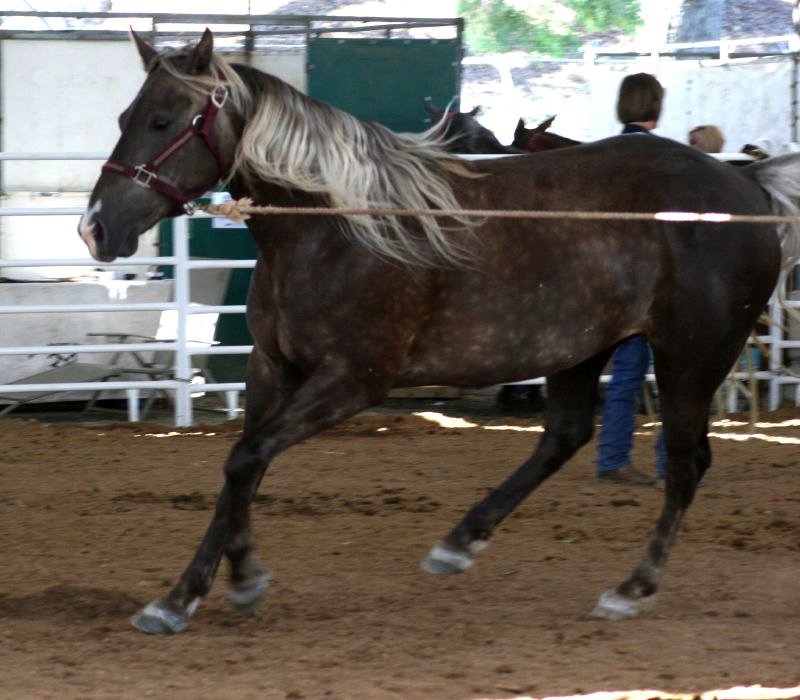
A Rocky Mountain Horse's identity is larger than the familiar chocolate body and pale mane. The association describes a medium-sized horse with a four-beat ambling gait, solid body colour and gentle temperament. Its certification process examines breed characteristics, so a similar-looking horse is not automatically a registered or certified Rocky Mountain.
The RMHA separates registration from certification. Its published buyer guidance says trained examiners assess height, body, gait, temperament and colour after the horse reaches the required age. Prospective owners should examine the actual registration papers and certification status rather than treating those terms as interchangeable. Current rules belong with the registry itself, especially when planning to breed.
Silver dilution also introduces a scientific topic worth explaining accurately. UC Davis links silver to multiple congenital ocular anomalies, or MCOA. This inherited condition can involve cysts and other developmental eye changes. It is relevant to Rocky Mountain and several other breeds; colour is therefore a reason to investigate the appropriate science, not a diagnosis made from a photograph.
A 2013 research paper investigated the relationship between the silver-colour variant in PMEL and MCOA, supporting a shared genetic cause. Its findings do not establish that every horse has the same clinical presentation. A genetic test and an eye examination answer different questions: one identifies a tested variant, while the other assesses the individual eyes. Both can inform a responsible conversation with an equine veterinarian.
Preservation should avoid reducing the Rocky Mountain to its most marketable colour. Gait quality, working soundness, disposition and family representation matter even when a horse does not match the image a visitor expects. An educational collection can make this visible with several correctly identified horses, movement footage and accounts of actual trail or pleasure work.
Comfort is also individual. A smooth-gaited breed description does not guarantee that a particular horse suits a particular rider, saddle or level of experience. Observing the horse under suitable conditions and discussing its training offers more useful evidence than a colour label. The strongest introduction connects beauty, function, documentation and welfare, giving readers a realistic basis for further learning.
Sources behind this article
This is original Conservation Legacy teaching informed by the sources below. Follow the official material for the full account and its context.