
Meet the
New Hampshire.
New Hampshire poultry breeders selected Rhode Island Red-derived birds for quicker feathering, growth and maturity. Work in New Hampshire and Massachusetts produced a population with its own production identity.

Bodlina · CC BY-SA 3.0 ↗ · Reuse terms
Origins, people & changing purpose
History & heritage
New Hampshire poultry breeders selected Rhode Island Red-derived birds for quicker feathering, growth and maturity. Work in New Hampshire and Massachusetts produced a population with its own production identity.
Selection in the early twentieth century culminated in American standard recognition in 1935. Professor A. W. Richardson helped develop the population. New Hampshire crosses later participated in the Chicken of Tomorrow competitions that shaped commercial broiler breeding.
Sources for this passage
Selection can create a distinct breed without a new cross
The Poultry Club describes New Hampshire development through selection within Rhode Island Red stock rather than the addition of another breed. It places standardization in 1935 after several decades of work. This offers a direct lesson in breed formation: selection can change a population's characteristics without requiring a new named foundation breed.
Sources for this passage
Read this article in its own place →Recognizing the breed
Size, details & appearance
Look closely at the features that make this animal distinctive.
Bodlina · CC BY-SA 3.0 · License
Size reference
Source-reported weight references ↗ · checked October 5, 2026.
Market weight and adult weight describe different stages. Values are reference information, not individual growth guarantees.
Meat
Tinted to Brown
Shell color can vary between individuals and through a laying season.
Large
Source-reported size category; not a measured weight for every egg.
Competitive and aggressive
Animal identity
Chestnut-red feathers, a deep triangular body and rapid feathering distinguish the breed from its Rhode Island Red foundation. Hens produce brown eggs; some strains brood readily. Line selection matters: birds developed principally for growth may not perform or look like a balanced dual-purpose exhibition flock.
Sources for this passage
Production goals changed the visible bird
The club identifies early maturity, quick feathering and a plump carcass as selection priorities, alongside changed body shape and color. Those qualities explain why New Hampshire is a distinct identity rather than simply any red chicken. They describe historical breeding aims and reputation; actual flock measurements are still needed before assigning a precise growth rate or annual egg total.
Sources for this passage
Read this article in its own place →Interpreting this population in practice
New Hampshire history centers on selection within a Rhode Island Red foundation for production traits. That history explains why growth-oriented and balanced farm lines may differ. When comparing birds, ask which traits the breeder maintains and interpret egg or growth observations in that setting. Descent from a productive ancestor does not guarantee an identical outcome under every management system.
Sources for this passage
Read this article in its own place →Scientific identity & inheritance
Gallus gallus (Linnaeus, 1758)
- Kingdom
- Animalia
- Phylum
- Chordata
- Taxonomic class
- Aves
- Order
- Galliformes
- Family
- Phasianidae
- Genus
- Gallus
- Species
- Gallus gallus
- Domestic population
- New Hampshire
Scientific identity
Red junglefowl natural history supplies background on ground feeding and social relationships. Its species account discusses the wild bird, so wild habitat and life-history figures must not be applied to every domestic breed. Domestic flock behavior is also affected by space, individual birds and the way groups are managed.
Chickens forage for plant foods and small animals, but access to insects does not establish a complete diet. Growing birds and laying birds have different nutritional roles. Litter, ventilation and drinking water are biological conditions: wet bedding and accumulated ammonia can damage welfare. A breed's reputation for hardiness should sit alongside this basic husbandry explanation.
The animal in its landscape
Ecology & human landscapes
A chicken flock occupies a human-managed habitat that connects soil, insects, vegetation, manure and feed brought onto the farm. Teaching should describe those connections without promising that birds eliminate every pest or enrich every site automatically. The scale and management of the flock shape the outcome.
Conservation adds a second layer: keeping productive, identifiable breeding populations through changing markets. Images can teach comb, plumage and body differences, while original articles explain the functions and selection behind them. The species library provides shared biology; the breed library preserves the distinct historical and genetic story.
Keeping and raising the animal
Care foundations
Outdoor foraging offers insects and other foods but does not remove the need for balanced nutrition. Feed should suit the bird's stage and role, including growing birds and laying hens. Housing is also a health system: wet litter and accumulated ammonia can damage feet, skin and eyes. Ventilation, dry bedding, clean drinking water and protection from predators and disease introduction belong beside breed history. A heritage chicken's hardiness does not make it immune to management-related illness.
These are general species foundations. The breed's own history and traits help explain how it developed, while an individual animal's age, environment and purpose shape its daily needs. Preservation includes keeping animals healthy enough to express normal behavior and maintain future generations. Compare dependable husbandry guidance with breed registry descriptions, and distinguish inherited traits from assumptions about toughness. Teaching the reasons behind care decisions gives readers a stronger foundation than applying one feeding formula to every animal.
Sources for this passage
From an egg to a living flock.
Follow the animal from its beginning through the changes in feeding, shelter, behavior and care. Select a stage to look closer.
Healthy adults can contribute to the next generation; care and documented ancestry connect the cycle.
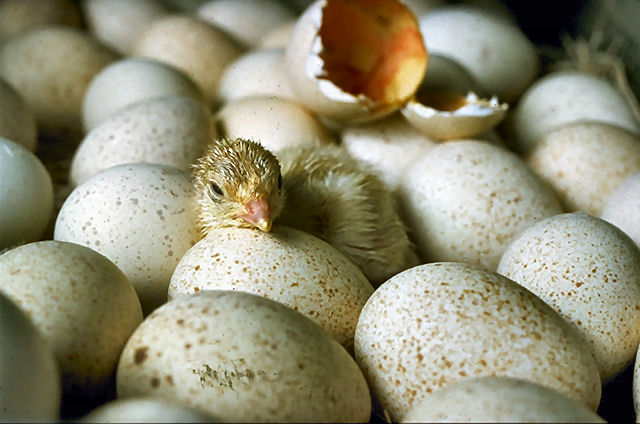
Hatching & first days
A chick needs warmth, water and suitable starter feed. Prepare its setting before arrival and observe its behavior.
What to observe
Watch access to warmth, water and starter feed, the way young birds gather or spread out, and whether each bird can reach the essentials.
Raised with a broody hen
A maternal hen supplies warmth and guides chicks. The keeper still provides a protected setting, feed, water and checks that each chick thrives.
Managed brooder rearing
Provide a warm area, cooler retreat, dry bedding and suitable feeders and drinkers. Watch chick behavior as well as the thermometer. Brooding normally supports birds eating for themselves; it is not routine syringe feeding.
Life-stage teaching sources
- Mississippi State University Extension · incubation factors ↗
- Cooperative Extension · brooding poultry hatchlings ↗
Conservation Legacy original teaching. Image captions identify the pictured animal; general species examples remain separate from selected-breed images.
See when life changes.
Body growth, reproductive development and managed weaning describe different changes. Explore the reference windows beside the care they help explain.
New Hampshire Red · pasture growth trial
Cockerels from Cackle Hatchery, raised at Providence Farm, Missouri, in 2013.
Mean live body weight for this study flock at the selected weighing.
Study method, evidence and data table
Group weighings through week 9; samples of 15 birds at weeks 11, 14 and 17; remaining birds at day 130. Birds moved to pasture pens after day 33 and received prepared grower feed.
Study flock averages. Day 0 is receipt of the chicks, with exact hatch age unspecified. The sample changes across weighings; interval gains compare flock means. Unmeasured weeks are omitted.
| Days after receipt | Mean live weight (lb) |
|---|---|
| Receipt | 0.074 |
| 7 | 0.102 |
| 14 | 0.168 |
| 21 | 0.342 |
| 28 | 0.561 |
| 35 | 0.833 |
| 42 | 1.075 |
| 49 | 1.416 |
| 56 | 1.702 |
| 63 | 1.968 |
| 77 | 2.965 |
| 98 | 3.677 |
| 119 | 4.606 |
| 130 | 5.238 |
Incubation
21 daysApproximate species reference for planning.
Evidence ↗After birth or hatch · reference windows
General chickens; seven named breeds in Missouri pasture trial separate below. Bars share a time axis measured from birth or hatch; each label retains its source units.
Timing depends on breed; not a Buckeye/Jersey Giant measured mean.
Source for this window ↗What its future depends on
Conservation & challenges
There is no single temperament or production outcome shared by every New Hampshire line. Ask about the actual breeder's selection priorities. Preservation faces the challenge of retaining a reproducing heritage population while its ancestry continues in much more numerous commercial crosses.
Sources for this passage
Conservation status and source-reported population evidence
A directly verified population measure has not yet been established for this page. Its conservation category remains useful, but does not supply a current head count.
Carry this animal’s story forward.
A documented photograph, a keeper’s experience or a carefully sourced correction can strengthen the next person’s understanding. This account connects with the breed’s own knowledge collection and common area.